How Diamonds Form: Mantle Science and What Inclusions Reveal
Change log: Wave 2 first pass, built from three digest-grade sources (two read through abstract+intro, one complete). Modules 8 (color centers) and 13 (famous stones) will re-reference this science, so formation vocabulary is defined once here and reused there.
Why a sales-floor or valuation conversation should start 200 kilometers underground
Ask ten professionals “where do diamonds form?” and most will say “deep in the earth, under pressure.” Correct and useless. The precise answer is what unlocks the rest of this course:
- Why large D-color, type IIa stones from Cullinan-type sources behave differently in the market (Module 13).
- Why “origin” is written into some reports and can never be written into most others.
- Why inclusions are the diamond’s autobiography — the reason a grader studies them instead of just counting them (Module 7).
- Why synthetic diamonds are chemically honest rivals: they reproduce this geology in a week (Modules 11–12).
The anchor texts for this module are, in GIA’s own words, “some of the most scientifically valuable samples of the deep earth” — no other mineral delivers direct data from >100 km depth and billions of years back (Smith et al. 2017, G&G Winter 2017).
The stability field: cold, deep, and ancient
Shirey & Shigley’s 2013 review (G&G 49:4, the anchor for GIA Assignment 4) builds the whole subject around one diagram — the carbon phase diagram: diamond is the high-pressure form of carbon, graphite the low-pressure form, and the boundary slope with temperature is what lets diamonds exist at all. Three consequences the review draws out are worth memorizing:
- Diamonds are only stable where it is both deep and cold. In the global picture, the region that satisfies this is the cratonic keel — the ancient, cold, thick (150–250 km) root of continental lithosphere beneath Archean cratons. Shirey & Shigley’s Figure 5 shows cratons as seismic high-velocity anomalies at 125 km depth; “the blue regions indicate where lithospheric diamonds were stored for billions of years.”
- The transition zone below ~300 km is the second great diamond factory — the “superdeep” family, formed in the convecting mantle at 360–750 km (Smith et al. 2016/2017; see below).
- Kimberlite is the elevator. Diamonds are metastable at the surface — they survive eruption only because the ascent is fast. The carbonated-melting diagram (Shirey & Shigley Fig. 7, after Dasgupta 2013) shows that just beneath the base of continental lithosphere there is “just enough space” for volatile-bearing mantle to melt below 1400 °C and generate the carbonatitic liquids that evolve into kimberlite. Volatiles + marginal melting + rapid ascent: without all three, there is no deposit.
The deposit recipe you can recite at a counter: diamond forms in a craton’s cold root over billions of years; a volatile-rich kimberlite magma rips up pieces of that root (and its diamonds) and reaches the surface in hours to days; erosion later frees the durable stones into rivers and beaches, where all of history’s non-pipe discoveries — Brazil, India, South Africa 1867, Namibia’s coast — were actually found.
Two families: lithospheric vs. superdeep
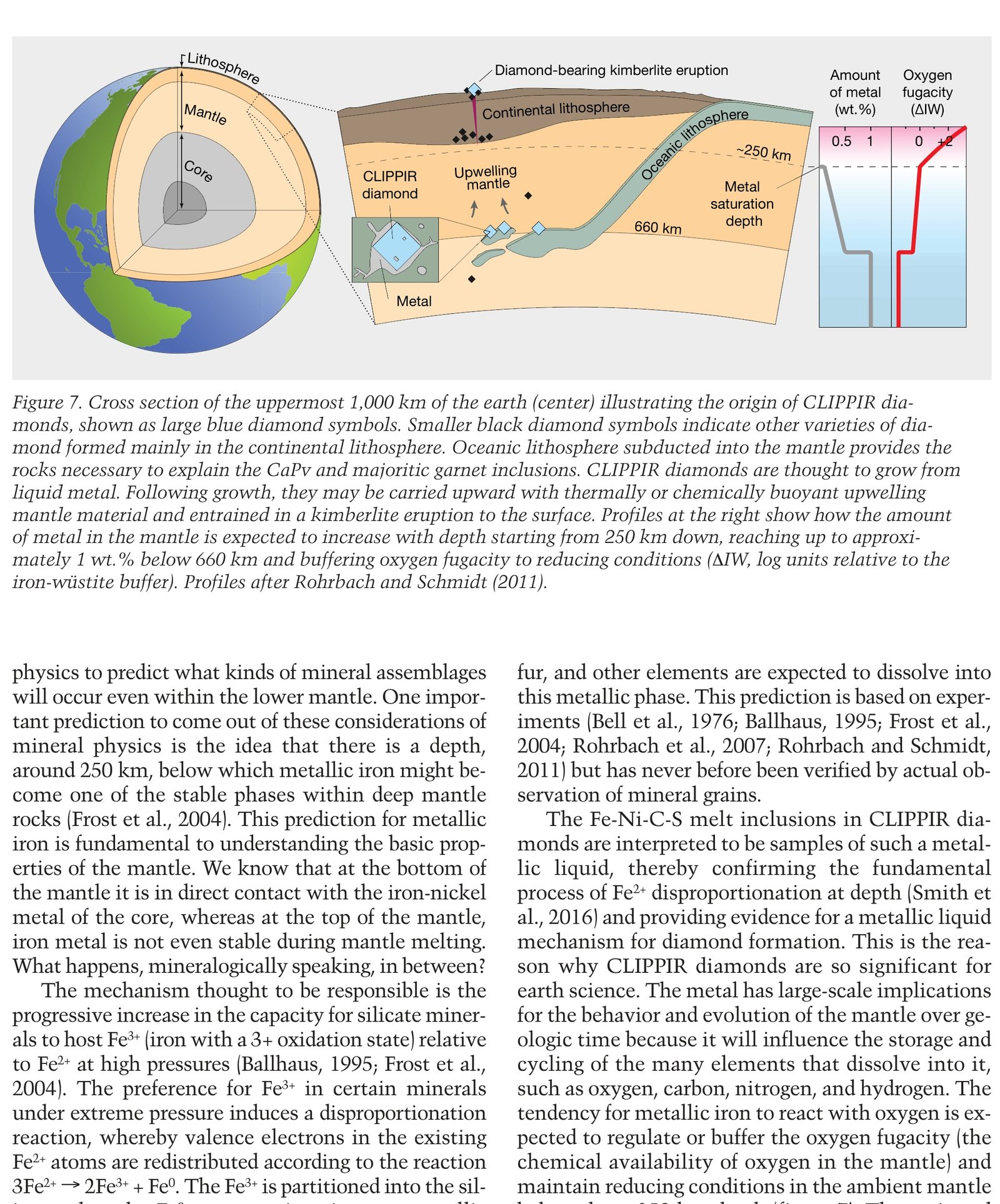
Shirey & Shigley classify every world locality (their Figure 4 maps 64 of them) into kimberlite-hosted lithospheric, superdeep, alluvial of crustal reworking, ultra-high-pressure crustal (UHP: coesite in metamorphic terranes), and impact (meteorite) types. For gem commerce only the first two matter, and their contrast is a market fact disguised as geology:
| Lithospheric (ordinary gem diamonds) | Superdeep / CLIPPIR | |
|---|---|---|
| Depth of formation | Base of cratonic keel, ~150–200 km | Convecting mantle + transition zone, 360–750 km |
| Chemistry | Mostly type Ia — nitrogen aggregated into A (platelets) and B clusters | Mostly type IIa/IIb — nitrogen-poor; the “pure” family |
| Growth medium | Carbonate-silicate fluids/melts from the metasomatized keel | Metallic Fe-Ni-C-S liquid (oxygen-poor metal saturates the deep mantle) |
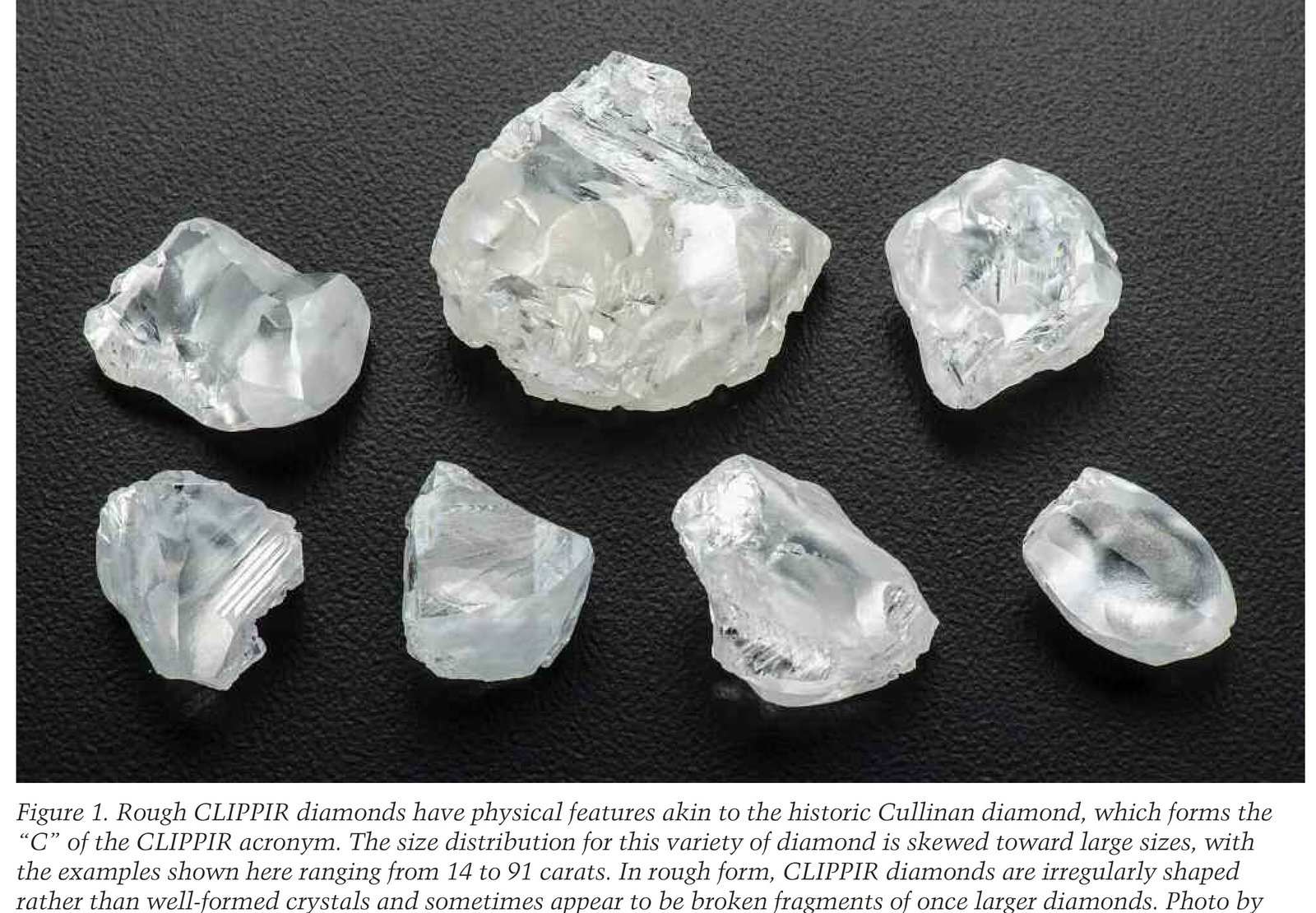
| Typical habit | Well-formed octahedra | Irregular, resorbed, often fragments of once-larger crystals |
| Size & purity | Exponentially rarer at high carat weights | Skewed toward large sizes; unusually inclusion-poor |
| Commercial faces | The volume of the market: Jwaneng, Orapa, Diavik… | The headline stones: Cullinan, Lesotho Promise, Golden Jubilee; today’s Letšeng economics |
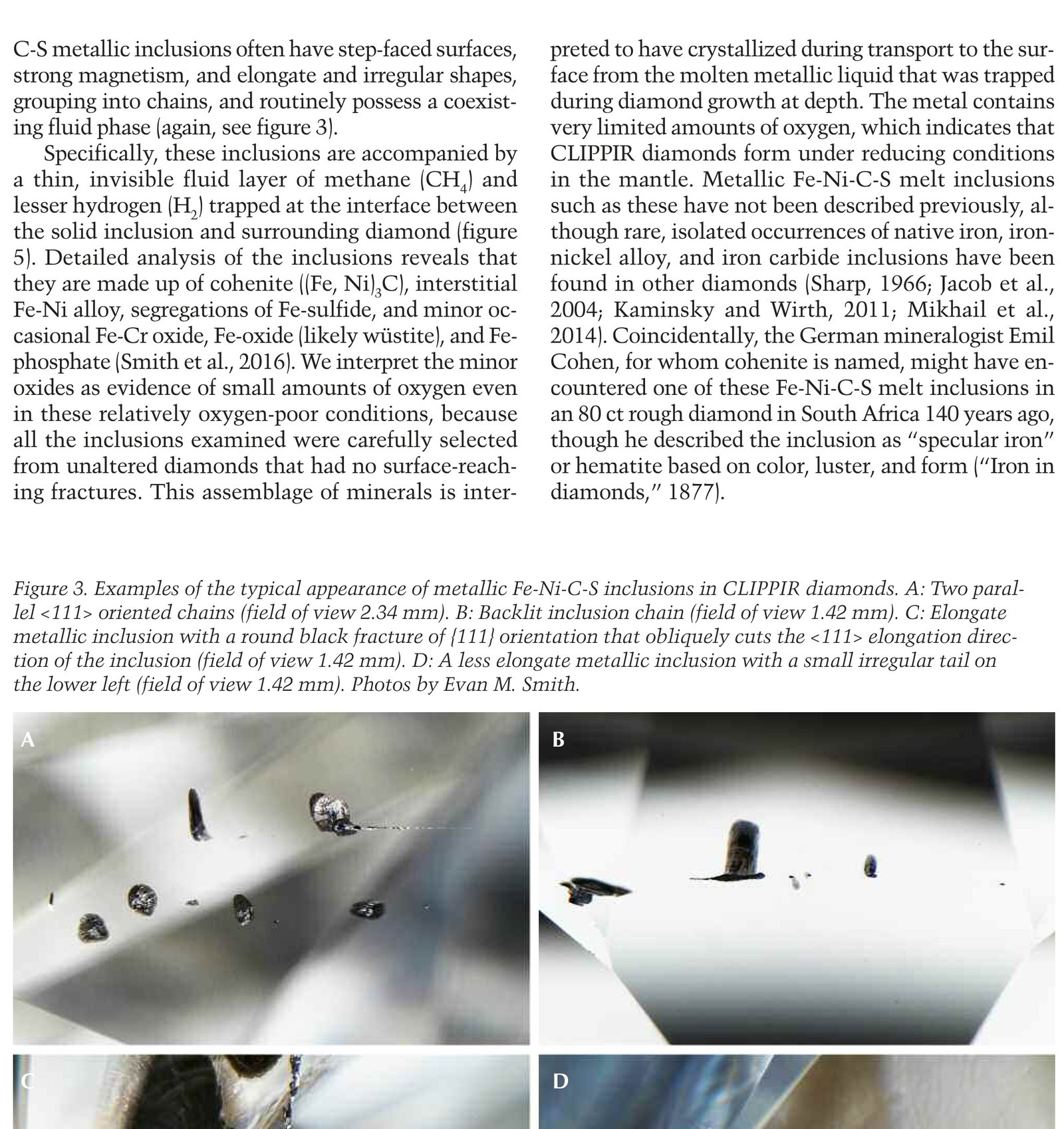
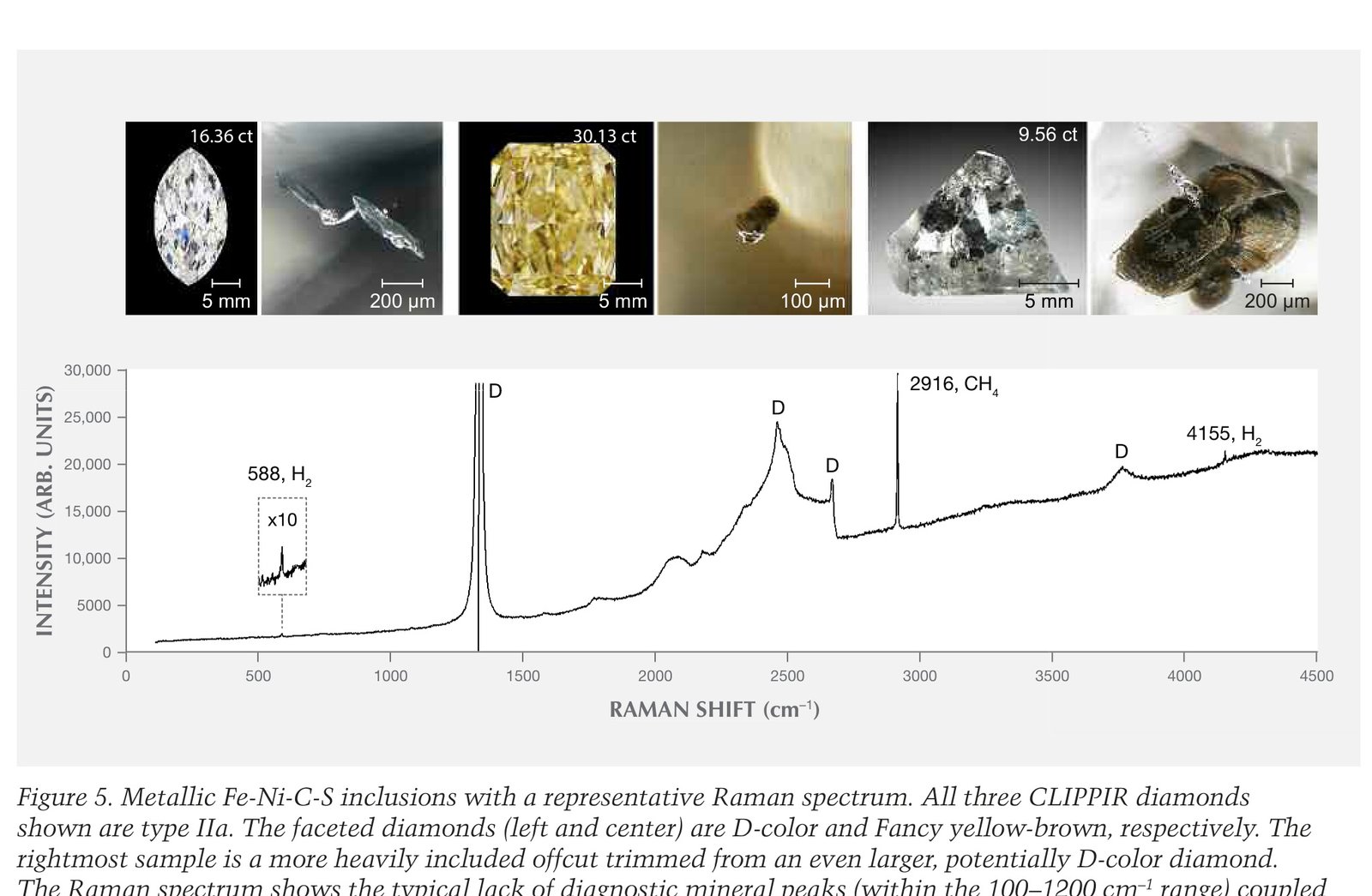
The CLIPPIR acronym — Cullinan-Like, Inclusion-Poor, Pure, Irregular, Resorbed — was coined in the 2016 Science paper (Smith et al., Science 354:1403) and reviewed by Smith, Shirey & Wang in G&G (Winter 2017). The GIA extended abstract is the most readable account we have: the metallic inclusions (iron-nickel with sulfur and carbon, now cohenite + pyrrhotite, wrapped in micro-jackets of methane and hydrogen fluid) are frozen droplets of the liquid metal that the diamonds crystallized from, and their very presence below ~250 km confirms a long-standing prediction that deep mantle regions contain ~1% metallic iron that “regulates and limits the availability of oxygen.” The research itself had to piggyback on commerce: gemstones cannot be bought for science, so GIA studied the offcut waste from polishing houses’ parcels — the only time the best material for geology is also the only material geologists are allowed to touch.
One market corollary to teach: “among larger diamonds, there is a striking increase in the prevalence of D color grades and the proportion of type IIa” (Smith et al. 2017). Big + colorless + clean is not a coincidence — it is a population-level property of superdeep origin. When a client asks why an 8-carat D VVS1 costs more per carat than a 2-carat of the same grades, the geology answer is legitimate: the stones at the extremes of size are disproportionately drawn from a formation channel (metal-melt, deep, resorption) that is rare, and produces fewer recoverable fragments — large D-IIa supply is structurally thin.
Clocks in the stone: dating and the story inclusions tell
Two dating systems recur in GIA’s assignment-4 list; learn what each measures and what it cannot:
- Re-Os in sulfide inclusions (Pay/Carnegie articles in the handout). Sulfide minerals trapped at the moment of diamond growth behave as closed clocks for the rhenium-osmium system. This is how the age of the formation event (not the stone’s journey to the surface) is pinned.
- δ13C carbon isotopes (the other Pay article). The ratio of 13C to 12C in the diamond carbon distinguishes mantle carbon from carbon that once participated in the surface cycle — subducted organic matter and carbonate carry isotopic “signatures of life.” Diamonds with recycled signatures prove plate tectonics has been operating for billions of years, pushing surface carbon into the diamond-forming reservoir.
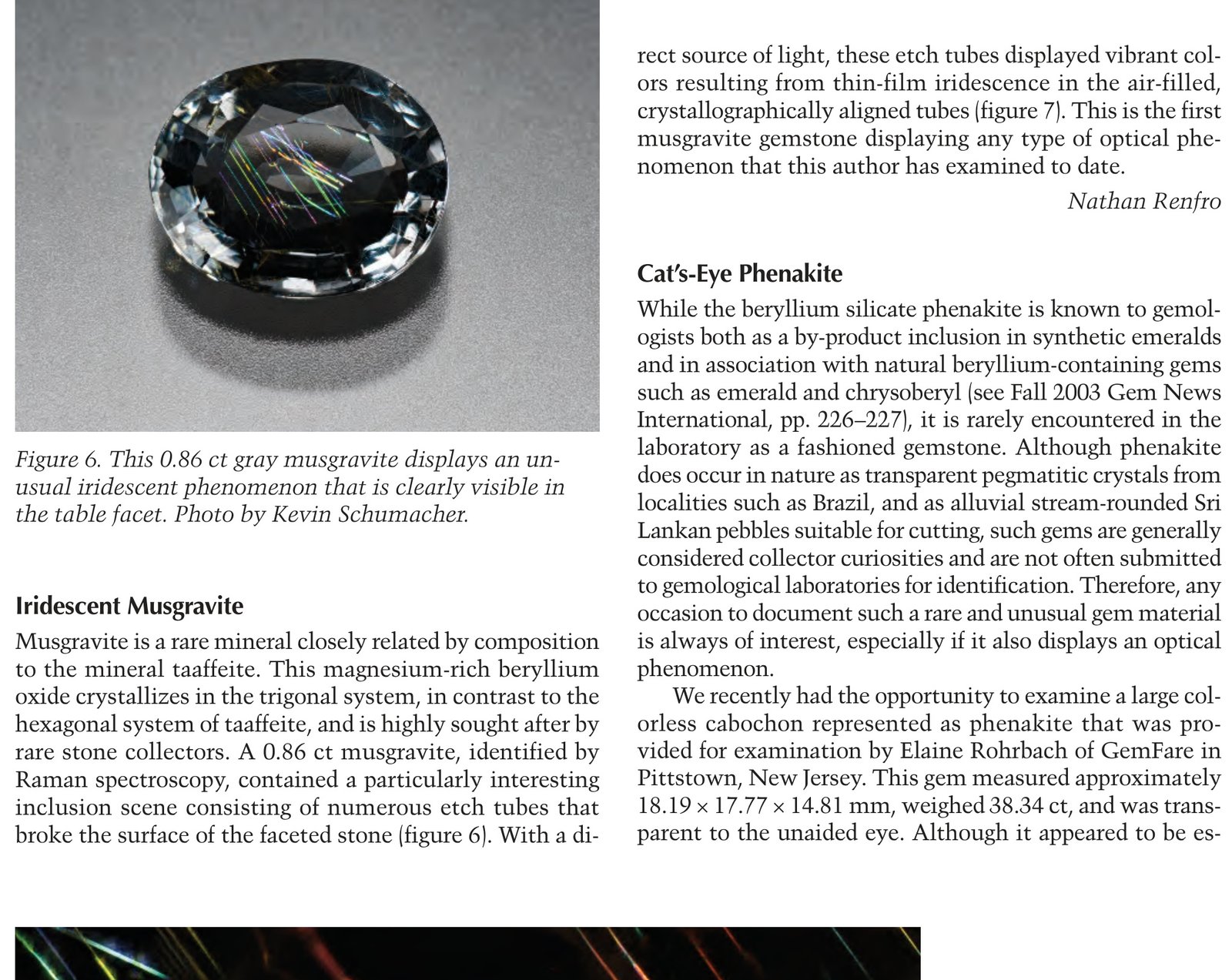
For the professional, the practical frame: “every diamond tells a story” is literally true via its inclusions. Garnet (pyrope), chromite, olivine, clinopyroxene, eclogitic minerals (the ferropericlase Micro-World case, G&G Winter 2016, is a lower-mantle example) are the provenance fingerprints geologists use to assign peridotite vs. eclogite paragenesis. What a grader sees as a blemish is often a petrologist’s data point — a framing that, as Module 7 will show, also changes how you can ethically reframe a clarity story for a client.
A caution from the literature, not the folklore: origin claims. No one can look at a polished diamond and say “Jwaneng” with confidence; provenance science (the G&G “microbarometers,” coesite, and AGU-provenance conference notes in the handout) works statistically on suites and inclusions, not on a customer’s certificate. This is why the trade’s provenance schemes (CanadaMark, Botswana’s certification, De Beers’ TracrMine lineage back to the 1990s) were built at the rough/parcel stage, tracking chains of custody — see Module 3’s Canada section.
Fibrous growth, “diamond in diamond,” and the second growth
Three of the handout’s A4 pieces describe how the carbon actually accretes, which explains features graders meet daily:
- Fibrous vs. gem growth. Some diamonds (cuboids, framesites, steinmannite carbonados) grow as radial fibers of microcrystalline material; the lattice is full of sub-microscopic inclusions, which is why carbonado is black, tough, and industrial-grade only. Ball’s 1948 “Industrial Diamonds and Their Uses” (cited in A7) is the trade’s classic treatment of this population — roughly 80% of mined carat weight never reaches a display case.
- Multi-stage growth. The “Diamond in Diamond” Lab Notes (G&G Spring 2015) documented a second-generation gem crystal overgrown on an older diamond fragment. Growth interruptions are common; they produce graining (Module 7), color zoning (Module 8’s “color-zoned pavilions” treatment case), and the “irregular/resorbed” look of CLIPPIR rough.
- Resorption. Once a diamond exists, hot mantle fluids can partially dissolve it (rounding faces, creating frosted or skeletal shapes). Resorbed surfaces on the Letšeng CLIPPIR rough in GIA’s figure are the visual tell — and they explain why some large rough is broken fragments of once-larger diamonds (Smith 2017): the biggest polished stones in history are survivors of both the mine and the dissolution.
What “deep time” means for a family buying a stone
The numbers that recur in the G&G geology corpus: lithospheric gem diamonds commonly formed between ~1 and 3.5 billion years ago (Archean-Proterozoic mantle events); the kimberlite eruptions that delivered them are younger, from ~200 Ma to a few tens of Ma (Canada’s Slave craton pipes ~55 Ma; Namibian marine gravels reworked from Miocene–Recent). The stone in a Victorian ring already predates complex life. There is no legitimate way to manufacture that; it is a fact the seller can own as plainly as the 4Cs — and it is the correct answer when a client asks “is the story true, or is it marketing?”
Mechanisms in plain order (the recitation for this module)
Say this as five sentences, then stop reciting and start using it:
- Diamond = carbon under ≥ ~4.5–6 GPa; stable only in ancient, cold mantle roots (150–200 km) and in the deep transition zone (360–750 km).
- Ordinary gem diamonds mostly formed from fluid/melt metasomatism in the keel; most are type Ia — nitrogen gathered into aggregates over geologic time, which is also why some are yellow and all are “type I.”
- The large, pure, D-color family (CLIPPIR) crystallized from metallic liquid superdeep, was resorbed into odd shapes, and rode up in kimberlite anyway.
- Kimberlite volcanism (volatiles + marginal melting) delivered the whole inventory to the surface fast enough for metastability to survive.
- Erosion then made the placers; humans have always been, geologically speaking, latecomers to the deposit — the Eureka child, Wells at Premier, till sampling in Saskatchewan (Module 3) all worked re-worked or half-exposed versions of (1)–(4).
Myths this module kills
- “All diamonds form the same way.” Two (or five, per Shirey & Shigley Fig. 4) distinct origin families with different market personalities.
- “Carbonado / black diamond is a meteorite diamond.” Impact-related diamonds exist; the commercial fibrous black materials are terrestrial growth products (and, for treated blacks, see Module 12’s 1990 Kammerling suite study). The “meteorite” story is marketing that outlived its sources.
- “Older is better.” Age of formation is a geologic fact with no grading consequence; a 3 Ga IaB stone can grade Z/I1 and a 0.9 Ga stone can grade D/IF. Age sells narrative, not value.
- “Lab-grown means ‘fake’.” A CVD/HPHT stone reproduces step (1)–(2) physics in a reactor; its history differs, which matters for disclosure and pricing (Modules 11–12), not for optical behavior.
Self-check
- Draw the two stability conditions for natural diamond retention and name the geological province that satisfies them.
- What three ingredients make kimberlite, and why does that matter for “where deposits are”?
- Define CLIPPIR and the inclusion assemblage that identified it. Why was offcut the enabling material?
- Two isotope/element clocks inclusions drive: what does each date?
- Why does the lithospheric/superdeep split make large D-type-IIa supply structurally scarce? Give the Smith et al. 2017 sentence that states it.
- Name one feature of multi-stage growth and where a grader encounters it.
- What is the honest limit of “origin determination” for a finished polished diamond?
Further reading (GIA handout, A4 — full citations in `references/`)
Shirey & Shigley 2013; Smith, Shirey & Wang 2017 (with Smith et al. 2016, Science); GIA Research News 2016 (CLIPPIR); Pay et al. 2014 ×3 (Carnegie dating); Smith & Moe 2016 ferropericlase Micro-World; Breeding 2015 Ardo So Ver dykes; Johnson & Moe 2015 diamond-in-diamond; Lu 2009 coesite microbarometers; Kirkley et al. 1991; Diehl & Herres 2004 X-ray fingerprinting (read alongside Module 5); Meyer & Gübelin 1981 ruby-in-diamond; Lonsdale 1947 single-crystal diamonds (the crystallographic foundation under everything above).
Counter Simulation: How Diamonds Form — Mantle Science & Inclusions
3 Scenarios • Earth Formation
Treating the stone as a manufactured factory commodity, reciting “It’s a diamond, carbon under pressure, takes a long time to make.”
“This diamond crystallized between 150 and 200 kilometers beneath the continental crust within the Earth’s upper mantle, enduring temperatures above 2,000° Fahrenheit and pressures exceeding 725,000 pounds per square inch. Most natural diamonds formed between one and three billion years ago—before multicellular life existed on our planet. You are not simply wearing fine jewelry; you are wearing a preserved fragment of deep Earth history.”
Apologizing for inclusions, saying “Don’t worry too much about that flaw on the certificate, nobody can see it with the naked eye anyway.”
“In gemology, we view these inclusions not as defects, but as geological birthmarks. Under 10x magnification, you can see a microscopic crystal of pyrope garnet trapped inside the diamond lattice as it grew over billions of years. That tiny mineral capsule is the scientific signature of deep mantle peridotite. It provides irrefutable physical proof that this diamond formed in the crucible of the ancient Earth.”
Repeating the popular misconception that diamonds form from metamorphosed coal deposits in rock quarries.
“Diamonds do not form from coal; coal forms from ancient surface plants, whereas diamonds formed hundreds of miles below where plant life could never exist. Diamonds were transported to the Earth’s crust by ancient, supersonic volcanic eruptions called kimberlite pipes. If that magma elevator had traveled even slightly slower, the carbon would have expanded and transformed into graphite. Every polished gem is a survivor of an extraordinary geological journey.”
🔬 Scientific Detail: Deep Mantle Petrology & Thermodynamics
Thermodynamic Stability Field of Diamond vs. Graphite
Diamonds are authentic messengers from Earth’s upper mantle, crystallized at depths between 150 and 250 kilometers (with super-deep diamonds originating at depths exceeding 660 km within the transition zone and lower mantle):
| Geological Parameter | Mantle Lithosphere (Diamond Stability) | Crustal Surface Conditions (Graphite Stability) |
|---|---|---|
| Operating Pressure | 4.5 – 6.0 GPa (~45,000 – 60,000 atmospheres) | 0.0001 GPa (1 atmosphere) |
| Operating Temperature | 950°C – 1,350°C | Ambient (20°C) |
| Carbon Phase | $sp^3$ Diamond lattice ($Fd\bar{3}m$, $\rho = 3.52\text{ g/cm}^3$) | $sp^2$ Graphite layers ($P6_3/mmc$, $\rho = 2.26\text{ g/cm}^3$) |
| Ascent Transport Mechanism | Kimberlitic / lamproitic volatile-rich magma traveling at 30 to 100 km/h | Slow tectonic uplift results in complete graphitization into worthless carbon |
| Geochronology (Age) | 1.0 to 3.5 billion years old (Precambrian cratonic keels) | Host kimberlite pipes are much younger (typically 50–1200 million years old) |
📚 Research References
- Stachel, T. & Harris, J.W. (2008). “The Formation of Large Diamonds in Earth’s Mantle.” Geology, 36(9), 743–746.
- Shirey, S.B. et al. (2013). “Diamonds and the Geology of Mantle Carbon.” Reviews in Mineralogy and Geochemistry, 75(1), 355–421. DOI: 10.2138/rmg.2013.75.12
- Smith, E.M. et al. (2016). “Large Gem Diamonds from Metallic Liquid in Earth’s Deep Mantle.” Science, 354(6318), 1403–1405. DOI: 10.1126/science.aal1303
Geochemical Database: Mantle thermodynamic equilibrium data cross-referenced with PubMed and Mineralogical Society of America reviews.