Lab-Grown, Natural, Simulant: The Disclosure Conversation
The three words that are not interchangeable
“Isn’t a lab-grown diamond chemically identical and a fraction of the cost? Why would anyone pay more for a mined stone?”
“You’ve done great research — and you are 100% correct about the chemistry. Both are pure crystallized carbon with identical sparkle and hardness. What the price difference reflects is finite geology versus renewable technology. A natural diamond is an irreplaceable treasure formed over a billion years ago, while a lab-grown diamond is an engineering triumph that can be reproduced on demand. Neither choice is wrong — it simply depends on whether you are investing in finite heirloom provenance or maximizing size and brilliance for your present budget.”
A client points at a ring in the case and asks, “Is this a real diamond?” You say yes. She buys it, wears it for a year, and then a friend’s jeweler tells her it is “not a real diamond, just something that looks like one.” She comes back angry, and you pull the paperwork: the stone is a lab-grown diamond, clearly marked as such on the original receipt and the report. Nothing was hidden. But “yes, it’s real” without the qualifier is exactly the kind of answer that creates this moment, because to her, real and natural meant the same thing, and you let her keep believing that.
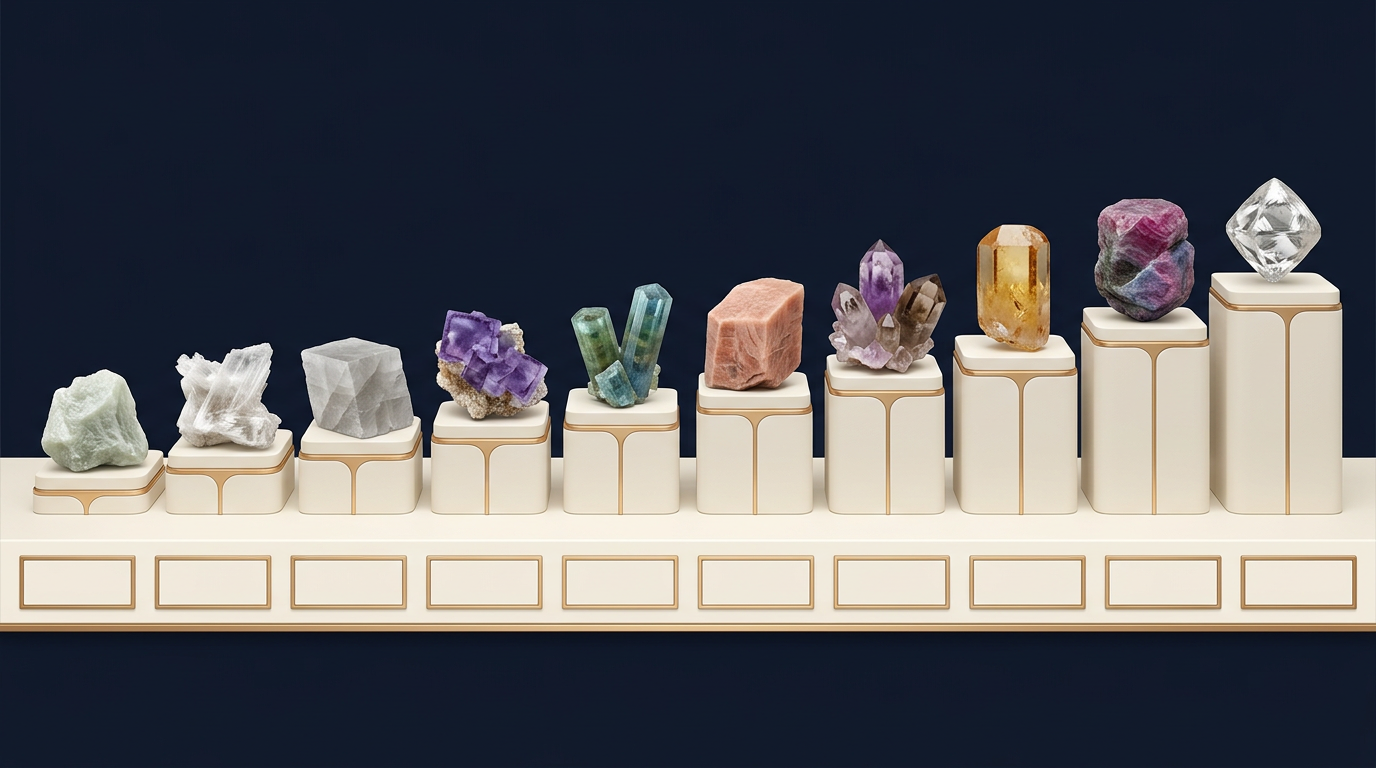
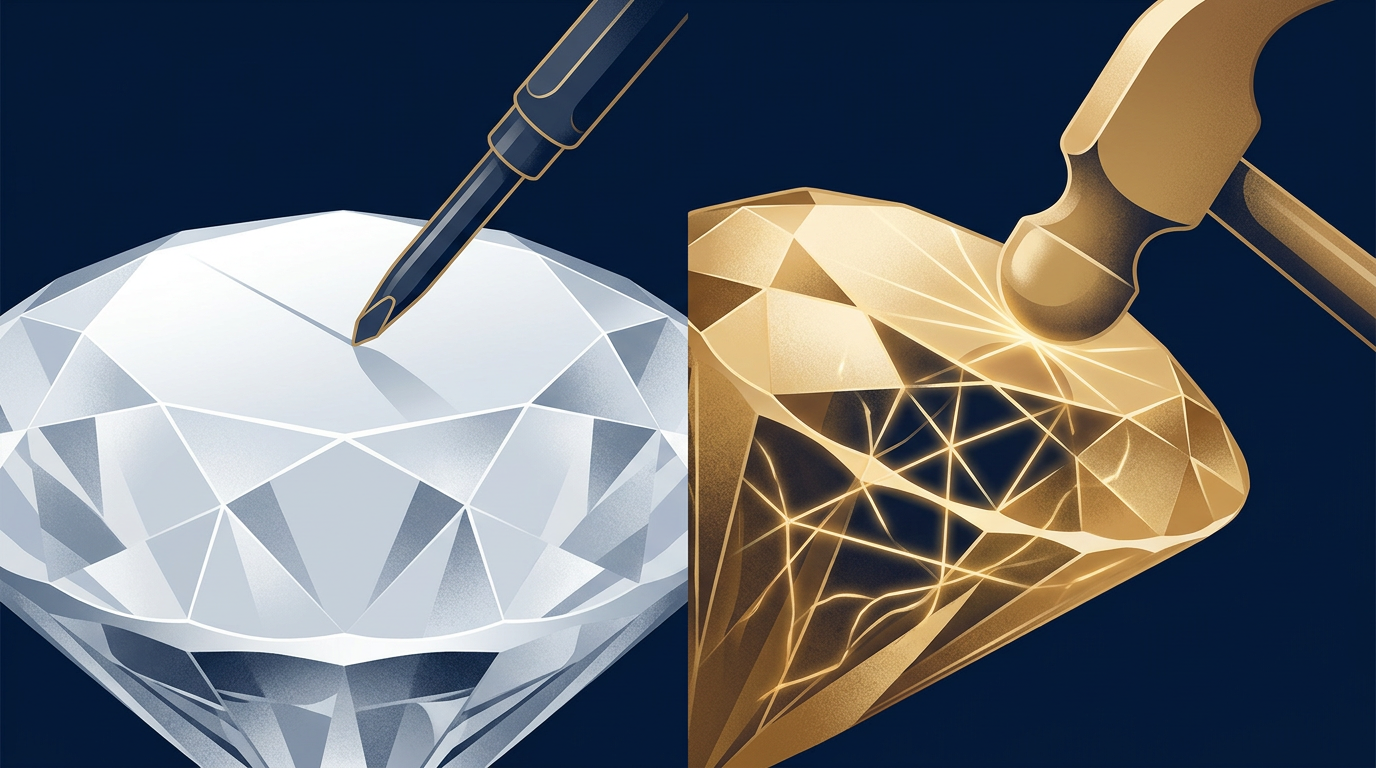
This is not a rare misunderstanding. Lab-grown diamonds, natural diamonds, and diamond simulants are three different things, and mixing up the vocabulary is not just imprecise, it can be a legal violation. This module gives you the distinctions, the disclosure rules that govern what you must say, the technical background to answer follow-up questions credibly, and language that builds trust instead of triggering a return.
Why this matters
The Federal Trade Commission’s Jewelry Guides make disclosure a legal requirement, not a courtesy. Under 16 CFR Part 23, a lab-grown diamond must be disclosed as laboratory-grown, laboratory-created, or an equivalent qualifier at the point of sale, and selling one as simply “a diamond” without that qualifier is a deceptive trade practice. This is not a gray area you can soften with sales language. Getting it right protects your store from legal exposure and protects the sale itself: a client who understands what she is buying does not come back six months later feeling misled, and does not leave a review saying so.
This also sits directly on your close rate. Lab-grown diamonds are a fast-growing part of bridal and fashion jewelry, and clients increasingly ask about them by name. An associate who can explain the differences confidently, without sounding like they are talking someone out of a sale or into one, converts more of these conversations than one who dodges the question.
MEDIA link-out C1-M04-D1 “GIA Aligns Lab-Grown Reports with FTC Standards” by Rapaport (trade press, reporting on GIA policy)
Why here: explains that GIA stopped using the word “synthetic” for lab-grown diamonds and now discloses growth method directly on the report.
Source: https://rapaport.com/news/gia-aligns-lab-grown-reports-with-ftc-standards/
Use: link-out
Notice the vocabulary shift: GIA’s own reports now say “laboratory-grown,” not “synthetic.” Match your own language to this, since “synthetic” reads to many clients as fake, and that is not accurate.
The FTC has actually enforced this: the 2019 warning letters
This is not a theoretical rule sitting unused in a regulation book. In April 2019, the FTC sent formal warning letters to eight companies that were advertising simulated or laboratory-created diamonds without adequately disclosing that the products were not mined diamonds. The letters explicitly cautioned the companies against using the word “diamond” alone to describe a lab-created stone, and warned that continued noncompliance with the Jewelry Guides “may result in enforcement actions if the FTC determines the companies engaged in unfair or deceptive acts or practices.” The FTC’s own recommended language mirrors what this module has already told you: laboratory-grown, laboratory-created, or a manufacturer-specific “[name]-created” qualifier, used clearly and conspicuously, immediately before the word “diamond” in any advertising.
Knowing that real companies received real warning letters over exactly this issue is worth having in your back pocket, not to recite to a client, but so that you understand this rule has teeth and a history of being enforced, not just a policy manual gathering dust.
Natural, lab-grown, and simulant are three different categories
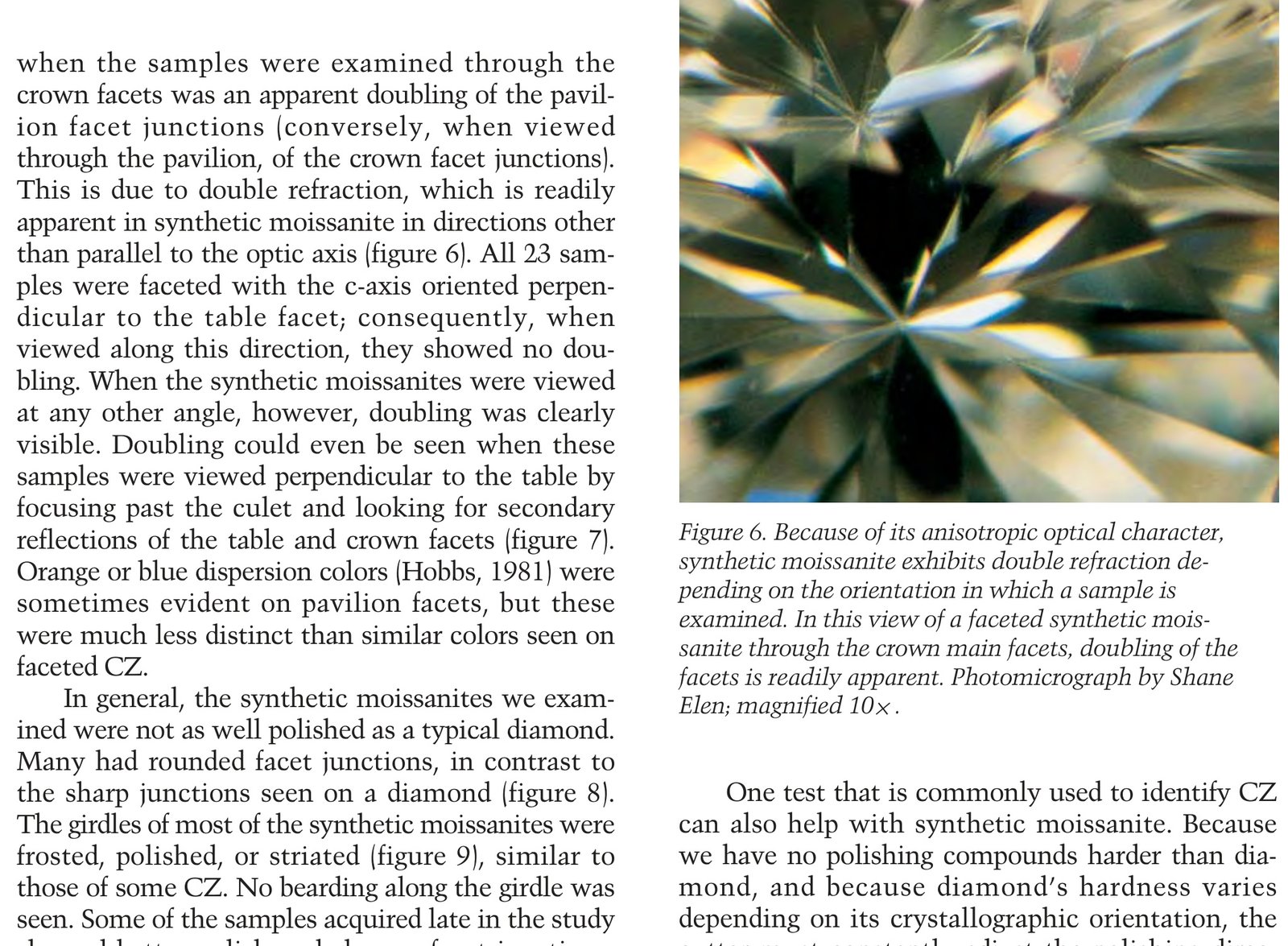
Keeping these three words straight is the whole job. Confusing any two of them with each other is the single most common source of client complaints in this area.
| Category | What it physically is | Chemical and optical match to a mined diamond |
|---|---|---|
| Natural diamond | Carbon crystallized under heat and pressure over geologic time, mined from the earth | Is a diamond |
| Lab-grown diamond | Carbon crystallized in a controlled lab environment using CVD (chemical vapor deposition) or HPHT (high-pressure, high-temperature) methods | Is a diamond, with the same chemical composition and optical properties as a natural one |
| Diamond simulant (moissanite, cubic zirconia, white sapphire, and others) | A different mineral or lab-made material chosen because it resembles a diamond visually | Is not a diamond at all |
The distinction that trips people up: a lab-grown diamond is chemically, physically, and optically a diamond. The only difference from a natural stone is where it formed. A simulant is never a diamond, no matter how convincing it looks, because it is made of an entirely different material.
Client: “So is a lab-grown diamond basically the same as a cubic zirconia, just fancier?”
Associate: “No, and that’s a really common mix-up. A lab-grown diamond is carbon, grown in a lab instead of mined from the ground, and it’s chemically identical to a natural diamond. A cubic zirconia isn’t diamond at all, it’s a completely different material made to look similar. Lab-grown is a type of diamond. Cubic zirconia and moissanite are diamond look-alikes.”
How lab-grown diamonds are actually made: HPHT and CVD compared

Being able to explain, at a basic technical level, how a lab-grown diamond is produced turns a vague “it’s made in a lab” into something a curious client finds genuinely interesting rather than suspicious. There are two production methods, and they differ meaningfully in process, speed, and the physical shape of the rough crystal that results.
| Factor | HPHT (High-Pressure, High-Temperature) | CVD (Chemical Vapor Deposition) |
|---|---|---|
| Basic process | A diamond seed is placed with a carbon source and subjected to extreme pressure (roughly 5-6 gigapascals) and heat (roughly 1,400-1,600 degrees Celsius), mimicking the conditions deep in the earth’s mantle | A diamond seed sits in a low-pressure chamber filled with hydrogen and a carbon-containing gas (such as methane); the gas is ionized into plasma, and carbon atoms deposit onto the seed layer by layer |
| Pressure and temperature | Very high pressure and high temperature | Low pressure, lower temperature (roughly 700-900 degrees Celsius) |
| Typical growth time | Can take a few months to reach a desired size | Often just a few weeks |
| Resulting crystal shape | Grows in a cuboctahedron shape with multiple growth directions | Grows in a cubic shape with a single growth direction |
| Common use today | One of the original lab-grown methods; also used to post-treat some CVD stones to improve color | Now the more common method for gem-quality lab-grown diamond production, in part due to greater control over growth conditions |
Neither method is “more real” or “more fake” than the other; both produce actual diamond, carbon crystallized into a diamond lattice structure, just via different physical pathways. The GIA report for a lab-grown stone will state which method was used, and occasionally a stone will show evidence of both, when a CVD-grown diamond receives a post-growth HPHT treatment to improve or stabilize its color.
Client: “How long does it take to grow one of these?”
Associate: “It depends on the method. CVD, the more common one for jewelry-grade stones today, generally takes a few weeks. HPHT can take a couple of months. Neither is instant, and neither cuts corners on what the final stone actually is, it’s real diamond either way, the process is just different from how nature does it over millions of years.”
How the trade actually screens for lab-grown diamonds

A reasonable question, and one clients increasingly ask directly, is how anyone can actually tell a lab-grown diamond from a natural one if they are chemically and optically identical. The honest answer is that visual inspection alone cannot do this reliably, which is exactly why dedicated screening technology exists across the trade.
According to the Natural Diamond Council, there are roughly 40 different instruments on the market designed to help distinguish natural from lab-grown diamonds. Basic screening devices commonly use short-wave ultraviolet light and look for specific characteristics, most notably certain nitrogen-related features that form naturally over the geologic timescales natural diamonds experience but are typically absent or different in lab-grown material. For loose melee stones (very small diamonds, commonly used in pav\u00e9 settings), specialized high-throughput screening machines exist that can process large quantities of small stones at once, automatically flagging any that warrant closer laboratory examination.
MEDIA link-out C1-M04-D3 “Detecting Lab-Grown Diamonds That Deceive” by Rapaport (trade press)
Why here: explains the scale of screening technology in the trade, including the approximate number of detection instruments available and how melee-specific screening works.
Source: https://rapaport.com/analysis/detecting-lab-grown-diamonds-that-deceive/
Use: link-out
Knowing this exists is useful for two reasons: it lets you reassure a client that undisclosed lab-grown stones are a solvable, actively monitored problem in the trade rather than an unstoppable epidemic, and it explains why your own store’s intake and trade-in process (Module 9 covers disclosure in more depth) may include a screening step for incoming secondhand melee or loose stones.
Client: “If they’re identical, how does anyone even catch an undisclosed lab-grown diamond?”
Associate: “They’re identical to the naked eye, but not to specialized equipment. There are dozens of screening instruments in the trade built specifically for this, looking at things like certain nitrogen features that form differently depending on how the stone grew. It’s a real, actively used part of how the industry keeps things honest, not just a policy on paper.”
Telling diamond simulants apart
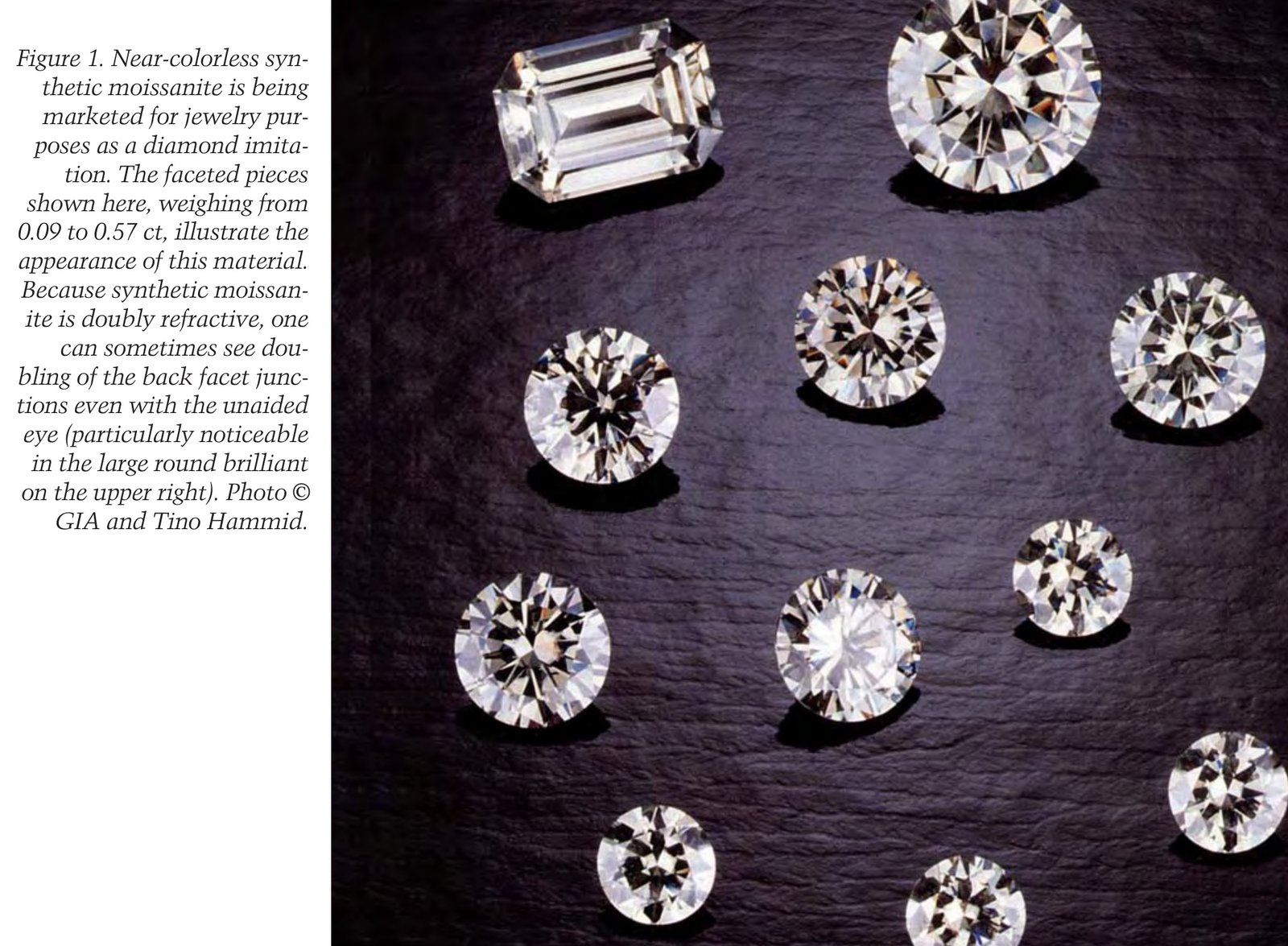
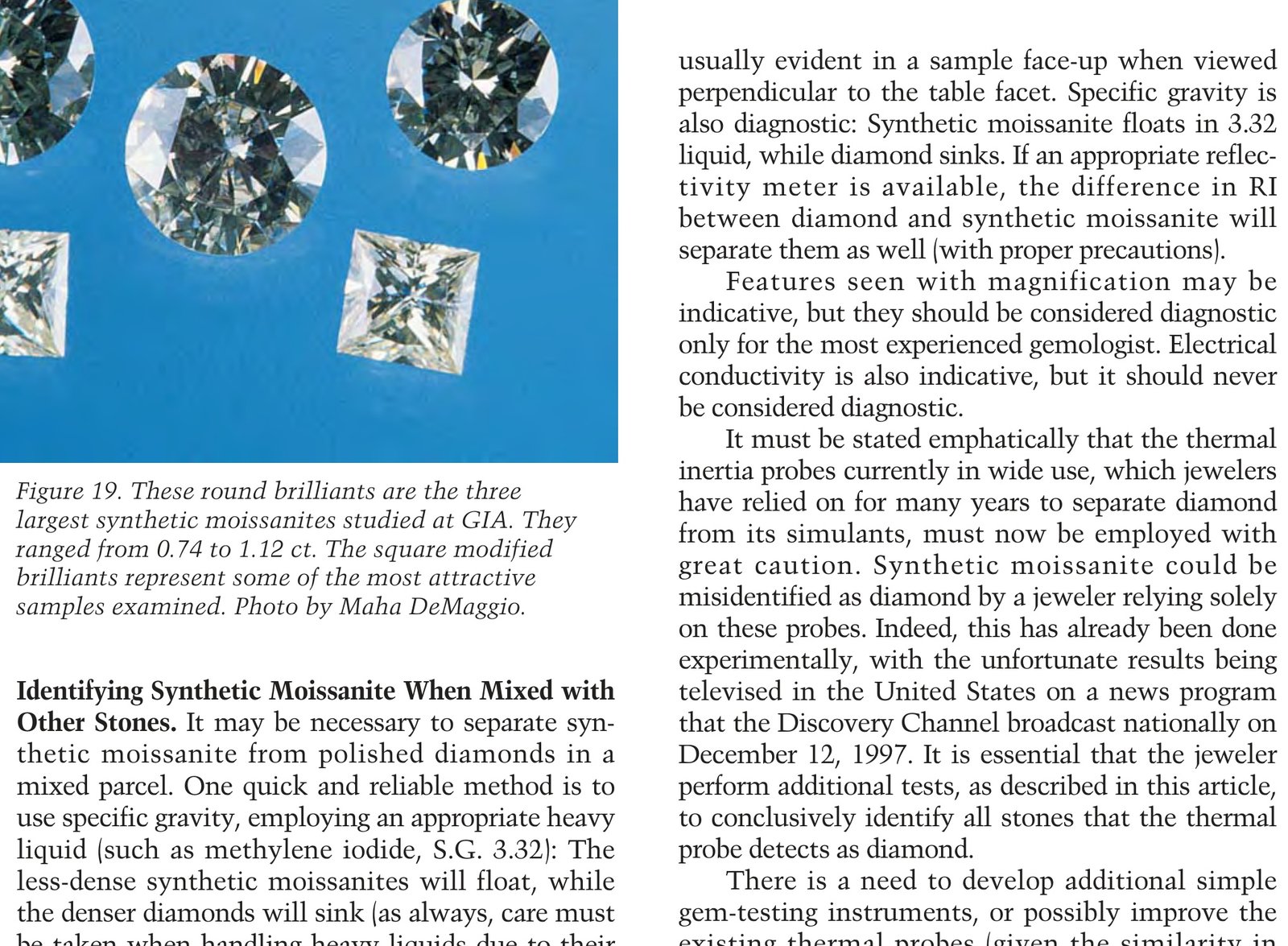
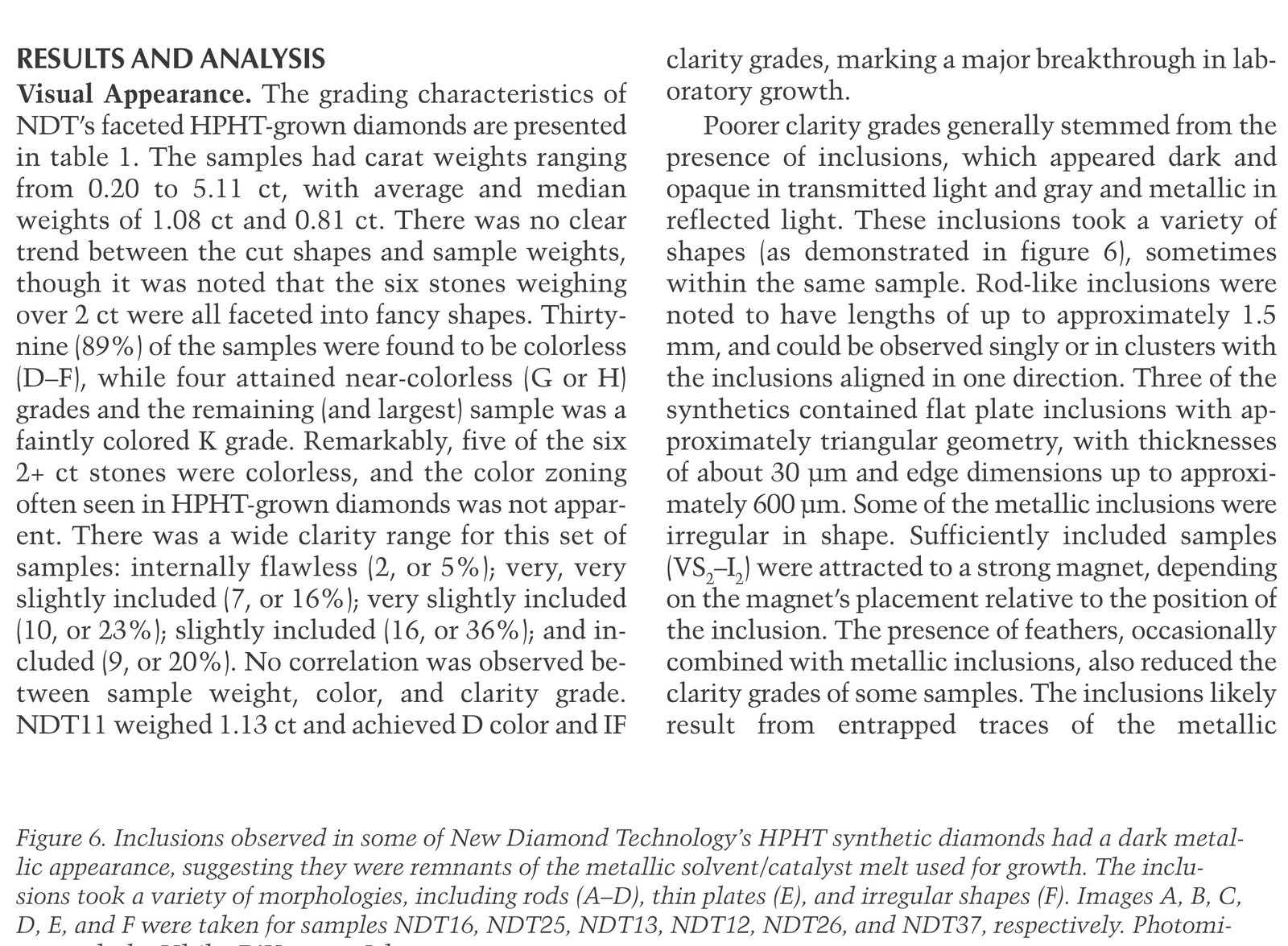
Moissanite and cubic zirconia are the two simulants you will see most often, and they are not the same as each other either. Moissanite is silicon carbide, with a hardness in the 8.5 to 9.25 range on the Mohs scale and a refractive index of 2.65, which is higher than a diamond’s. That higher refractive index is why moissanite throws more colorful, disco-ball-like flashes of light than a diamond does, which is actually a giveaway to a trained eye, not a flaw hidden from one. Cubic zirconia is a manufactured zirconium oxide, generally softer and less durable than moissanite, and it tends to look slightly duller and more prone to scratching over time.
MEDIA link-out C1-M04-D2 “Diamond simulant” by Wikipedia, citing published gemological sources
Why here: a neutral, verifiable summary of moissanite’s hardness (8.5-9.25), specific gravity, and refractive index relative to diamond and cubic zirconia.
Source: https://en.wikipedia.org/wiki/Diamond_simulant
Use: link-out
The rainbow-colored flash you sometimes see described online as a way to “catch” a fake diamond is really describing moissanite’s fire, not a defect. Point this out to a client who has done that research; it builds credibility that you know the material, not just the marketing.
Reading a lab-grown diamond’s report
Lab-grown diamonds that are graded receive a distinct report path. GIA issues these under its Laboratory-Grown Diamond Reports, which are visually different from natural diamond reports and explicitly state the growth method (CVD or HPHT), note any detected post-growth treatments such as color-enhancing HPHT treatment, and include a QR code linking to GIA’s report-check service. A lab-grown stone from GIA is also permanently inscribed on the girdle identifying it as laboratory-grown, so the physical stone carries the same disclosure as the paperwork.
- Confirm the report type before you say anything about the stone’s origin. A Laboratory-Grown Diamond Report is not the same document as a natural Diamond Grading Report, even though both use 4Cs language.
- Read the growth method aloud if the client asks. CVD and HPHT are both legitimate, and neither is “more real” than the other.
- Point out the girdle inscription under magnification. This is the physical proof, separate from the paper.
- Never omit the qualifier “laboratory-grown” in the line-item description, verbally or on the receipt. This is the specific point the FTC treats as mandatory.
Point-of-sale documentation: what belongs on the receipt
Disclosure is not just a spoken sentence, it has to survive on paper too. Point-of-sale documentation for a lab-grown diamond should use “laboratory-grown diamond” (or an equivalent qualifier) as the actual line-item description, not buried in a footnote or a separate attachment, and should include the carat weight, the certifying laboratory, and the report number on that same line. If your store’s receipt template does not already do this consistently, flag it to your manager. A verbal disclosure that is not matched on the paperwork is a weak position if a client ever disputes what they were told.
The same discipline applies to advertising and case signage. If a case groups lab-grown and natural stones together, each should carry its own clear label rather than a single sign for the whole case. This is the kind of detail a compliance review checks first, and it is also what protects you personally if a sale is ever questioned later.
A brief international comparison: disclosure rules are not identical everywhere
If you work in, or serve clients from, markets outside the US, it is worth knowing that lab-grown disclosure requirements exist in multiple jurisdictions but are not legally identical. All major regimes (the US, the EU, and India, among others) require some form of clear disclosure that a diamond is laboratory-grown rather than mined, but the legal force and specific mechanics differ. In the US, the FTC’s Jewelry Guides are technically interpretive guidance rather than a standalone statute, meaning a violation becomes actionable specifically as a deceptive act under Section 5 of the FTC Act rather than as a direct breach of the Guides themselves. Other jurisdictions structure their requirements differently. The practical takeaway for the sales floor: the specific legal mechanism varies, but the underlying expectation, clear disclosure before the word “diamond,” is consistent everywhere you are likely to work.
Regional variation: how the lab-grown conversation shifts by market
- United States: FTC-driven disclosure rules apply directly, and clients are increasingly likely to ask about lab-grown options by name, particularly in the bridal category.
- United Kingdom: Disclosure expectations are broadly similar, with UK consumer protection law imposing comparable clear-labeling requirements, though the specific regulatory citation differs from the US FTC framework.
- India and the Gulf: Lab-grown diamonds have grown rapidly as a manufacturing and export category in India specifically, so associates in these markets may encounter more client familiarity with the category, alongside potentially more price-sensitive comparison shopping between natural and lab-grown options.
- Cruise and travel retail: Compressed-time selling means the disclosure should still happen early and clearly, but the deeper technical explanations (HPHT vs. CVD mechanics, screening technology) are better reserved for a client who asks follow-up questions rather than volunteered by default given time constraints.
The disclosure script
Say the qualifier every time, early, and without apology. Treating the disclosure as a footnote is what creates the sense, later, that something was hidden.
Client: “I love this one. Is it a natural diamond?”
Associate: “This particular stone is a laboratory-grown diamond, which means it’s chemically and optically a real diamond, just grown in a controlled lab environment instead of mined. If natural origin matters to you for this piece, I have natural options in a similar look, and I can walk you through the price difference between the two.”
That answer does three things: names the category correctly, explains what “lab-grown” actually means so the client is not left assuming it is a simulant, and offers a natural alternative without implying either choice is wrong. Clients choose lab-grown diamonds for real reasons, including price and sourcing preferences, and your job is to inform the choice, not steer it.
On the floor: applying it this week
- Monday: Locate every lab-grown diamond in your case and confirm each has correct report-type documentation and, if GIA-graded, a girdle inscription you can show a client under magnification.
- Tuesday: Practice saying “laboratory-grown diamond” as your default phrase, out loud, until it replaces any habit of saying just “diamond” for these stones.
- Wednesday: If your store carries simulants, handle one next to a diamond and a lab-grown stone. Note the visual and weight differences you can describe honestly.
- Thursday: Rehearse the disclosure script with a colleague playing a skeptical client who thinks lab-grown means fake. Also practice explaining HPHT vs. CVD in plain language, in under 30 seconds.
- Friday: Ask your manager how your store documents lab-grown disclosure on receipts and invoices, and confirm you are matching that standard, and ask whether your store uses any screening equipment for incoming melee or trade-in stones.
Objections, mistakes, and edge cases
| Situation | The trap | Better move |
|---|---|---|
| Client asks if lab-grown is “fake” | Agreeing or getting defensive | “It’s a real diamond, chemically and optically. The only difference is where it formed. It’s not a simulant like moissanite or cubic zirconia, which aren’t diamond at all.” |
| Client wants the cheapest sparkly option | Recommending a simulant without naming it clearly | Name the material explicitly: “This is moissanite, not a diamond. It’s a different stone that resembles one.” |
| Client assumes fluorescence or a loupe test can prove lab-grown vs. natural | Reinforcing a DIY myth | Explain that labs use multiple scientific methods and dedicated equipment to determine origin, not a single visual test, and offer to have a stone verified through a report if it matters to them. |
| Omitting the qualifier to close faster | Saying just “diamond” for a lab-grown stone | Say “laboratory-grown diamond” every time, verbally and in writing. This is a compliance requirement, not a style choice. |
| Client conflates lab-grown diamond with a diamond simulant | Not correcting the confusion | Use the three-category table from this module to separate the concepts clearly, without judgment either way. |
| Client asks which growth method is “better” | Declaring a winner | Explain both are legitimate; CVD is currently more common for gem-quality stones due to growth control, but neither is inferior diamond material |
| Client asks how anyone catches undisclosed lab-grown stones | Saying it’s impossible to detect | Explain that dedicated screening equipment exists across the trade specifically for this purpose |
| Client from outside the US assumes disclosure rules do not apply | Not addressing this | Explain that disclosure expectations exist in essentially every major market, even if the specific legal mechanism differs |
| Trade-in melee stones with unclear origin | Skipping verification | Follow your store’s screening process for incoming loose or melee stones before making any origin claim |
Self-check
- Can you state, in one sentence, why a lab-grown diamond is chemically a diamond and a simulant is not?
- Can you name the two growth methods used for lab-grown diamonds?
- Can you explain, at a basic level, how HPHT and CVD growth actually differ in process, pressure, and time?
- Can you name two common diamond simulants and one physical property that distinguishes each from a diamond?
- Do you know the FTC’s core disclosure rule for lab-grown diamonds at point of sale?
- Can you point out a girdle inscription on a lab-grown stone and explain what it proves?
- Can you deliver the disclosure script without sounding apologetic or evasive?
- Can you explain why fluorescence or a loupe alone cannot reliably prove natural versus lab-grown origin?
- Can you describe what belongs on a receipt line item for a lab-grown diamond sale?
- Can you name the year the FTC sent warning letters over undisclosed lab-grown diamond marketing, and to roughly how many companies?
- Can you explain, in plain language, how trade screening equipment distinguishes natural from lab-grown diamonds?
- Can you explain why disclosure rules exist in multiple countries even though the specific legal mechanism differs?
- Can you explain why CVD has become the more common method for gem-quality lab-grown diamonds?
- Can you adjust how much technical detail you volunteer based on a compressed-time selling environment?
If you missed more than three, review the resources below before your next lab-grown conversation.
Go deeper
- FTC Jewelry Guides, 16 CFR Part 23 (ecfr.gov) – the federal regulation governing gemstone and diamond disclosure; read the treatment-disclosure and origin-disclosure sections closely. 30-45 minutes.
- GIA Aligns Lab-Grown Reports with FTC Standards (rapaport.com) – background on how GIA changed its own reporting language and report structure for lab-grown diamonds. 10 minutes.
- Detecting Lab-Grown Diamonds That Deceive (rapaport.com) – a trade-press overview of screening technology and its prevalence. 15 minutes.
- The many facets of advertising diamonds with clarity (ftc.gov) – the FTC’s own 2019 blog post describing its warning letters to eight companies over lab-grown disclosure. 10 minutes.
- Diamond simulant (Wikipedia, sourced from gemological literature) – a neutral technical comparison of moissanite, cubic zirconia, and diamond. 15 minutes.
Media credits
- Article – GIA Aligns Lab-Grown Reports with FTC Standards, by Rapaport, https://rapaport.com/news/gia-aligns-lab-grown-reports-with-ftc-standards/. Linked, not re-hosted.
- Reference article – Diamond simulant, Wikipedia contributors, https://en.wikipedia.org/wiki/Diamond_simulant. Linked, not re-hosted.
- Analysis article – Detecting Lab-Grown Diamonds That Deceive, by Rapaport, https://rapaport.com/analysis/detecting-lab-grown-diamonds-that-deceive/. Linked, not re-hosted.
🔬 Scientific Detail: Synthesis & Spectroscopy
Thermodynamic & Physical Comparison of Growth Methods
Both High-Pressure High-Temperature (HPHT) and Chemical Vapor Deposition (CVD) synthesize authentic diamond (pure elemental carbon in the $Fd\bar{3}m$ cubic system), but they operate in vastly different thermodynamic regimes and leave diagnostic spectroscopic fingerprints:
| Parameter | HPHT (High Pressure High Temperature) | CVD (Chemical Vapor Deposition) |
|---|---|---|
| Thermodynamic State | Carbon is thermodynamically stable (mimics mantle conditions) | Carbon is metastable; diamond phase kinetically favored via atomic hydrogen etching |
| Operating Pressure | 5.0 – 6.0 GPa (~50,000 – 60,000 atmospheres) | 10 – 100 Torr (~0.01 – 0.13 atmospheres, vacuum chamber) |
| Operating Temperature | 1,400°C – 1,600°C | 700°C – 900°C (activated via microwave plasma) |
| Feedstock / Catalyst | Graphite / carbon source dissolved in metallic flux catalyst (Fe, Ni, Co alloys) with Ti/Zr nitrogen getters | Hydrocarbon gas (methane, $\text{CH}_4$, typically 0.5–5%) diluted in high-purity hydrogen ($\text{H}_2$) |
| Crystal Habit & Growth | Cuboctahedral form exhibiting multiple growth sectors ({111}, {100}, {110}, {113}) | Tabular / cubic crystal habit grown layer-by-layer along single direction ({100} homoepitaxy) |
| Diagnostic Spectroscopic Defect | Ni/Fe-related optical defect centers; cross-shaped or hourglass luminescence zoning under deep UV | Silicon-vacancy doublet ($[\text{Si-V}]^-$ at 737 nm) detected via 633 nm laser photoluminescence; NV centres ($575\text{ nm}$ / $637\text{ nm}$) |
| Diagnostic Inclusions | Flux metal inclusions showing distinct metallic luster, high relief, and ferromagnetism (attracted to rare-earth magnets) | Non-diamond carbon pinpoints, graphitic films along growth planes; non-metallic |
Gemological Discrimination: Diamond vs. Lookalikes (PubChem Verified Data)
When clients ask about diamond simulants, having exact, verifiable physical figures establishes effortless authority:
| Property | Diamond (Natural & Lab) | Moissanite (Silicon Carbide) | Cubic Zirconia (ZrO₂) |
|---|---|---|---|
| Chemical Formula | C (Carbon) | SiC (Silicon carbide) | ZrO₂ (Zirconium dioxide + $\text{Y}_2\text{O}_3$) |
| PubChem CID | 5462310 | 9863 | 62395 |
| Mohs Hardness | 10 | 9.5 | 8.0 – 8.5 |
| Refractive Index ($n$) | 2.417 (Isotropic) | 2.654 – 2.697 (Doubly refractive, $\Delta n = 0.043$) | 2.15 – 2.18 (Isotropic) |
| Dispersion (“Fire”) | 0.044 | 0.104 (2.36× diamond) | 0.058 – 0.066 (1.4× diamond) |
| Specific Gravity | 3.51 – 3.53 | 3.21 – 3.23 (Slightly lighter) | 5.65 – 5.95 (~1.7× heavier!) |
| Thermal Conductivity | ~2,200 W/(m·K) | ~360 – 490 W/(m·K) | ~2.0 – 2.7 W/(m·K) (Insulator) |
| Electrical Nature | Dielectric insulator ($E_g = 5.47\text{ eV}$) | Semiconductor ($E_g = 3.0\text{–}3.3\text{ eV}$) | Dielectric insulator |
⚖️ Regulatory Context: FTC Legal Standards & Enforcement
The Federal Trade Commission (FTC) Jewelry Guides: 16 CFR Part 23
Consumer disclosures for laboratory-grown diamonds are federally codified in the Guides for the Jewelry, Precious Metals, and Pewter Industries (16 CFR Part 23, revised July 2018 at 83 FR 40666). In the United States, selling or advertising a lab-created diamond without explicit qualification is legally defined as an unfair or deceptive trade practice under Section 5 of the FTC Act (15 U.S.C. § 45).
Strictly Prohibited & High-Risk Marketing Terms
- “Cultured Diamond”: Under Note 1 to § 23.27, using “cultured” alone without an approved prefix (“laboratory-grown”, “laboratory-created”) is deceptive, because reasonable consumers confuse the term with biological culturing processes (like cultured pearls).
- “Real”, “Genuine”, or “Natural”: Marketers may not describe a lab-grown stone as “natural” or “genuine.” While physically a diamond, using “real diamond” without qualifying “lab-grown” leads consumers to believe the stone was mined from the earth.
- Buried Disclosures on Social Media: The FTC explicitly established that hashtag disclosures (e.g., placing
#labgrowndiamondin an Instagram caption or behind a “more” fold) fail the Clear and Conspicuous legal threshold. The qualifier must be immediately adjacent to the product noun in the primary text. - Environmental & Sustainability Claims (The Green Guides, 16 CFR Part 260): In its April 2019 enforcement warnings to 8 jewelry manufacturers, the FTC cautioned that marketing lab-grown diamonds as “eco-friendly,” “sustainable,” or “carbon-neutral” without rigorous lifecycle assessments documenting reactor power grid sources constitutes deceptive greenwashing.
📚 Research References
The following peer-reviewed studies and regulatory references provide scientific documentation for growth kinetics, spectroscopic identification, and disclosure jurisprudence:
CVD & HPHT Diamond Synthesis
- Schwander, M. & Partes, K. (2011). “A Review of Diamond Synthesis by CVD Processes.” Diamond and Related Materials, 20(9), 1287–1301. DOI: 10.1016/j.diamond.2011.08.005
- Lee, S.T., Lin, Z. & Jiang, X. (1999). “CVD Diamond Films: Nucleation and Growth.” Materials Science and Engineering: R: Reports, 25(4), 123–154. DOI: 10.1016/s0927-796x(99)00003-0
- Martineau, P.M. et al. (2009). “High Crystalline Quality Single Crystal CVD Diamond.” Physica Status Solidi (a), 206(9), 1965–1974. DOI: 10.1002/pssa.200982215
- Sumiya, H. & Satoh, S. (1996). “High-Pressure Synthesis of High-Purity Diamond Crystal.” Diamond and Related Materials, 5(11), 1359–1365. DOI: 10.1016/0925-9635(96)00559-6
- Shigley, J.E. et al. (1986). “The Gemological Properties of the Sumitomo Gem-Quality Synthetic Yellow Diamonds.” Gems & Gemology, 22(4), 192–208. DOI: 10.5741/gems.22.4.192
- Diggle, P.L. et al. (2020). “Decoration of Growth Sector Boundaries with Single Nitrogen Vacancy Centres in As-Grown Single Crystal HPHT Synthetic Diamond.” Physical Review Materials, 4(9), 093402. DOI: 10.1103/PhysRevMaterials.4.093402
Spectroscopic Identification & Screening
- Eaton-Magaña, S. & Breeding, C.M. (2021). “Raman and Photoluminescence Mapping of Gem Materials.” Minerals, 11(2), 177. DOI: 10.3390/min11020177
- Wang, W. et al. (2012). “CVD Synthetic Diamonds from Gemesis Corp.” Gems & Gemology, 48(2), 80–97. DOI: 10.5741/gems.48.2.80
- Martineau, P.M. et al. (2004). “Identification of Synthetic Diamond Grown Using Chemical Vapor Deposition (CVD).” Gems & Gemology, 40(1), 2–25. DOI: 10.5741/gems.40.1.2
- Shigley, J.E. et al. (1993). “The Gemological Properties of Russian Gem-Quality Synthetic Yellow Diamonds.” Gems & Gemology, 29(4), 228–248. DOI: 10.5741/gems.29.4.228
Regulatory & Consumer Disclosure Law
- Overton, T.W. (2004). “Gem Treatment Disclosure and U.S. Law.” Gems & Gemology, 40(2), 106–127. DOI: 10.5741/gems.40.2.106
- Kysar, D.A. (2004). “Preferences for Processes: The Process/Product Distinction and the Regulation of Consumer Choice.” Harvard Law Review, 118(2), 525–642. DOI: 10.2307/4093392
✦ Floor Counter Dialogues & FTC Compliance Playbook
Master verbatim objection handling for the sales counter, side-by-side gemological property matrices, and FTC 16 CFR Part 23 disclosure protocols.
Wait, so lab-grown… is that just fake diamond like cubic zirconia?
That is the most common misconception on the market! The short answer is: no, it is 100% real diamond. Chemically, physically, and optically, it is pure carbon crystallized in the cubic system—identical to a mined diamond. If a master gemologist inspects it with a standard jeweler’s loupe, it tests as diamond.
So why is there a price difference?
The difference isn’t what it is; it’s how and when it was made. Natural diamonds formed one to three billion years ago under deep continental mantle pressure and are geologically finite. Lab diamonds are grown in advanced chambers over several weeks. Our role is to explain both openly so you can choose what aligns with your values and budget.
If I get a lab-grown solitaire, will people at the dinner party or wedding know it’s not mined?
To the naked eye, under any lighting condition, absolutely no one can tell. Even standard thermal diamond pens register it as genuine diamond. Only an accredited gemological laboratory using photoluminescence spectroscopy can distinguish the growth patterns. What your friends will notice is the brilliance, cut quality, and how stunning it looks on your finger.
◆ Floor Quick-Reference Card: Natural vs. Lab vs. Simulant Comparison
| Dimension | Natural Diamond | Lab-Grown Diamond (CVD/HPHT) | Simulant (Moissanite / CZ) |
|---|---|---|---|
| Chemical Composition | Pure Carbon (C, isometric) | Pure Carbon (C, isometric) | SiC (Silicon Carbide) / ZrO₂ |
| Refractive Index | 2.417 (Single refractive) | 2.417 (Single refractive) | 2.65–2.69 (Doubly refractive) / 2.15 |
| Mohs Hardness | 10 (Scratch-resistant to all) | 10 (Identical hardness & tenacity) | 9.25 (Moissanite) / 8.5 (CZ) |
| Gemological Screening | Type Ia (98% natural nitrogen aggregates) | Type IIa (negligible nitrogen; spectral luminescence) | Easily identified via thermal pen or loupe doubling |
| FTC Legal Disclosure | May be described simply as “Diamond” | Must be immediately preceded by “Lab-Grown”, “Laboratory-Created” | Must clearly state “Simulant”, “Cubic Zirconia”, or “Moissanite” |
Interactive Compliance & Floor Practice
Diagnostic Scenario
The Misinformed Client
Situation: A client points to a 2.50ct oval solitaire priced at $3,200 and asks: “Why is this so cheap? Is this made of glass or cubic zirconia?”
Question: How should the sales advisor explain the piece according to FTC 16 CFR Part 23 guidelines?
🔬 Reveal Diagnostic Feedback & Floor Rationale →
Using unqualified terms like “cultivated” or unsubstantiated eco-claims without immediate “laboratory-grown” disclosure violates FTC Jewelry Guides § 23.25.
Clearly states “laboratory-grown”, accurately explains material equivalence, and distinguishes synthesis genesis without misleading the client.
Failing to disclose lab-grown origin at point of presentation is an illegal deceptive practice under FTC rules.
Diagnostic Scenario
Point-of-Sale Receipt Compliance
Situation: A client purchases a lab-grown tennis bracelet. How should the transaction be documented on the point-of-sale invoice?
Question: Select the legally required and operationally protective receipt nomenclature:
🔬 Reveal Diagnostic Feedback & Floor Rationale →
Listing “Diamond” alone without qualifying origin violates FTC 16 CFR § 23.25 and exposes the retailer to consumer protection penalties.
“Cultured” cannot be used alone for diamonds without conspicuous “laboratory-created” qualifiers.
Provides clear, conspicuous, permanent record of laboratory-grown origin, protecting both client and retailer.