Price Objections Without Discounting
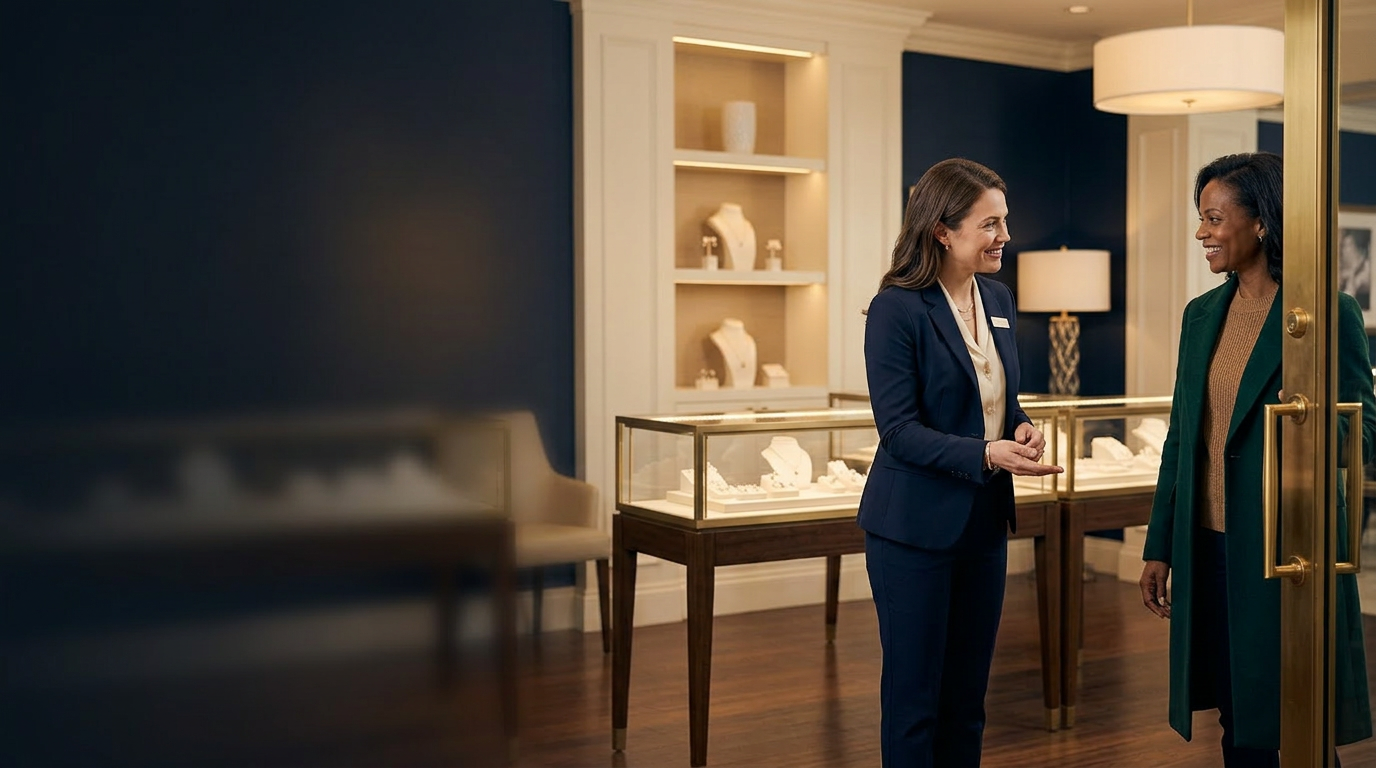
The Discount Trap: Why Price-Cutting Destroys Luxury Trust
A customer has fallen in love with a handcrafted 2.50-carat platinum three-stone diamond ring. She has tried it on, looked in the mirror, and stroked the side stones. The emotional desire is unmistakable.
Her partner leans across the counter, looks at the price tag ($12,500), and delivers the classic challenge:
“Twelve-five is pretty steep. What’s your absolute best cash price if I buy this right now?”
The inexperienced sales associate feels a spike of anxiety. Terrified of losing the sale, he stammers:
“Well… if you can do it today, I could probably ask my manager if we could do ten thousand five hundred.”
To an untrained salesperson, knocking $2,000 off the price feels like a victory. He thinks: “I made the sale! A smaller profit is better than no profit.”
In reality, that single concession caused three catastrophic commercial and psychological disasters:
1. It Proves Your Original Price Was Dishonest: The moment you drop a price by $2,000 within ten seconds of being asked, the client’s subconscious does not think: “What a great deal!” The client thinks: “They were trying to rip me off for two thousand dollars. If he gave me two grand that fast, how much more is he hiding? What is this ring really worth?”
2. It Decimates Your Store’s Net Profitability: In retail jewelry economics, inventory carrying costs, rent, high-security insurance, bench labor, and skilled salaries are fixed overhead. A 15% discount off the top line does not reduce profit by 15%, it often reduces net operating profit by 40% to 60%.
3. It Commoditizes Craftsmanship and Rarity: Luxury fine jewelry is not an appliance or a gallon of gasoline. It is an enduring piece of art and geological rarity. When you haggle like a flea-market vendor, you strip the piece of its dignity, romance, and prestige.
Master client advisors do not cave on price. They defend value with calm pride, intellectual clarity, and unwavering confidence in their craft.
—
The Economics of a Discount: The Brutal Math
Before exploring tactical floor scripts, understand the mathematical reality of discounting. Every sales associate must understand how a seemingly “small” discount destroys store viability:
“`
RETAIL JEWELRY PROFIT MODEL (Example: Keystone Margin at 50% Gross Margin)
Retail Price: $10,000
Cost of Goods: $5,000
Gross Profit: $5,000 (50%)
Fixed Overhead: $3,500 (Rent, payroll, insurance, security, marketing)
Net Profit: $1,500 (15% Net Margin)
“`
Now observe what happens when an associate gives a “casual” 10% discount ($1,000 off):
“`
Retail Price: $9,000
Cost of Goods: $5,000 (Unchanged)
Gross Profit: $4,000
Fixed Overhead: $3,500 (Unchanged)
Net Profit: $500 <-- A 66.7% COLLAPSE IN NET PROFIT!
```
To make up for that single 10% discount, the store has to sell three times as many pieces just to generate the same bottom-line dollars.
When you protect price, you are not being greedy. You are protecting the financial health of the business, your team’s commissions, and the long-term service warranty you owe to the client.
—
The 4-Step AARE Framework for Price Objections
When a customer pushes back on price, do not become defensive, do not apologize, and do not offer a concession.
Execute the AARE Framework:
“`
[ STEP 1: ACKNOWLEDGE ] –> Validate the customer’s perspective with calm empathy.
▼
[ STEP 2: ANCHOR ] –> Re-anchor on the tangible rarity, craft, and optical performance.
▼
[ STEP 3: REFRAME ] –> Shift perspective from price to Cost-Per-Wear & generational life.
▼
[ STEP 4: EXPLORE ] –> Move to payment terms, financing, or inventory adjustments without cutting margin.
“`
—
Step 1: Acknowledge (Validate Without Conceding)
The first rule of psychological de-escalation: never argue with a customer’s feelings.
If a client says “That’s a lot of money,” and you reply “No it’s not, it’s actually very reasonable,” you have created conflict. You have implied that the client is wrong or financially inadequate.
Instead, validate their perception completely:
Associate: “I completely respect that. Twelve thousand five hundred is a substantial, thoughtful investment. You should never spend that kind of money without knowing with absolute clarity what makes this piece worth every single dollar.”
Why Step 1 Wins:
– It removes all adversarial tension.
– It positions you on the same side of the table as the client.
– It transforms an objection into a shared exploration of quality.
—
Step 2: Anchor (The Three Value Pillars)
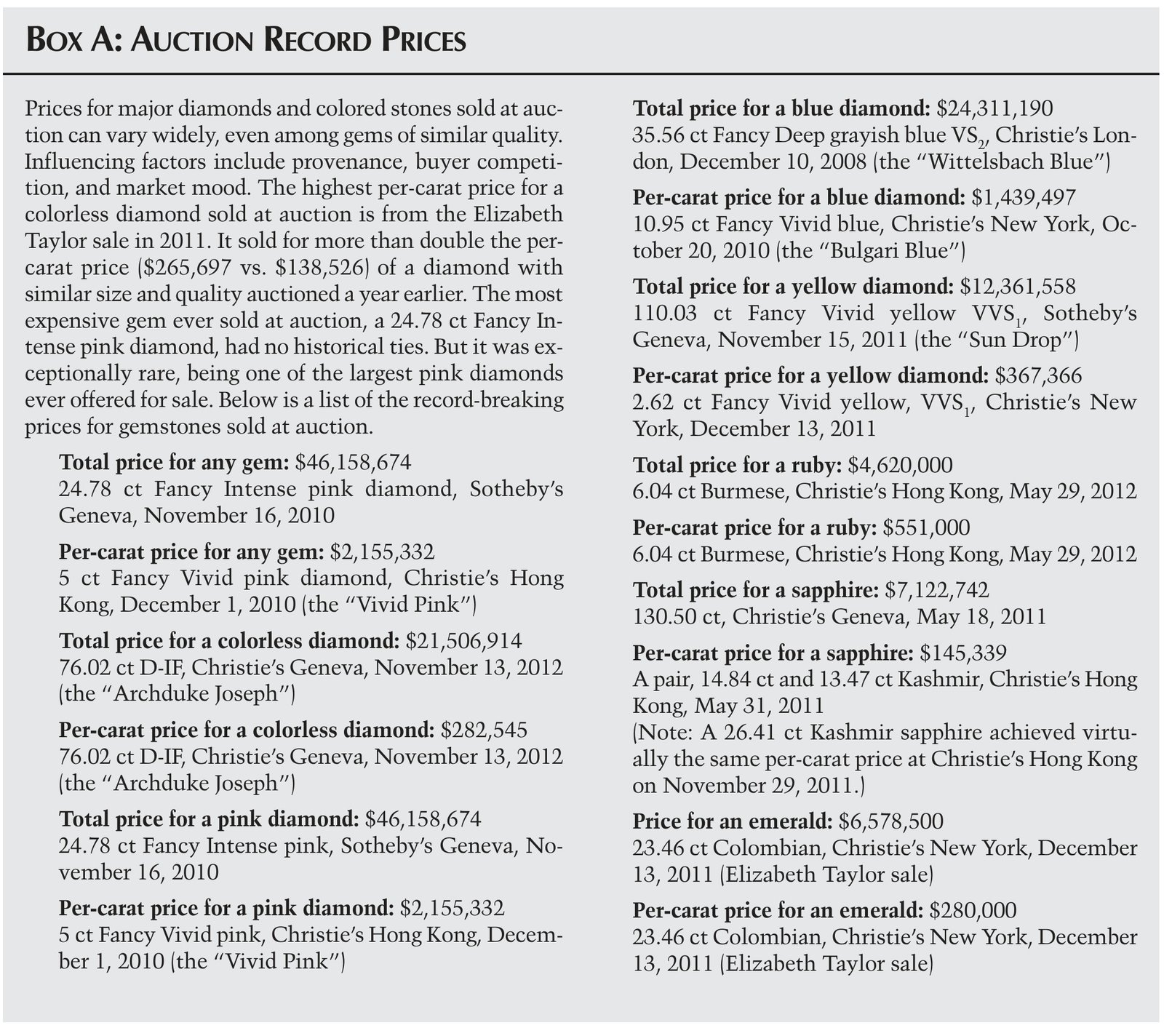
Once tension is neutralized, re-anchor the conversation on what created the price tag. Price only feels “too high” when the client’s perceived value of the item is lower than the number on the tag:
“`
PERCEIVED VALUE < PRICE TAG --> Price Objection Occurs
PERCEIVED VALUE > PRICE TAG –> Client Buys with Pride
“`
To elevate perceived value above the price tag, articulate the Three Pillars of Luxury Value:
Pillar A: Geological Rarity & Optical Engineering
“When you look at this center stone, you aren’t paying for just carat weight. You are investing in a cut calibrated to within fractions of a millimeter that eliminates 100% of light leakage. Only a tiny fraction of the diamonds recovered worldwide possess this level of natural crystal purity and optical performance.”
Pillar B: Metallurgical Density & Bench Craftsmanship
“Notice the weight in your palm. This isn’t hollow commercial casting. This mounting is solid 950 platinum, forged with three times the density of gold. Our master jeweler spent sixteen hours hand-setting each micro-pavé diamond under a microscope so the prongs never catch on your wardrobe.”
Pillar C: The Lifetime Custodial Warranty
“That investment includes our complete house custodial covenant: complimentary lifetime inspections, ultrasonic cleanings, prong tightening, rhodium servicing, and an annual written insurance valuation. We aren’t just selling you a ring today, we are maintaining this heirloom for the next fifty years.”
—
Step 3: Reframe (The Cost-Per-Wear Formula)
Consumers regularly spend tens of thousands of dollars on depreciating consumer assets without hesitation:
– A $65,000 luxury SUV that loses 25% of its value the day it leaves the lot and ends up in a salvage yard within fifteen years.
– A $1,400 smartphone that is discarded within three years ($1.28 per day).
– A $6 daily designer coffee ($2,190 per year).
Yet when looking at a fine jewelry piece that lasts for multiple human lifetimes, they experience sticker shock because they view it as a lump-sum expense rather than an enduring asset.
Use the Cost-Per-Wear Reframe:
$$ ext{Daily Cost-Per-Wear} = rac{ ext{Total Investment}}{ ext{Years of Wear} imes 365 ext{ Days}}$$
Worked Floor Script: The Cost-Per-Wear Calculation
Associate: “Let’s look at this differently. Unlike an automobile that depreciates every mile you drive, or a handbag that wears down at the seams, this platinum ring will be worn on your hand every single day for the next thirty, forty, or fifty years, and then passed to your daughter.
>
*If you wear this ring over the next thirty years, that twelve-thousand-dollar investment comes out to approximately one dollar and nine cents a day.
>
You will spend five times that on an iced latte this afternoon that is gone in twenty minutes. For a dollar a day, she wears an eternal symbol of your marriage that never tarnishes, never depreciates to zero, and brings a smile to her face every morning she looks in the mirror.”
When clients hear the cost-per-wear breakdown, the lump-sum barrier evaporates. The purchase transforms into an affordable daily luxury.
—
Step 4: Explore (Solutions That Preserve Margin)
If the client genuinely cannot exceed a specific financial boundary, never slash the price of the current item. Instead, explore Three Margin-Preserving Solutions:
—
Solution 1: Preferred Client Financing (Cash-Flow Flexibility)
Many affluent and middle-class clients have the cash, but prefer not to liquidate capital or deplete savings accounts.
Associate: “If keeping your liquid cash working in your investments is important, we have our preferred client account with 12 months interest-free financing. That allows you to secure the exact, uncompromising 2.50-carat piece she loves for around a thousand dollars a month, with zero interest. Would that give you the comfort and flexibility you’re looking for?”
—
Solution 2: The Spec Shift (Smart Gemological Curation)
If the dollar ceiling is firm, adjust the specifications rather than discounting the item:
Associate: “I never want you to spend a dollar more than makes you comfortable. If ten thousand is your firm ceiling, let’s keep the exact same platinum mounting and 2.50-carat finger presence, but look at a stone that is a G color with an eye-clean SI1 clarity. To the naked eye, the brilliance and fire are completely identical, but it brings the investment down to nine thousand eight hundred.”
This preserves the store’s full gross margin, respects the client’s budget, and demonstrates authentic consultative problem-solving.
—
Solution 3: The Value-Add Attachment (Trade Goods for Margin)
If you must give something to close a difficult negotiation, never give cash off the price. Give service or complementary merchandise with a high perceived value and low wholesale cost:
– Complimentary insurance appraisal ($150 value).
– A luxury wooden travel jewelry case ($120 retail / $25 wholesale cost).
– A complimentary pair of freshwater pearl studs.
Associate: “Our pricing is rigorously calculated to be fair, so I cannot alter the twelve-five on this ring. What I can do for you today, as a thank you for your patronage, is include our complete bespoke care kit, our expedited insured appraisal, and a complimentary pair of pearl studs for her bridal shower.”
—
Handling the Aggressive Haggler
On every sales floor, you will encounter the customer who prides himself on being a “tough negotiator” and demands a discount as a sport:
Client: “Come on, everybody discounts. You’ve got room in that price. Give me 20% off and we have a deal right now.”
The Master Script: The Firm Luxury Stand
Look the client directly in the eye, smile warmly, and deliver this word-for-word response with absolute calm:
Associate: “I really appreciate you asking, Marcus. And I know a lot of stores artificially inflate their price tags just so they can offer flashy 20% discounts to make people feel like they won a prize.
>
*We have never run our house that way. We price every single piece fairly and transparently from day one based on genuine gemological rarity and ethical bench craftsmanship.
>
The benefit to you is that you never have to wonder if your neighbor got a better price than you did, and you never have to worry about whether our quality was compromised to meet a fake discount. The twelve thousand five hundred is the honest, fair value of this ring. Shall we move forward and get it sized for her?”
Why This Script Shuts Down Haggling:
– It exposes discount games as an insult to consumer intelligence.
– It elevates your brand’s integrity.
– It creates a standard of fairness that the client cannot logically argue against.
—
Summary Matrix: The Price Objection Playbook
| Customer Challenge | Fatal Mistake (Avoid) | Master Response (AARE Framework) |
|—|—|—|
| “That’s more than I wanted to spend.” | Quoting a discount immediately | “I completely respect that, it is a substantial investment. Let’s look at what is creating that value, and see how that balances against the lifetime cost-per-wear.” |
| “What’s your best cash price?” | Knocking 10% to 15% off | “We price all of our pieces transparently from day one so every client receives the absolute fairest value, whether paying by card or cash.” |
| “I saw a similar ring online for 20% less.” | Disparaging the competitor | “Online certificates only tell part of the story. Let’s look at this stone under the loupe and see why optical cut quality and bench security matter.” |
| “Can you do better on price?” | “Let me ask my manager.” | “Our pricing is strictly calculated to maintain our master jewelers and lifetime warranty. What I can do is include our bespoke care and appraisal suite.” |
| “I need to think about the money.” | Pressuring them with fake urgency | “Of course. You should feel 100% confident. Let’s review the exact monthly investment with our preferred account so you have the numbers clearly.” |
—
7-Day Floor Implementation Plan
– Day 1 (The Discount Freeze): Commit to zero unprompted discounts for the entire day. Notice how many clients purchase at full retail when you simply hold the line.
– Day 2 (Mastering the Acknowledge Step): When a client hesitates at price, practice saying: “I completely respect that, it is a thoughtful investment.”
– Day 3 (The Cost-Per-Wear Calculation): Perform the 30-year cost-per-wear math with at least two clients. Watch how their perception of price shifts.
– Day 4 (The Three Value Pillars): Present the trio of geological cut, platinum density, and lifetime custodial warranty before quoting any price above $5,000.
– Day 5 (Financing as Cash Flow): Introduce preferred client financing as a wealth-preservation tool rather than a debt burden.
– Day 6 (The Value-Add Offer): Practice offering an appraisal or care kit instead of cash discounts when a customer asks for a concession.
– Day 7 (Weekly Margin Audit): Review your sales transactions from the week. Calculate how many gross margin dollars you protected by using the AARE framework.
—
Module Self-Check
Test your command of gross margin defense before progressing to Module 6:
1. Explain the three destructive psychological consequences that occur when an associate quickly offers a discount.
2. Mathematically, why does a 10% retail discount often reduce net operating profit by 40% to 60%?
3. Name the four steps of the AARE Framework in order.
4. What is the formula for calculating Cost-Per-Wear, and why is it effective in overcoming sticker shock?
5. What are the Three Pillars of Luxury Value used during the Anchor step of AARE?
6. Instead of discounting, how can an associate use The Spec Shift to meet a client’s firm financial ceiling?
7. Why is offering a high-perceived-value merchandise attachment (e.g. pearl studs or travel case) preferable to offering a cash discount?
8. How should an associate respond to the classic customer challenge: “What’s your best cash price?”
9. Why does relying on “Let me ask my manager for a discount” project weakness and undermine client trust?
10. How does holding firm on price protect the long-term emotional value of a luxury fine jewelry piece?
—
Authoritative References & Further Reading
– INSTORE Magazine: The Real Cost of Discounting: Why Giving 10% Destroys Independent Jewelers.
– Shane Decker: Holding Gross Margins on the Diamond Counter: The Psychology of Price Confidence.
– Terry Sisco / Exsellerate: The AARE Objection Recovery System for Luxury Hard-Goods.
– Harvard Program on Negotiation (PON): Value Anchoring and Protecting Margins Against Price Haggling.
– National Retail Federation (NRF): Retail Jewelry Gross Margin Benchmarks and Profit Health.
—
Media Credits & External Links
– [INSTORE Magazine: Profit & Margins Guide](https://instoremag.com/)
– [JCK Online: The Art of Handling Price Objections](https://www.jckonline.com/)
– [The Jewelers Playbook: Video Masterclass on Selling Without Discounting](https://www.youtube.com/@TheJewelersPlaybook)