Color and Light: How Gems Get Their Color — and Why Lighting Changes Everything
The tanzanite that changed color
A client buys a 2.20 ct oval tanzanite under your showcase’s halogen spotlights. She picks a deep violet-blue that she describes as “the color of a peacock’s neck” and leaves thrilled. Two days later she returns, upset. At dinner in candlelight the stone looked purple-gray. Under her office fluorescent it looked brownish. The sun coming through her kitchen window brought back the blue she remembered. “You sold me the wrong stone,” she says.
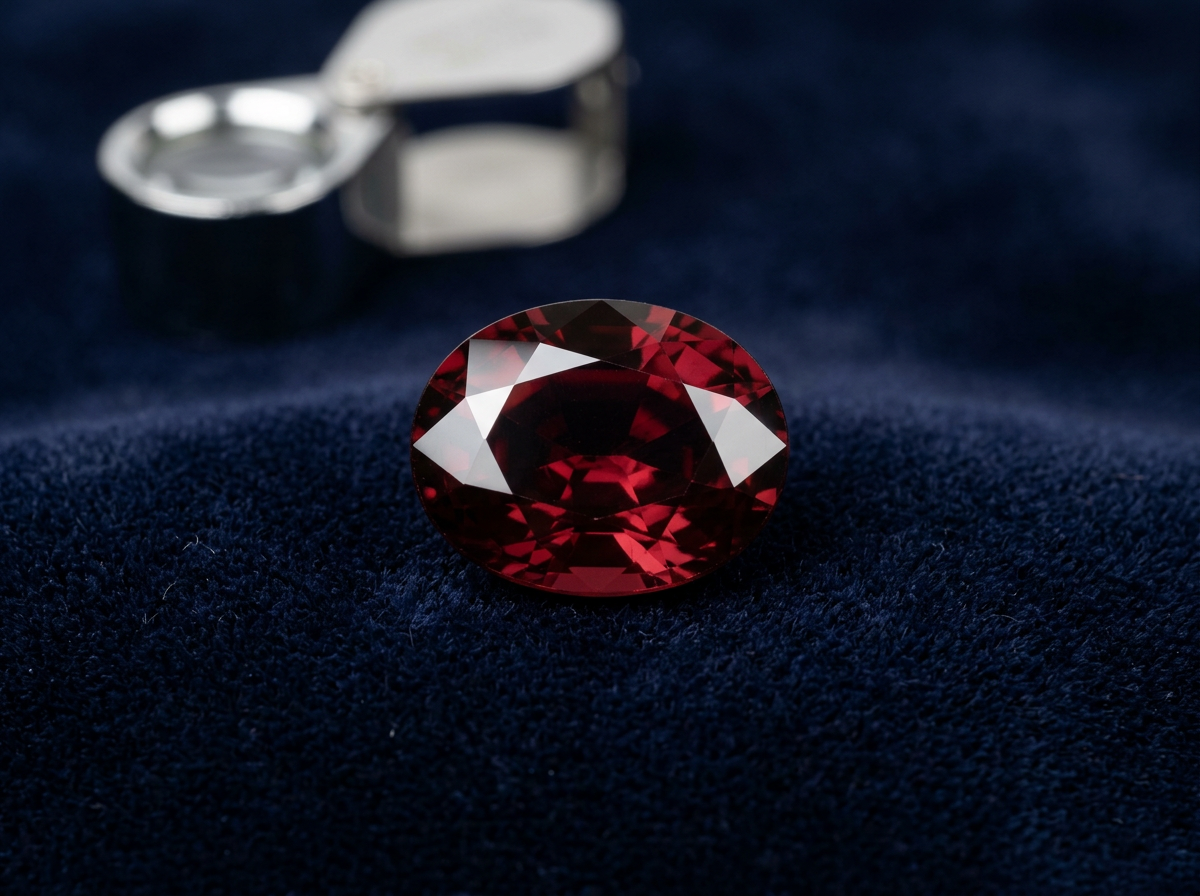
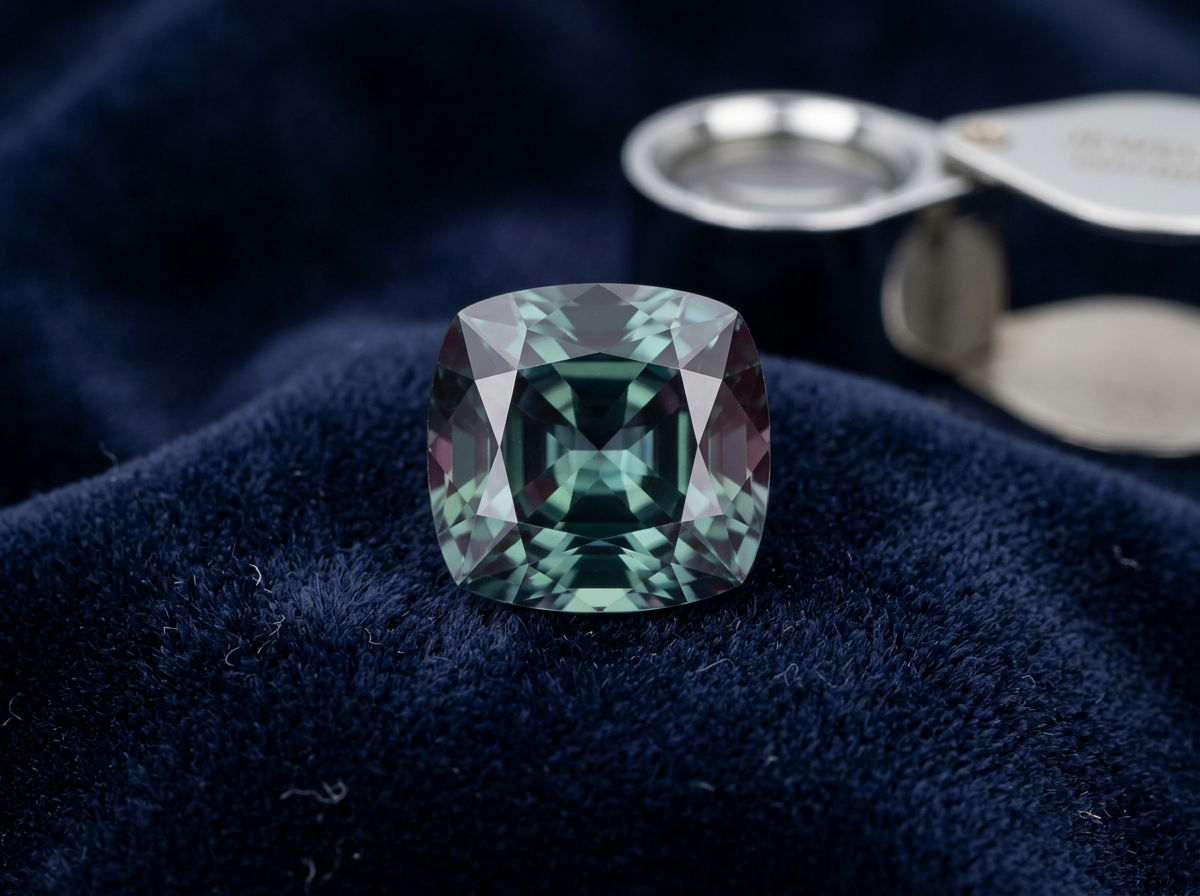
You did not sell her the wrong stone. You sold her a tanzanite without showing it to her in daylight, in incandescent, and in fluorescent light before she wrote the check. Tanzanite is trichroic — it shows three different colors along three different crystal directions — and its dominant transmitted color depends strongly on what wavelength mix is in the light falling on it. Every colored stone in your case will look at least slightly different under different lighting, and some (alexandrite chrysoberyl, color-change garnet, color-change sapphire, zultanite/diaspore) are famous for it. This is not a defect. It is physics.
This module explains where color comes from, why pleochroism and the alexandrite effect exist, how phenomena like star and cat’s-eye form, and how to describe color consistently. The anchor references are Fritsch and Rossman’s three-part 1987–88 “An Update on Color in Gems” trilogy — still the definitive gemological reference on color science — Richard Hughes’ 2014 paper on pleochroism, and Stephanie Bohannon’s 2016 plain-language summary of phenomenal cabochon effects.
Light is color: a 60-second reminder
Visible light is a narrow band of the electromagnetic spectrum, roughly 380 to 750 nanometers in wavelength. Short wavelengths appear violet; as wavelength increases we see blue, green, yellow, orange, and finally red at the long end. White light (daylight, incandescent, fluorescent, LED) is a mixture of these wavelengths — but not all white light is created equal:
– Daylight (~5500–6500 K, color temperature) is relatively balanced across the spectrum, slightly weighted toward blue.
– Incandescent / candlelight (~2700–3200 K) is heavily weighted toward red and yellow, with very little blue.
– Cool-white fluorescent (~4100 K) is spiky rather than continuous — it emphasizes certain green/yellow wavelengths and can make warm-colored stones look flat.
– LEDs vary widely by CRI (Color Rendering Index); a low-CRI LED will distort color badly. High-CRI LEDs (90+) approximate daylight.
A gemstone appears colored because it selectively absorbs some wavelengths and transmits or reflects others. A ruby absorbs most of the spectrum except the red band around 690 nm (and some transmission in blue, which is why rubies can show purplish secondary), so what reaches your eye is red. An emerald absorbs the middle of the spectrum and transmits green plus some blue. An allochromatic (“other-colored”) gem like corundum is colorless in its pure form; trace elements or structural defects determine which wavelengths are absorbed.
The key line: color is not inside the gem — color is the light the gem did not absorb. If you change the light, you change which wavelengths are available to be transmitted, and the color of the stone changes. A gemologist uses a spectroscope to see which wavelengths are absorbed — that absorption spectrum is a chemical fingerprint of which element or defect is causing the color, which is why spectroscopy is a standard identification tool.
The five color-causing mechanisms
Fritsch and Rossman’s trilogy organizes gem color into five families of causes. Knowing the categories helps you understand why certain treatments work (heat can change charge transfer; irradiation creates color centers) and why certain stones are idiochromatic (peridot) vs allochromatic (ruby).
1. Transition-metal ions (dispersed metal ions). Many gems are colored by trace amounts of transition-metal atoms — principally chromium (Cr), iron (Fe), manganese (Mn), vanadium (V), cobalt (Co), nickel (Ni), and copper (Cu) — that replace atoms in the crystal lattice and absorb specific wavelengths. In idiochromatic (“self-colored”) gems, the coloring element is an essential ingredient in the gem’s chemistry:
– Peridot (olivine): iron is part of the formula → bottle-green to olive-green from Fe²⁺.
– Malachite and azurite: copper carbonate minerals, colored by copper → green and blue respectively.
– Rhodochrosite: manganese carbonate → rose pink.
– Turquoise: copper (blue) and iron (green) in hydrated aluminum phosphate.
– Almandine/pyrope garnet: iron and iron-aluminum → red.
In allochromatic (“other-colored”) gems, the host mineral is colorless in pure form and trace impurities produce color:
– Ruby: Cr³⁺ replacing Al³⁺ in corundum → red (with strong red fluorescence).
– Emerald: Cr³⁺ (and sometimes V³⁺) replacing Al³⁺ in beryl → green.
– Alexandrite chrysoberyl: Cr³⁺ in chrysoberyl → the alexandrite effect (red-rich vs blue-rich transmission windows).
– Blue sapphire: requires charge transfer between Fe and Ti (see mechanism 2); Fe alone produces yellow/green.
– Aquamarine (blue beryl): Fe²⁺ → pale blue; heat treatment removes green component to produce more saturated blue.
– Morganite (pink beryl): Mn²⁺ → peach/pink; often heat-treated to remove yellow.
– Tanzanite: vanadium (V³⁺) replacing Al in zoisite → the characteristic trichroic blue-violet.
– Amethyst: Fe⁴⁺ color centers in quartz (mechanism 3).
– Paraíba-type tourmaline: copper (Cu²⁺) and manganese (Mn³⁺) → neon blue/violet — the only gemstone colored primarily by copper (Merkel & Breeding 2009 confirmed the spectroscopic signature that distinguishes cuprian tourmaline from iron-colored blue/green tourmaline).
– Lapis lazuli: primarily blue from the mineral lazurite, colored by sulfur radical anions (a charge-transfer/band mechanism); the classic ultramarine blue.
2. Charge transfer (intervalence charge transfer, IVCT). Some colors come from electron transfer between adjacent ions of different oxidation states rather than from a single ion absorbing light. The single most commercially important example is blue sapphire: Fe²⁺ and Ti⁴⁺ ions in adjacent aluminum sites in corundum share an electron, and this charge-transfer absorbs yellow light, transmitting blue. Because the effect requires both elements to be present and in the right oxidation state, heat-treating sapphires (which alters iron oxidation and dissolves or precipitates rutile silk) can change the blue dramatically. Other charge-transfer colors include: the deep blue of iolite (Fe-Fe charge transfer); the brown of some enstatite and some sapphires; some colors in kyanite; and much of the blue in blue spinel (Co²⁺ is present in some cobalt-blue spinels but other blues are charge-transfer-related).
3. Color centers. A color center is a structural defect (often a missing atom or an impurity atom) in the crystal that traps an electron or hole, absorbing certain wavelengths. Color centers are usually created by natural or artificial irradiation (from radioactive elements in the ground, or in a laboratory) and can sometimes be removed by heating.
– Smoky quartz is naturally irradiated quartz with an aluminum-based color center; heating removes the color.
– Maxixe beryl (deep blue beryl from the Maxixe mine in Brazil) is a radiation-induced color center that fades on exposure to light.
– Irradiated blue topaz: natural colorless topaz is exposed to gamma or electron-beam irradiation in a reactor or accelerator to produce stable blue color (London blue, sky blue, Swiss blue — all commercial blue topaz is irradiated; the process is regulated and residual radiation is routinely checked to be at safe background levels; see Nassau 1985 and Rossman 1981).
– Some yellow sapphires get their yellow from a trapped-hole color center; heat can destroy or create it depending on starting material.
– Some amethyst (especially geodes) is a radiation-induced iron color center; heat treatment of amethyst produces citrine or prasiolite (green quartz).
Important for sales: irradiation-induced color centers are stable in topaz and (mostly) in amethyst but not in Maxixe beryl or some kunzite — kunzite’s famous “evening stone” reputation comes in part from the fact that strong sunlight fades its color over time.
4. Band theory (semiconductor band gaps and impurities). In some materials, color arises from electron transitions between energy bands rather than from specific atoms or defects.
– Diamond is a wide-band-gap semiconductor; pure diamond is colorless because visible-light photons do not have enough energy to bridge the gap. Trace boron atoms accept electrons and produce blue (Type IIb diamond — the Hope Diamond color). Trace nitrogen produces yellow/canary. Plastic deformation produces brown/pink/red. Irradiation produces green. C16 covers diamond color in depth; for colored stones the key analogy is that sapphire from charge transfer and blue diamond from boron are colored by different mechanisms even though both are “blue.”
– Sphalerite, spessartine, some rare sulfide and oxide gems show band-gap related color.
– The vivid red of some rare synthetic gems can also be band-gap related.
5. Physical phenomena (structural and optical effects). This family covers the physical effects that produce dispersion (“fire”), opal play-of-color, the schiller of moonstone, the stars on star sapphires, and other light-scattering or light-interference effects. The most important for colored stones:
– Dispersion (fire): different wavelengths bend by different amounts in a high-dispersion gem, separating white light into spectral flashes. Diamond (0.044) is famous for this, but demantoid garnet (0.057), sphene/titanite, zircon (0.038), and sphalerite show more fire. Sapphire (0.018), quartz and beryl show very little.
– Scattering: fine particles inside a gem scatter light. Adularescence in moonstone (scattering off alternating albite/orthoclase lamellae), aventurescence in sunstone (reflection from copper or hematite platelets), the milk-and-honey effect in chrysoberyl cat’s-eye, and the “velvet” of Kashmir sapphire (submicroscopic rutile and dust) are all scattering phenomena.
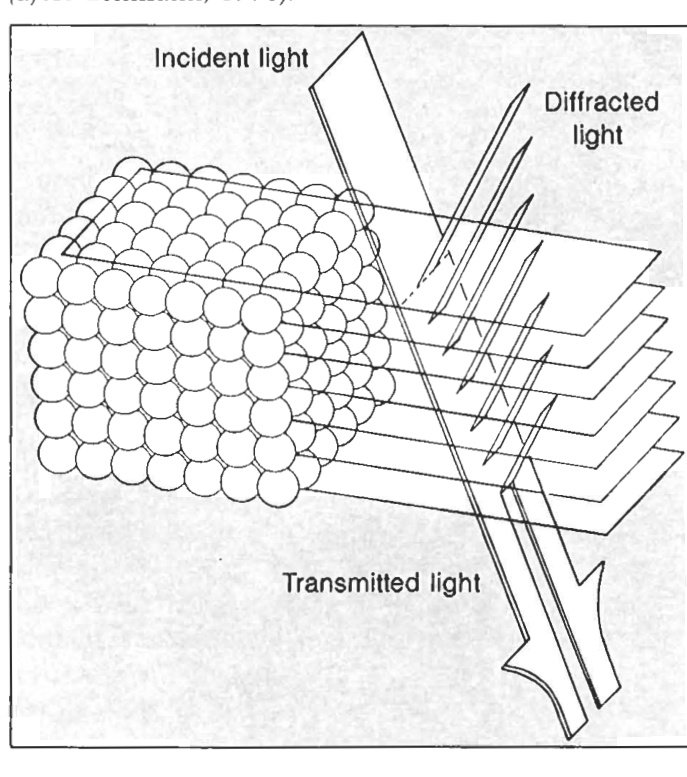
– Interference and diffraction: light waves reflecting off thin films or periodic structures interfere with one another. Play-of-color in precious opal comes from visible-light diffraction by a regular lattice of silica spheres (150–300 nm — about the size of visible-light wavelengths). Iridescence in iris agate, on pearl nacre, on the cleavage surface of some labradorite, and in fire agate are thin-film interference.
– Inclusion-based phenomena (asterism and chatoyancy): covered in detail in Section 5 below.
| Mechanism | What’s happening at the atomic scale | Gem examples |
|---|---|---|
| Transition-metal ions | Trace atoms absorb specific wavelengths | Ruby/emerald (Cr), peridot (Fe), Paraíba tourmaline (Cu+Mn), morganite (Mn), turquoise (Cu+Fe), rhodochrosite (Mn) |
| Charge transfer | Electron exchange between adjacent ions absorbs light | Blue sapphire (Fe²⁺+Ti⁴⁺), iolite (Fe-Fe), some blue spinel, some brown enstatite |
| Color centers | Radiation-produced trapped electrons/holes absorb light | Smoky quartz, irradiated blue topaz, Maxixe beryl, some yellow sapphire, some amethyst |
| Band theory | Electron transitions across a semiconductor energy gap | Blue diamond (boron acceptor), yellow diamond (nitrogen), sphalerite, spessartine garnet (band transitions involved) |
| Physical phenomena | Dispersion, scattering, diffraction, interference, inclusion reflections | Opal play-of-color, star/cat’s-eye, moonstone schiller, demantoid fire, sunstone aventurescence, pearl iridescence |
Four optical effects that change what the client sees
1. Pleochroism. Crystals that are doubly refractive split an incoming light ray into two rays polarized at right angles (uniaxial crystals) or three rays (biaxial crystals). Each ray travels at a different speed and sees a different absorption spectrum — so the gem can show two or three different bodycolors depending on the direction from which you view it. Hughes (2014) is the clearest practitioner reference.
- Dichroic (two colors, uniaxial crystals): Ruby (red/orangy-red), sapphire (blue/greenish-blue), emerald (green/blue-green or yellowish-green), aquamarine (blue/colorless or near-colorless — the cutter typically orients to show blue), tourmaline (often dark/light along different axes — you see this if you look down the length of a tourmaline crystal), amethyst (purple/reddish-purple), zircon.
- Trichroic (three colors, biaxial crystals): Tanzanite (blue / violet / purplish-bronze — this is exactly our opening scenario, and why the cutter must orient the table perpendicular to the optic axis to show the rich blue-violet rather than brownish-purple), iolite (blue / violet / colorless-yellowish — “the gem with three colors”), andalusite (green / brownish-red / yellow — the most dramatic pleochroism of any common gem), alexandrite chrysoberyl, kunzite (pink/colorless/purplish), peridot.
The sales-floor implications are direct:
– Tanzanite, iolite, andalusite and kunzite are always oriented at the cutter’s wheel to show the most desirable color through the table — but pleochroism remains visible when you tilt the finished stone, and the apparent color shifts as the stone moves.
– You should show strongly pleochroic stones from multiple angles, not just face-up.
– Pleochroism is not color-change. Pleochroism is about viewing direction under a single light. Color-change (below) is about changing light source.
2. The alexandrite effect (color-change). In some stones, the absorption spectrum has transmission windows in both the red and blue-green regions of the spectrum. In rich red-containing light (candlelight/incandescent), the red transmission dominates; in rich blue-containing light (daylight/fluorescent), blue-green dominates. The classic gem is alexandrite chrysoberyl (chromium-colored chrysoberyl from the Ural Mountains originally; now from Sri Lanka, Brazil, Tanzania, India), described historically as “emerald by day, ruby by night” (in reality, the finest stones are greenish to bluish-green in daylight and purplish-red to raspberry red in incandescent). Modern commercial color-change gems include:
– Color-change garnet (East Africa, Sri Lanka, Madagascar, Tanzania — Pay 2015), usually vanadium-colored; shifts from blue-green to purplish-red or pinkish-brown depending on source. Some color-change garnets are among the most dramatic color-change stones on the market, outperforming all but the finest alexandrite.
– Color-change sapphire (various sources; some Sri Lankan, Madagascar, and Montana sapphires shift blue to purple under incandescent).
– Color-change diaspore (zultanite/ottomanite, from Turkey’s İlbir Mountains) — green in daylight to pinkish-champagne/raspberry in incandescent.
– Some synthetic corundum marketed as “alexandrium” or similar names.
The counter trap: describing every color-change stone as “alexandrite.” Color-change garnet is not alexandrite. True alexandrite is chrysoberyl.
3. Metamerism. Two objects can have different absorption spectra and yet appear to match under one light source, only to look different under another — those two objects are a metameric pair. This is why two sapphires that look identical in your showcase (warm halogen) can look different from one another in a client’s office (cool fluorescent), and why a sapphire that matches a client’s eye color in the store may not match in daylight. The counter implications:
– Always show a colored-stone sale under more than one light source before closing — ideally daylight equivalent (6500K) plus the store’s showcase lighting.
– When matching a colored stone to an existing piece (e.g., adding side stones to an existing ring), match under multiple lights, not just showcase lighting.
– Showcase lighting is chosen to make stones look beautiful. Daylight is where they will live.
4. Fluorescence. Some gems absorb high-energy UV light and immediately re-emit it at a longer visible wavelength, producing a glow. The most commercially important example is ruby under long-wave UV: the same chromium that produces the red color also produces strong red fluorescence, which is why fine Burmese/Mogok rubies (low in iron, which quenches fluorescence) appear to “glow” vividly red in natural daylight (which contains a UV component), while Thai/Cambodian basalt rubies (high in iron) look darker and less vivid even when well cut. Blue-white diamond fluorescence is covered in C16 M07; for colored stones the fluorescence stories that matter are:
– Red fluorescence in ruby and some red spinel (Cr).
– Yellow/orange LW fluorescence in some yellow sapphires.
– Chalky greenish-yellow LW fluorescence in most natural emeralds (a quick screening test).
– Inert (non-fluorescent) in most iron-rich stones (basalt sapphire, almandine garnet).
Phenomenal stones: stars, cats, moonstone, sunstone, opal
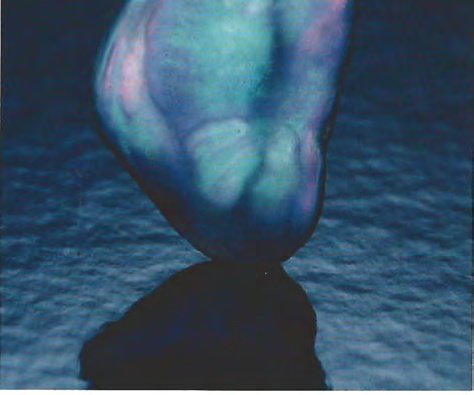
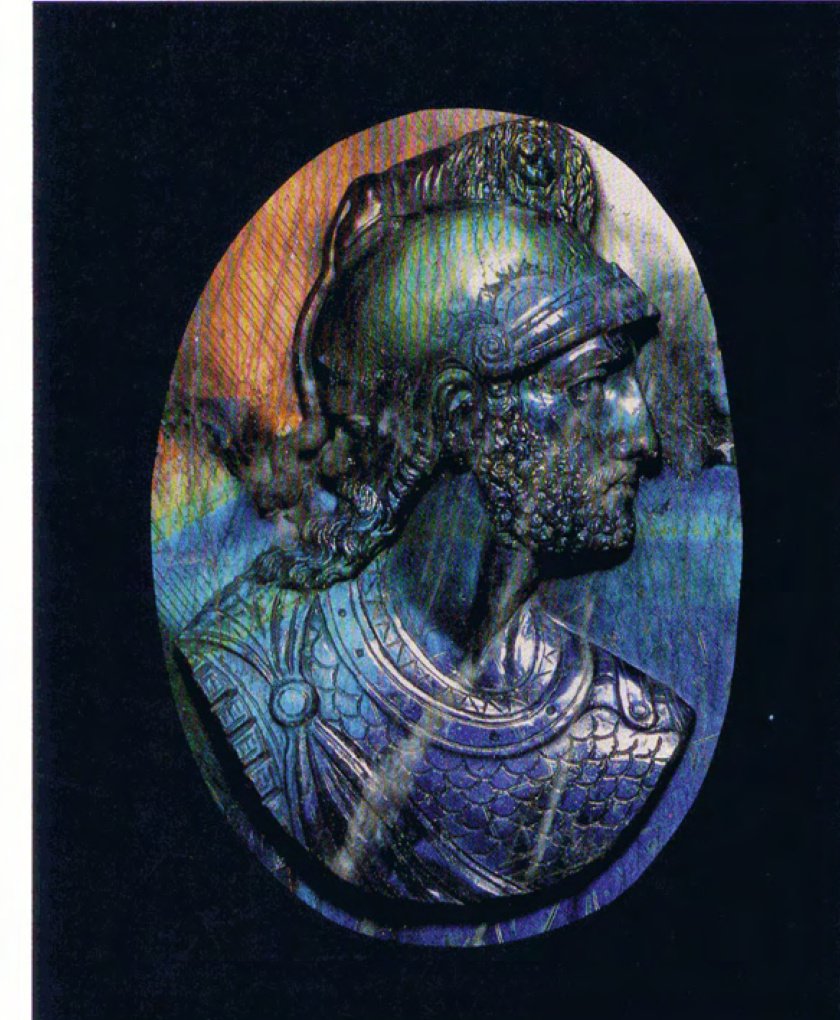
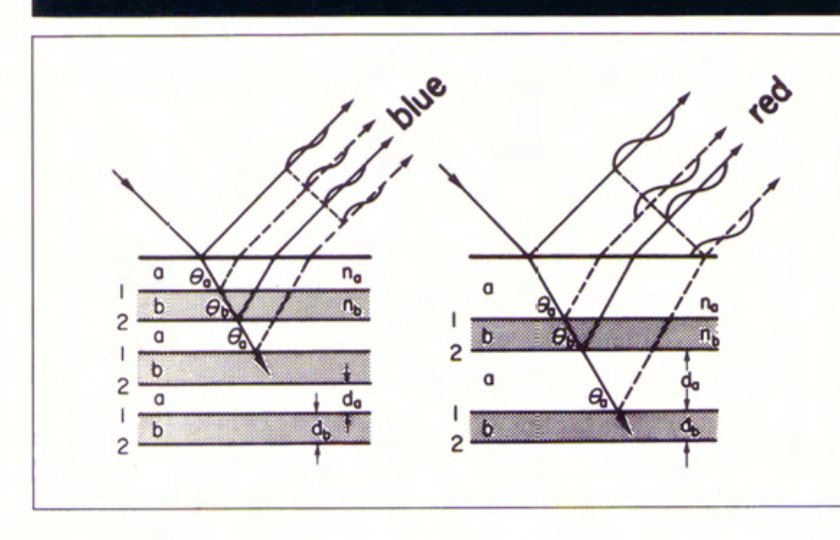
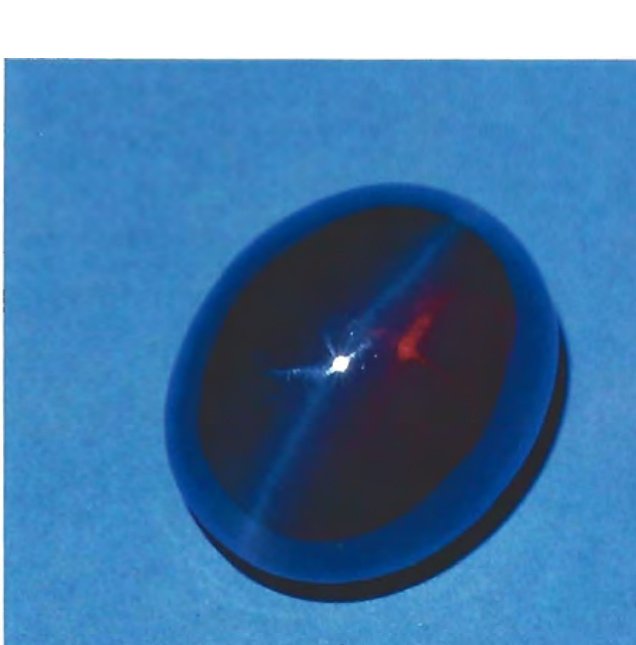
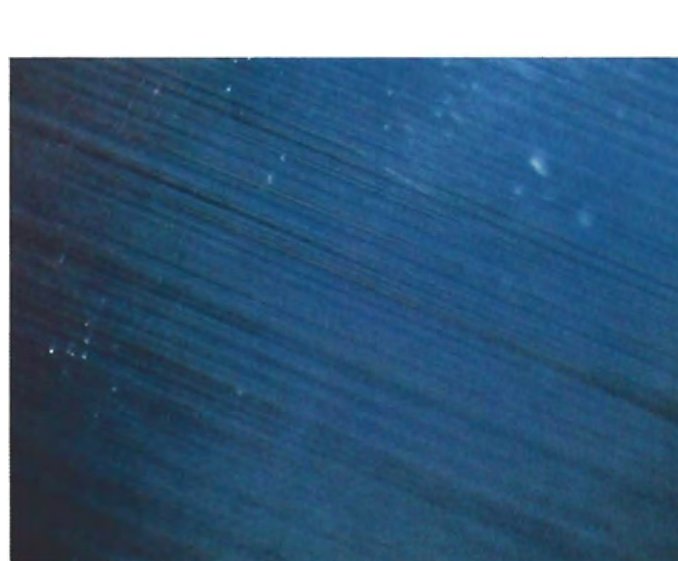
Phenomenal gems (also called phenomenal cabochons, because the effect requires a smooth domed surface) show effects beyond simple bodycolor. Stephanie Bohannon’s 2016 GIA Research & News piece is the clearest short reference.
- Asterism (the star). Star rubies and star sapphires show a six-rayed (occasionally twelve-rayed) star that glides across the surface of the cabochon as it moves. The cause is rutile silk — microscopic needles of the mineral rutile (TiO₂) oriented in three directions at 120° to one another, aligned parallel to the basal plane of the corundum crystal. Light reflects off each set of needles, producing three bright bands of light that cross to make a six-ray star. For the star to be sharp and centered the cabochon must be cut perpendicular to the c-axis, with the dome height matched to the depth of the silk. Diffuse silk produces a soft, milky star; fine, well-formed silk produces a sharp star. Twelve-ray stars form when two different needle sets (rutile plus another mineral, often hematite) coexist in the same stone (Schmetzer 2015 describes dual-color double stars). Synthetic diffusion-treated star corundum exists — titanium diffusion produces synthetic rutile silk in Verneuil-grown boules; detection features include color concentrated at facet edges (after the cab is polished flat for inspection) and often an unnaturally perfect star. Diffusion stars and engraved-star doublets (McClure & Koivula 2001) are covered further in M08/M09.
- Chatoyancy (cat’s-eye). Parallel needles, tubes, or fibrous inclusions reflect a single bright band of light perpendicular to their direction. The classic gem is chrysoberyl cat’s-eye (cymophane), in which fine parallel rutile needles produce a sharp milk-and-honey effect — one side of the band appears milky, the other honey-colored, as the stone is tilted. Quartz cat’s-eye (crocidolite/quartz replacement, tiger’s-eye), tourmaline cat’s-eye, apatite cat’s-eye, scapolite cat’s-eye, beryl cat’s-eye, diopside cat’s-eye exist and are much less valuable than chrysoberyl. The term “cat’s-eye” used without a species name in the trade historically refers to chrysoberyl cat’s-eye — always specify species at the counter.
- Adularescence (moonstone schiller). Fine alternating lamellae of albite and orthoclase (two feldspar minerals) in orthoclase feldspar scatter light, producing a floating blue-to-white glow that rolls across the cabochon as it moves. Rainbow moonstone (a transparent feldspar variety with brighter iridescence) is typically from India and is actually a variety of labradorite/anorthoclase; classical blue moonstone is from Sri Lanka and Myanmar.
- Aventurescence. Platy inclusions reflect light as spangles: Oregon sunstone contains copper platelets (the most valuable; shows red/gold schiller); Indian sunstone and most aventurine quartz contain hematite or fuchsite mica; goldstone glass is a manmade aventurescence imitation.
- Play-of-color (precious opal). Precious opal’s flashes come from diffraction and interference of white light by a regular three-dimensional lattice of uniform silica spheres (150–300 nm diameter). Spheres of different sizes diffract different colors: ~300 nm spheres produce red flash (the most valued); smaller spheres produce green, then blue; irregularly sized spheres produce no play-of-color (common opal, or potch). In black opal a dark bodycolor intensifies the flash; in white opal a light bodycolor softens it; in boulder opal the ironstone host provides a dark background; in crystal opal the body is transparent. Ethiopian Welo opal has play-of-color in a transparent hydrophane body.
- Iridescence / labradorescence. Thin-film interference produces color flashes in labradorite feldspar, on pearl nacre, in fire agate, and in iris agate. The schiller of labradorite can be dramatic, showing blue, green, gold, and orange flashes depending on orientation.
| Phenomenon | Optical cause | Classic gems |
|---|---|---|
| Asterism (star) | Light reflecting from three sets of oriented rutile (or other) needles | Star ruby, star sapphire; rarely star garnet, star quartz, star diopside |
| Chatoyancy (cat’s-eye) | Light reflecting from parallel needles/tubes/fibers | Chrysoberyl cat’s-eye, tiger’s-eye quartz, tourmaline cat’s-eye |
| Adularescence | Light scattering off alternating feldspar lamellae | Moonstone (orthoclase feldspar) |
| Aventurescence | Platelet inclusions reflecting spangles | Oregon sunstone (Cu), Indian sunstone (hematite), aventurine quartz (fuchsite) |
| Play-of-color | Diffraction/interference by ordered silica-sphere lattice | Precious opal (black, white, boulder, crystal, Ethiopian Welo) |
| Iridescence / labradorescence | Thin-film interference | Labradorite, pearl nacre, fire agate, iris agate |
| Dispersion (fire) | Wavelength-dependent refraction separating white light into spectral colors | Demantoid garnet, zircon, sphene, diamond, sphalerite |
Describing color consistently: hue, tone, saturation
Color vocabulary is one of the easiest places for salespeople to sound imprecise. GIA’s colored-stone grading uses a Munsell-derived framework of three dimensions:
– Hue is the position on the color wheel — the basic “color name”: red, orange, yellow, green, blue, violet, plus intermediates like “reddish-orange,” “greenish-blue,” “bluish-violet.” GIA uses a 31-hue wheel. A sapphire described as “blue” might actually be violetish-blue, greenish-blue, or slightly gray-blue — the hue distinction matters.
– Tone is how light or dark the color is, from 0 (colorless) to 10 (black). Tone is independent of hue: a “light” and “dark” sapphire can have the same hue but different tone. Fine Kashmir sapphire is typically medium to medium-dark tone; fine Ceylon sapphire is medium-light to medium; fine Australian sapphire is often dark to very dark.
– Saturation is the intensity of the color — how far it is from gray or brown. “Strongly saturated,” “vivid,” or “intense” colors are highly prized; grayish, brownish, or “washed out” colors are less valuable. Saturation is the dimension most affected by pleochroism and lighting.
Words like “cornflower blue” for Kashmir, “pigeon’s blood” for Burmese ruby, “royal blue” for fine Burma/Ceylon sapphire, and “imperial” for topaz are historical trade names. They are useful shorthand among gemologists but they are metaphors, not grades. The lab describes color with hue/tone/saturation and uses proprietary color-call names (GIA issues “pigeon’s blood” and “royal blue” color calls for ruby and sapphire as an add-on report service, but these are defined criteria, not subjective impressions).
The single most important counter rule on color: before closing a colored-stone sale, show the stone under daylight-equivalent light (6500 K) — either a purpose-built lamp or by stepping to a window. If the stone looks different in daylight than in the showcase, that is not a surprise to spring after purchase; it is a feature to walk the client through at the counter. For strongly color-change stones (alexandrite, color-change garnet, zultanite), show the effect deliberately — it is a selling feature, not a defect.
What this means for the counter
- Always show colored stones in at least two lights: your showcase lighting and a daylight-equivalent source. For tanzanite, iolite, alexandrite, color-change garnet and other strongly pleochroic/color-change stones, also show in warm incandescent (candlelight-equivalent) to demonstrate the shift.
- Use hue/tone/saturation instead of vague words like “nice” or “bright.” “This is a violetish-blue, medium tone, strongly saturated tanzanite” tells a gemologist (and a client) more than “it’s a dark blue one.”
- Describe phenomena as features, not flaws. A star should be described as sharp or diffused, centered or slightly off-center, with one or two layers of rays — the star is the value, not an afterthought.
- Never call a color-change stone “alexandrite” unless it is chrysoberyl. Color-change garnet, color-change sapphire and color-change diaspore are distinct species.
- Understand that pleochroism is why a cutter sometimes sacrifices weight to orient a tanzanite or iolite correctly — a poorly oriented tanzanite with a brownish face-up color is worth much less than a properly oriented smaller stone.
On the floor: applying it this week
- Monday (5 minutes): Find out what lighting your store has — what temperature (K) are your showcase spots? Is there a 6500K daylight lamp at the counter? If not, make a plan to bring stones to a window for daylight viewing.
- Tuesday (10 minutes): Pick up any tanzanite in your case. Look at it face-up, then side-on through the girdle, then tilt it in incandescent. You are seeing trichroism. Do the same with an iolite if you carry it.
- Wednesday (practice): Describe one stone in your case using hue/tone/saturation out loud to a colleague. If you catch yourself saying “pretty blue,” stop and try again.
- Thursday: Before selling any colored stone, show it in a second light source. Make this a step in your own sales process, not an occasional courtesy.
- Friday (10 minutes): Read Bohannon’s “Optical Effects of Phenomenal Cabochons” article (GIA Research & News, link below). The photographs alone will anchor phenomenal stones for you.
Objections, mistakes and edge cases
| Situation | The trap | Better move |
|---|---|---|
| Client returns a tanzanite saying “it changed color at home” | Saying “that’s impossible — gemstones don’t change color” | Explain that tanzanite is trichroic and looks different under different lights; apologize that it wasn’t shown in multiple lights at sale; demonstrate the effect for her and offer to exchange or set it in a mounting she’s happy with. Then fix the showing protocol. |
| Client asks “is that a real alexandrite?” about a color-change garnet | Saying yes because it changes color | “This is a color-change garnet, which shows the same beautiful day-to-night color shift as alexandrite but is a different species — garnet instead of chrysoberyl. It gives you the effect at a different price point.” True alexandrite is chrysoberyl only. |
| Two sapphires match in the store but not in the client’s car | Treating this as a defect or a sign of treatment | Metamerism is normal — two stones with different spectra can match under one light and not another. This is why multi-light matching is essential, especially for matching pairs or sides. |
| Client asks for “the brightest sapphire in the case” | Picking the darkest one because it looks intense in halogen | Dark, inky basalt sapphires can look saturated in warm light but close up to near-black in daylight. Check saturation and tone in daylight, not just under showcase lighting. |
| Selling a star sapphire as “more valuable because it’s a star” | Valuing a weak, diffused star over a clean transparent stone of the same size | Star stones are valued for the quality of the star (sharp, centered, complete rays, translucent body) and for bodycolor. A weak, uneven star on a heavily included stone is not more valuable than a fine transparent sapphire; a fine Mogok star with a sharp six-ray star on a vivid blue body is a collector’s gem. |
| Client assumes all moonstone is blue | Showing only white moonstone | Distinguish classical blue Ceylon/Burmese moonstone (most valued for strong blue sheen), rainbow moonstone (Indian, actually labradorite), and gray/white commercial moonstone. |
| Calling all opal “black opal” | Saying black opal for white or boulder material | Black opal is defined by a dark (black/dark gray) bodycolor, mostly from Lightning Ridge. White opal (Coober Pedy/Mintabie), boulder opal (Queensland ironstone host), crystal opal (transparent body), and Ethiopian Welo hydrophane opal are distinct. |
| Edge case: heated tanzanite (all commercial tanzanite is heated to remove brown component) | Implying brown trichroic color is a treatment problem | Heating removes the brown component permanently (see M09 treatments), but trichroism remains after heating — the cutter’s orientation determines what the client sees face-up. |
Self-check
- What is the wavelength range of visible light?
- In one sentence, what makes a gem appear colored?
- Name the five families of color-causing mechanisms (Fritsch–Rossman).
- Which trace element colors both ruby and emerald?
- What mechanism produces the blue of a classic blue sapphire?
- How does pleochroism differ from color-change (alexandrite effect)?
- Which common commercial gem is trichroic (three colors in three directions) and must be oriented carefully by the cutter to show blue face-up?
- What produces asterism (the star) in star ruby/star sapphire?
- What causes play-of-color in precious opal?
- Before closing a colored-stone sale, what should you do with the lighting and why?
Go deeper
- ★ Fritsch E., Rossman G.R. (1987/88) An Update on Color in Gems, Parts 1–3. G&G — https://www.gia.edu/gems-gemology/fall-1987-color-gems-fritsch ; https://www.gia.edu/gems-gemology/spring-1988-gem-color-fritsch ; https://www.gia.edu/gems-gemology/summer-1988-color-gems-fritsch — the definitive trilogy. 45 minutes each.
- ★ Hughes R.W. (2014) Pleochroism in Faceted Gems: An Introduction. G&G 50:3 — https://www.gia.edu/gems-gemology/fall-2014-introduction-pleochroism-faceted-gems — 25 minutes, with photographs of pleochroism in the major species.
- ★ Bohannon S. (2016) Optical Effects of Phenomenal Cabochons. GIA Research & News — https://www.gia.edu/gia-news-research/optical-effects-phenomenal-cabochons — 10 minutes, plain language with photos of each phenomenon.
- Merkel P.B., Breeding C.M. (2009) Spectral Differentiation Between Copper and Iron Colorants in Gem Tourmalines. G&G 45:2 — https://www.gia.edu/gems-gemology/summer-2009-tourmalines-copper-merkel — for the copper/tourmaline (Paraíba) color mechanism.
- Pay D. (2015) Color-Change Garnets from Tanzania. G&G 51:1 — https://www.gia.edu/gems-gemology/spring-2015-gemnews-color-change-garnets-tanzania — color-change garnet update.
- Schmetzer K. et al. (2015) Dual-Color Double Stars in Ruby, Sapphire, and Quartz. G&G 51:2 — https://www.gia.edu/gems-gemology/summer-2015-dual-color-double-stars-ruby-sapphire-quartz — for 12-ray/double-star phenomena.
- McClure S.F., Koivula J.I. (2001) A New Method for Imitating Asterism. G&G 37:2 — https://www.gia.edu/gems-gemology/summer-2001-imitating-asterism-mcclure — imitation stars.
- Reference revisit: M01-embedded GIA-CS-01 laboratory walkthrough includes the spectroscopy/UV segment around 20–25 minutes, showing how a gemologist reads absorption spectra and checks fluorescence.