Finding Them: Mining, Recovery, and Field Gemology from Mogok to Montepuez
The client who asks where it came from
A client is holding an emerald ring set with a 1.60 ct oval in yellow gold. She has been reading online about colored stones and asks a question that has become common in the last decade: “Where does this emerald actually come from — and is it from a mine I should feel good about buying from?”

You know the stone was sold to you as “Colombian” by a dealer you trust. What you cannot honestly say, standing at the counter, is which mine, which mining company, or which cutting house it passed through. You cannot promise the mine was large and regulated or small and artisanal. You cannot name the miner. The emerald may have moved through five hands before it reached you: miner → local buyer → exporter → cutter → dealer → your store. This is not a failure of disclosure — it is the structure of the colored-stone market.
What you can do, after this module, is describe how emeralds (and rubies, sapphires, opals, and jade) are actually recovered from the ground, what a credible traceability claim looks like and what does not, and what responsible sourcing means in a fragmented, partially artisanal industry where no colored-stone equivalent of the Kimberley Process yet exists. Your answer stops being vague and starts being honest.
Two kinds of mining, two kinds of deposit
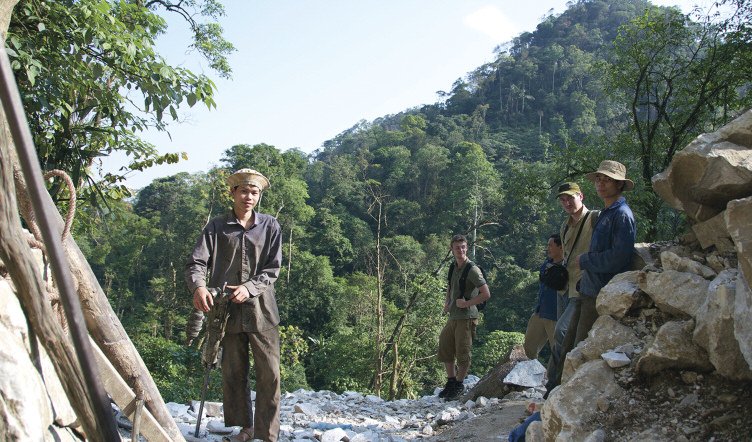
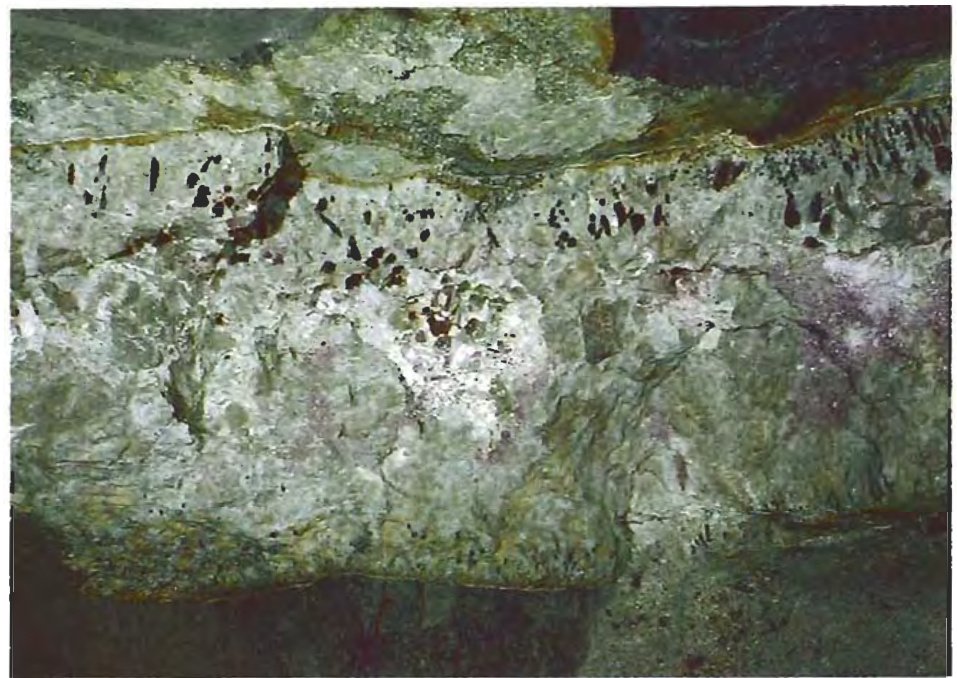
The first distinction is between primary and secondary deposits.
A primary deposit is the rock the gem originally formed in — the black-shale vein that holds Colombian emeralds, the marble and gneiss that holds Mogok ruby, the alkali basalt lava that holds Chanthaburi sapphire, the ironstone boulder that holds Queensland opal, the topaz rhyolite that holds Utah red beryl. Mining a primary deposit means working the source rock itself, either from the surface or by tunneling.
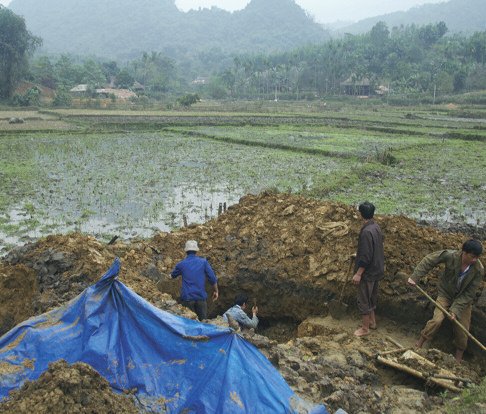
A secondary deposit (also called an alluvial or placer deposit) is gravel or sediment into which the gems have eroded out of older primary rock uphill and been concentrated by rivers, ocean waves, or ancient beach deposits. Most river-mined sapphire, ruby, spinel, chrysoberyl, and garnet is from secondary deposits. Sri Lanka’s illam gem gravels, the Ilakaka sapphire fields of southern Madagascar, the Pailin/Cambodia corundum workings shown in the Pardieu video, Montana’s sapphire gravel bars, and much of the Queensland opal field are secondary deposits.
Secondary deposits matter for three reasons:
1. They concentrate gems. A river washes away everything less dense (quartz, feldspar, clay) and leaves the denser corundum, spinel, chrysoberyl, garnet, zircon, and gold concentrated on bedrock or in gravel bars. A miner can wash a ton of gravel and recover a handful of stones.
2. They have been mined artisanally for centuries with minimal equipment. The same rivers that concentrate gems also provide water and transport, which is why Ratnapura (Sri Lanka), Mogok (Myanmar, whose gem markets are adjacent to alluvial workings), Chanthaburi (Thailand), Ilakaka and Bemainty (Madagascar), Pailin (Cambodia) and the Montana sapphire districts have all been worked for generations with hand labor.
3. They mix sources. A river that drains multiple geological formations can deposit rubies from one primary source and sapphires from another side by side, which is why Sri Lankan gravels contain such a wide mix of species and colors. This also means origin determination on an alluvial stone can be difficult even for a lab — the crystal’s inclusions tell the story, not the location it was found.
In jewelry retail, most colored stones you sell will have been mined from secondary deposits (because that is where the largest volumes are accessible) even though they formed in a primary rock — sometimes a few kilometers away, sometimes a hundred kilometers upstream. The geography is easy to overstate. Saying “this is a Pailin ruby” names the mining location; it doesn’t necessarily mean the stone formed under Pailin — though in Pailin’s case the basalt is nearby.
[MEDIA: video | C17-M03-V1]
Watch: Sapphire and Ruby Mine in Pailin, Cambodia — GIA (Vincent Pardieu)
Why here: This is the textbook example of small-scale secondary-deposit mining. High-pressure water hoses break down the riverbank into mud, a suction pipe moves the slurry to a jig, and gravitational separation traps dense corundum and garnet. Pardieu notes he collects samples directly from miners at the jig at the end of the day to ensure pre-treatment reference material for the lab.
Source: https://www.youtube.com/watch?v=q6CRKlDpEGE
Use: embed
How colored stones are mined: five methods
You do not need to be a mining engineer, but you should recognize the five methods by which colored stones reach the surface. Each produces a different visual profile of production risk and traceability.
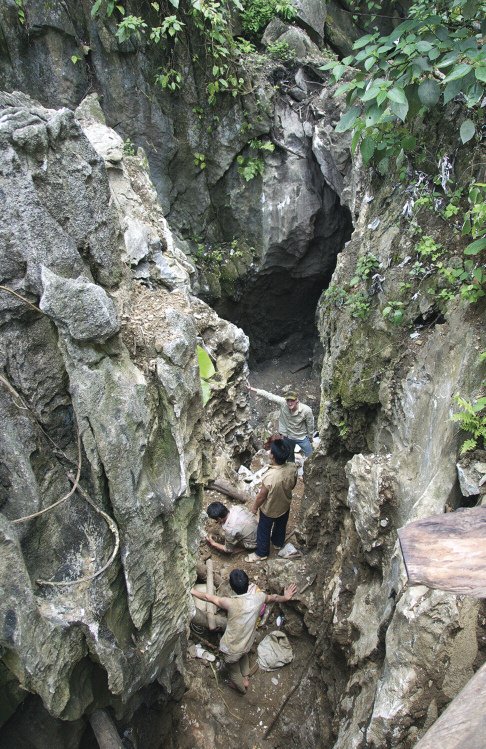
1. Artisanal hand-mining and simple shafts. The oldest method: individuals or small family groups dig pits, tunnels and adits by hand, often using only picks, shovels, hammer and chisel, and sometimes small explosive charges. Working conditions vary enormously — from family co-ops with a long local tradition (as in parts of Sri Lanka) to informal, unregulated, dangerous mining in conflict or post-conflict zones. Artisanal mining dominates much of colored-stone production in Madagascar, parts of Kenya/Tanzania, parts of Colombia, and rural Afghanistan. It can be extraordinarily low-tech: Lucas, in the Panjshir Valley video embedded below, describes trekking up into the Afghan mountains to find tunnels blasted into quartz veins, with rock washed manually in a wooden box by a stream to find emeralds. This is the production method behind most difficult traceability questions in colored stones.
[MEDIA: video | C17-M03-V2]
Watch: Emerald Adventures in Afghanistan — GIA (Andy Lucas)
Why here: The most vivid 3 minutes of artisanal tunnel mining in the GIA video library — abandoned tunnels, simple hand tools, manual rock washing to find Panjshir emeralds. Lucas says out loud what every visitor notices: “it’s amazing anybody mines for colored stones at all” given the ratio of rock moved to emerald recovered.
Source: https://www.youtube.com/watch?v=QUSnLD2cr-M
Use: embed
2. Alluvial washing: high-pressure monitors, sluices and jigs. This is the next step up from hand panning: a diesel pump drives a high-pressure water monitor (like a large fire hose) that blasts away overburden, a suction line pulls the resulting mud and gravel through a sluice, and either a riffled sluice box or a mechanical jig concentrates the dense gems. Pailin (GIA-CS-03) is the textbook example. Gem Mountain, Montana (GIA-CS-07) uses the same gravitational concentration principle at a smaller, consumer-facing scale:
[MEDIA: video | C17-M03-V3]
Watch: Passion and Searching for Sapphires — GIA (Gem Mountain, Montana)
Why here: Watch the “rock, bounce, rotate” sluice technique customers use to wash sapphire gravel at the public mine, and notice how the mine sells gravel by the bucket, heat-treats and facets customer finds, and even ships gravel to customers by mail. This is a modern, regulated secondary-deposit sapphire operation.
Source: https://www.youtube.com/watch?v=NumMOkhsi_M
Use: embed
3. Open-pit mechanized mining. The largest colored-stone mines today are open-pit operations with haul trucks, excavators, and processing plants on site. The most cited example is Kagem emerald mine in Zambia, operated by Gemfields — documented in GIA Field Gemology Expedition 44 (Pardieu & Saeseaw) as the world’s single largest open-pit colored gemstone mining operation, with production accounting for a substantial share of the world’s emerald supply. Mechanized open-pit mining also operates at Montepuez ruby mine in Mozambique (Gemfields’ other major colored-stone asset), at parts of the Belmont emerald mine in Brazil (detailed by Lucas et al. 2015 as a model of fully traceable Brazilian emerald production from mine to market), and at most Australian boulder opal and ironstone opal workings. Open-pit mines have capital costs and scale that tend to require corporate operators, and they produce far better traceability because the mine can track every tonne of ore to a specific bench.
4. Underground and tunnel mining. Tunneling into primary hard-rock deposits has produced some of the finest colored stones in history: the Chivor and Coscuez emerald mines in Colombia (tunnels driven into black shale veins following narrow emerald-bearing zones), the Wah Wah Mountains red-beryl mine in Utah (small tunnels in topaz rhyolite following clay-filled fractures), the Capão topaz mine (decline tunnels into itabirite at Ouro Preto), Panjshir Valley emerald adits (as shown in Lucas’s Afghanistan video), and Hpakant jadeite in Myanmar (using both conventional tunneling and large-scale mechanized open-pit methods, with extensive Bamar pick-mining in adjacent areas). Underground colored-stone mining is expensive, dangerous, and rare for gems other than high-value material — it requires the vein to be narrow but rich enough to justify tunneling.
5. Marine and dredge mining. Less common for colored stones than for diamonds or gold, but river-dredge and small-scale marine mining occurs for some Australian sapphire and, historically, for Sri Lankan gem gravels. Marine mining of colored stones remains niche.
The pipeline: from mine to showcase
A colored stone typically passes through more hands than a diamond does on its way from rock to ring. The exact path varies, but a typical route for a commercial corundum or emerald is:
- Miner (artisanal worker, family group, or company) recovers rough.
- Local buyer / rough broker at the mining area aggregates production from multiple miners, sorts by quality, often washes/pre-shapes the rough. In Thai/Cambodian corundum this has historically been done by Chanthaburi-based rough dealers who travel the producing areas.
- Treatment (if applicable) — most commercial corundum is heat-treated at this stage, almost always in Chanthaburi (Thailand) for corundum from Southeast Asia, Madagascar and Africa; emerald oiling happens after pre-forming.
- Cutting and polishing — Jaipur (Rajasthan, India) is the dominant global cutting center for colored stones, processing the majority of the world’s commercial emerald, ruby and sapphire (Lucas et al. 2016 describe Jaipur as the “global gem and jewelry power of the Pink City”). Smaller volumes are cut in Chanthaburi (Thailand, historically for corundum), in Idar-Oberstein (Germany, historically), in Panyu and Guangzhou (China, for manufactured jewelry — Hsu/Lucas Panyu article), and in producer countries (Brazil, Sri Lanka, Madagascar all have domestic cutting). High-end fine goods are often cut in Bangkok, New York, Idar-Oberstein or Jaipur specialty houses.
- Dealer/wholesaler — parcels move to international dealers, often sold via one of the major trade shows (Tucson in February, Hong Kong in September, the Gemfields Singapore/London auctions for branded rough, Jaipur shows, BaselWorld historically).
- Manufacturer/bench jeweler creates jewelry.
- Retail — your store.
[MEDIA: video | C17-M03-V4]
Watch: An Overview of Emerald Mining in Brazil by GIA (Sergio Martins)
Why here: Martins quickly describes the three main Brazilian emerald producing regions (Goiás/Santa Terezinha, Nova Era/Itabira, Bahia), noting that two — Bahia and Nova Era — remain the most important today. The video frames Brazil as a major source and sets up the Jaipur pipeline (much Brazilian rough is cut in Jaipur).
Source: https://www.youtube.com/watch?v=07m5fFqyZIc
Use: embed
This pipeline is why a single mine-to-market claim at the counter is hard to defend for most commercial goods. The exceptions are the vertically integrated operators — Gemfields’ branded ruby and emerald (sold at auction, with some downstream partner tracking); Belmont Mine in Brazil, which is documented by GIA as an integrated mine-to-market operation (Lucas 2015) that can trace a stone from a specific blast to the faceted gem; and small-volume mine-direct operations (American Montana sapphire producers, some Colombian emerald mines, some Australian opal operators). For everything else, an honest answer is usually: “This stone comes from X country, was cut in Y center, and was treated in Z way — I don’t have per-mine traceability on this parcel.”
Field gemology: why GIA sends scientists to mines
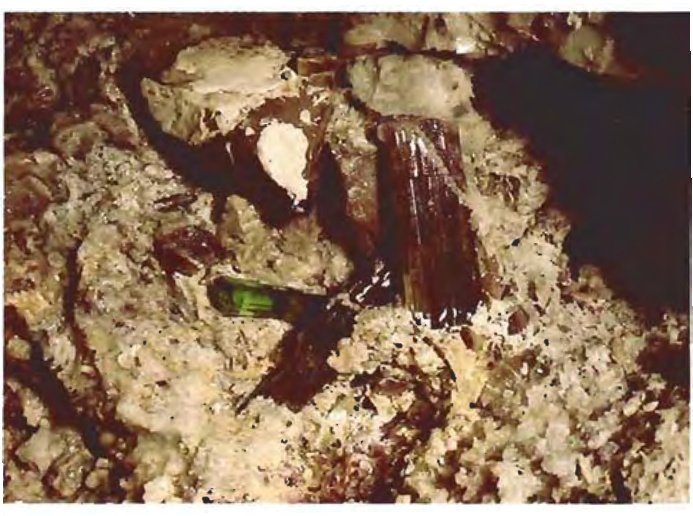
The reason GIA field gemologists like Vincent Pardieu, Wim Vertriest, Aaron Palke and Andy Lucas travel to remote mines is not primarily documentary. It is to build the lab’s reference collection of known-origin samples — stones collected directly from a working mine or directly from a miner at the mine (Pardieu’s closing comment in the Pailin video is exactly this: “we collect sapphires and ruby directly from the miner on the mining site at the jig, so we are sure these stones have not been heat treated and that they are really coming from that place”). Those stones, with their known origin, become the reference material against which the lab compares submitted stones during origin determination.
Without these reference collections, origin reports would not be possible. The inclusions, trace-element chemistry, and spectroscopic profile of a Mozambique ruby differ from those of a Mogok ruby in measurable ways — but you only know what those differences look like because someone collected known samples from each mine under controlled conditions. GIA field expeditions also document new deposits as they appear (the 2009 Montepuez ruby discovery, the 2012 Didy ruby rush in Madagascar, the 2016 Ethiopian emerald discovery, the Bemainty/Ambatondrazaka sapphire rush in 2016) so the lab can identify material from new sources as soon as it enters the market.
Key GIA field expeditions that feed this course’s species modules include:
– Mogok, Myanmar (2014–2015) — three-part series: Dattaw ruby mine and Baw Mar sapphire mine (Lucas, Pardieu)
– Montepuez, Mozambique (2015) — Discover Mozambique’s Montepuez Ruby Mine
– Zambia (2015) — Kagem open-pit visit (Miku and Kagem mines)
– Sri Lanka (2014) — Ratnapura, Elahera and the mining-to-market pipeline
– Brazil (2014) — Belmont emerald mine (mine to market) and Emerald Sources of Brazil
– Luc Yen, Vietnam (2013, 2015) — ruby and sapphire
– Ilakaka, Madagascar (2015) — sapphire-mines field visit
– Pailin, Cambodia (2013) — Pardieu concise field report and video
– Madagascar rushes (2012, 2015, 2016) — Didy, Zahamena, Ambatondrazaka/Bemainty
– Tanzania (2016) — Update on Colored Gemstone Mining in Tanzania (Pardieu/Vertriest)
Traceability and responsible sourcing: the honest story
Clients increasingly ask the responsible-sourcing question, and the right answer is not a branded slogan — it is a short description of the state of the problem.
-
The Kimberley Process does not cover colored stones. The KP certification scheme was designed specifically for rough diamonds in response to 1990s conflict-diamond campaigns. It has no application to colored stones. Colored-stone supply chains are more fragmented, involve more artisanal production, are frequently traded across multiple borders before cutting, and — critically — lack the international governmental agreement that created the KP.
-
Several frameworks exist. Archuleta (2016), “The Color of Responsibility,” published in G&G, lays out the landscape: OECD Due Diligence Guidance for Responsible Supply Chains of Minerals from Conflict-Affected and High-Risk Areas; the CIBJO and colored-stone association standards; the Responsible Jewellery Council certification; initiatives by individual companies (Tiffany & Co., Brilliant Earth, and others); Gemfields’ model of operating large-scale mines with visible production and auction sales with partner compliance requirements; and the GIA’s own developing origin and traceability report — the service shown in GIA-CS-01 where a client submits a rough stone with documented mine origin, the lab documents it, the client cuts it, and the lab re-examines the cut stone to confirm that the finished gem matches the documented rough. (That service was in development at the time of the 2021 webinar; verify its current scope before claiming it is fully live.)
-
Artisanal mining is not the opposite of ethical mining. The common mistake is to assume corporate = good and artisanal = bad, or vice versa. Many responsible-source programs work directly with ASM (artisanal small-scale mining) cooperatives to support safe labor and fair pricing. Other artisanal mining is informal, unregulated, and in some cases associated with smuggling or armed groups in high-risk areas. Large corporate mining can operate with transparent labor and environmental standards, but can also displace communities or have large environmental footprints. Your job at the counter is not to audit a mine — it is to tell the truth about what you can and cannot verify.
-
What you can say confidently: when a stone has a GIA (or other major lab) origin report, you can state the country of origin as the lab determined it. When a stone comes from a vertically integrated producer with a mine-to-market program (Belmont, Gemfields-branded goods, some Montana sapphire operations, certain Australian opal operations), you can describe that program honestly. When a stone comes through the regular multi-dealer pipeline without a mine-direct claim, say so.
-
What you cannot say honestly: that every colored stone in your case is “conflict-free” (that term means something specific for diamonds, and no equivalent certification exists for colored stones); that a stone is “ethical” based on country of origin alone; that a “Colombian” emerald was necessarily mined under any particular conditions.
The right script when asked about ethics is:
“Colored-stone sourcing is harder to trace than diamonds because there is no international Kimberley Process for colored stones. This stone is [country/if known] — and on this piece we [have / don’t have] a mine-direct traceability program through the supplier. What I can tell you is the treatment, the lab identity, and the quality. If traceability is important to you, I can show you pieces from [specific traceable program carried by your store].”
Five mines worth knowing as counter stories
You will be asked about these. Memorize one line on each.
- Mogok, Myanmar (Burma) — the “Valley of Rubies.” More than 800 years of mining history; the world’s finest pigeon’s-blood rubies come from marble-hosted deposits near Mogok, along with blue sapphires, spinel (some of the finest red spinel in the world, historically mistaken for ruby), peridot, and a long list of other species. Restricted access for decades; GIA field teams visited in 2014–2015.
- Montepuez, Mozambique. Discovered in 2009; developed by Gemfields from 2012 onward; now the dominant ruby source in the world, producing large quantities of fine, bright, low-iron ruby that competes with Burmese material at the top of the market. Documented by Chapin et al. (2015) and Pardieu’s series of reports.
- Kagem, Zambia. The world’s largest emerald mine by production volume; operated by Gemfields; mechanized open pit; produces dark, slightly bluish-green emeralds in large sizes; Pardieu in the 2015 GIA field report calls the pit the largest colored-gemstone mining pit in the world.
- Belmont Mine, Minas Gerais, Brazil. A fully integrated mine-to-market emerald operation documented in detail by Lucas et al. (2015) — traceable from blast to finished stone; an example of a mine where per-stone traceability claims are credible.
- Ilakaka, Madagascar. A 1998 sapphire rush in southern Madagascar opened one of the largest sapphire deposits ever found; alluvial production still continues; the deposit produces a wide range of blue, pink, yellow, and padparadscha-colored sapphires from metamorphic material, including many stones that resemble Sri Lankan material closely enough to require careful lab separation.
On the floor: applying it this week
- Monday (10 minutes): Ask your buyer or manager which mines/countries your store’s current colored-stone inventory comes from and which parcels have a documented mine-to-market program. Don’t guess at sourcing in front of a client until you’ve had this conversation internally.
- Tuesday (15 minutes): Watch the four videos embedded in this module — together they’re under 20 minutes. Pailin shows artisanal alluvial mining, Afghanistan shows artisanal tunnels, Montana shows consumer-scale gravel washing, Brazil shows the producer-country overview.
- Wednesday (practice): Memorize the responsible-sourcing script above and practice saying it out loud to a colleague. The trap is to overclaim (“everything we sell is ethically sourced”) or underclaim (“I have no idea where any of this comes from”) — the honest middle is what clients actually want.
- Thursday: Pick one of the five mines above (Mogok, Montepuez, Kagem, Belmont, Ilakaka) and read one GIA Research & News article about it.
- Friday (5 minutes): Look at one colored stone in your case and walk yourself through its pipeline — rough likely source, where it was cut, what treatment it had, how it got to you. Articulate the gaps honestly.
Objections, mistakes and edge cases
| Situation | The trap | Better move |
|---|---|---|
| Client asks “is this emerald ethical?” | Saying yes or no without basis | Explain that colored stones do not have a universal certification like the diamond Kimberley Process; state what you know (origin, lab report, any traceability program on this piece) and offer traceable alternatives if that matters to the client. |
| Client asks “what mine is this from?” | Guessing a mine name | You can almost never identify a specific mine from a finished stone — even origin reports name the country/region, not the mine. Say so. |
| Client assumes all emerald mining is large corporate pits like Kagem | Overgeneralizing | Distinguish large mechanized pits (Kagem, parts of Belmont) from family co-op pits, tunnels, and artisanal workings; production scales vary enormously even within one country. |
| Client asks why colored stones don’t have a Kimberley Process | Claiming the industry doesn’t care | Explain that colored stones are far more fragmented across small sources, species, and supply chains than diamonds; OECD and industry frameworks exist but no intergovernmental treaty covers them yet (Archuleta 2016 is the best reference on why it’s hard). |
| Client brings an “ethical sapphire” from a branded direct-to-consumer seller | Dismissing or endorsing without basis | Ask what documentation the seller provides; compare it to what your store offers. Traceability claims need to be traceable to a mine-level document, not just a marketing page. |
| Edge case: a stone with a credible origin report but no mine name | Treating the country as a guarantee of mining conditions | Origin reports establish geographic origin, not mining conditions or ethical standards. The two questions are different. |
Self-check
- What is the difference between a primary deposit and a secondary (alluvial/placer) deposit?
- Why do secondary deposits often contain multiple species side by side?
- Name the five mining methods described in this module.
- Which Indian city is the dominant global colored-stone cutting center?
- Why do GIA field gemologists travel to mines and collect samples directly from miners at the jig?
- Why does the Kimberley Process not apply to colored stones?
- Name one vertically integrated emerald mine GIA has documented as mine-to-market traceable.
- In which decade was the Montepuez ruby deposit discovered?
- If a client asks “what mine is this sapphire from?” what is the honest answer in most cases?
- Why is artisanal mining not automatically unethical — and why can corporate mining not be called automatically ethical?
Go deeper
- Video: Sapphire and Ruby Mine in Pailin, Cambodia (C17-M03-V1) — 3 min.
- Video: Emerald Adventures in Afghanistan (C17-M03-V2) — 3 min.
- Video: Passion and Searching for Sapphires / Gem Mountain Montana (C17-M03-V3) — 11 min.
- Video: An Overview of Emerald Mining in Brazil (C17-M03-V4) — 2 min.
- Lucas A. et al. (2015) The Belmont Mine and an Emerald’s Journey from Mine to Market. GIA Research & News — https://www.gia.edu/gia-news-research/belmont-mine-emeralds-journey-mine-to-market
- Chapin M. et al. (2015) Mozambique: A Ruby Discovery for the 21st Century. G&G 51:1 — https://www.gia.edu/gems-gemology/spring-2015-mozambique-ruby-discovery-21st-century
- Archuleta J. (2016) The Color of Responsibility: Ethical Issues and Solutions in Colored Gemstones. G&G 52:2 — https://www.gia.edu/gems-gemology/summer-2016-color-responsibility-ethical-issues-solutions-colored-gemstones
- Lucas A. et al. (2016) Jaipur, India: The Global Gem and Jewelry Power of the Pink City. G&G 52:4 — https://www.gia.edu/gems-gemology/winter-2016-jaipur-india
- Lucas/Pardieu (2014) Mogok Expedition Series Parts 1–3. GIA Research & News.
Media credits
- Video: “Sapphire and Ruby Mine in Pailin, Cambodia, by GIA” — GIA, https://www.youtube.com/watch?v=q6CRKlDpEGE. Embedded via YouTube; embedding enabled, verified 2026-09-11.
- Video: “Emerald Adventures in Afghanistan | GIA” — GIA, https://www.youtube.com/watch?v=QUSnLD2cr-M. Embedded via YouTube; embedding enabled, verified 2026-09-11.
- Video: “Passion and Searching for Sapphires” — GIA, https://www.youtube.com/watch?v=NumMOkhsi_M. Embedded via YouTube; embedding enabled, verified 2026-09-11.
- Video: “An Overview of Emerald Mining in Brazil by GIA” — GIA, https://www.youtube.com/watch?v=07m5fFqyZIc. Embedded via YouTube; embedding enabled, verified 2026-09-11.