Module 2: Opening and Closing: The Two-Person Rule
The daily operating rhythm of a fine jewelry boutique contains two distinct periods of extreme vulnerability: the morning opening and the evening closing. During the midday trading hours, a jewelry salon operates behind locked display cases, under the active scrutiny of multiple sales professionals, within sight of neighboring merchants, and surrounded by public foot traffic. But during opening and closing, the protective security envelope collapses.
Electronic perimeter intrusion alarms are disarmed; motion sensors are bypassed; heavy safes and reinforced vault doors are unlocked; and millions of dollars in loose diamonds, platinum mountings, and luxury timepieces are physically handled in open trays across the showroom. Most critically, these procedures often take place when the street is quiet, neighboring retail businesses are closed, and staffing levels are at their lowest.
According to long-term crime analysis by the Jewelers’ Security Alliance (JSA), more than 60% of all violent hostage, kidnapping, and ambush encounters in the jewelry trade occur while employees are entering or leaving the premises. In an ambush robbery, criminals do not attempt to crack a TL-30×6 safe or defeat electronic vibration sensors in the dark. Instead, they wait in shadows, vehicles, or adjacent corridors to intercept an arriving manager, forcing them at gunpoint to unlock the doors, enter keypad codes under duress, and empty the vault before a single sales consultation has begun.
To eliminate this vulnerability, the international fine jewelry industry, governed by underwriting mandates from insurers such as Jewelers Mutual, enforces a non-negotiable operational doctrine: The Two-Person Rule. Opening or closing a fine jewelry salon alone is not merely a breach of company policy; it is an invitation to catastrophe.
—
1. The Anatomy of the Two-Person Opening Sequence
The Two-Person Rule is not simply having two colleagues arrive at the store at the same time and chat while unlocking the door. When two associates walk up to an entrance together, an armed assailant hiding around the corner can capture both simultaneously with a single drawn weapon. The Two-Person Rule is a rigid, multi-stage tactical protocol designed so that if one employee is compromised, the second employee remains completely safe, unobserved, and capable of instantly summoning armed law enforcement.

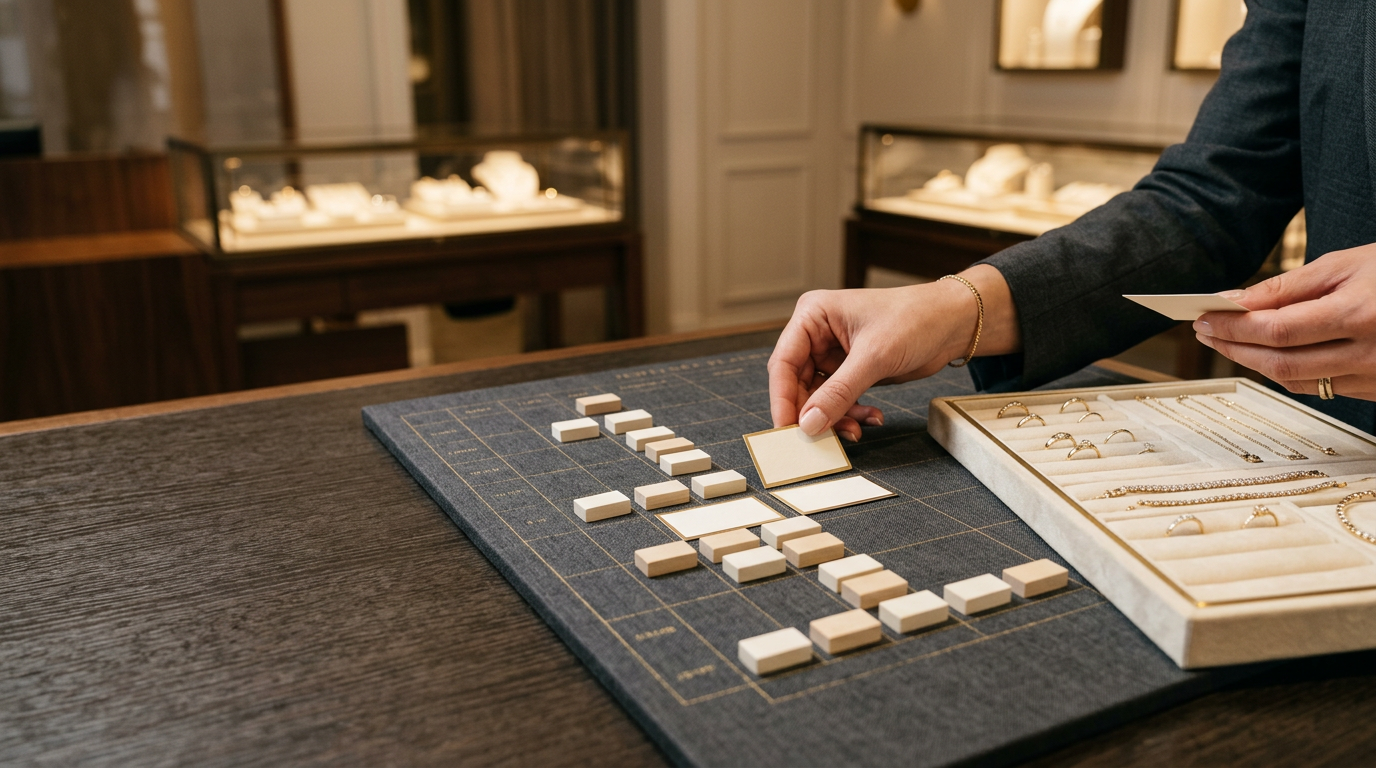
The protocol designates two operational roles: Employee A (The Scout) and Employee B (The Observer).
Stage 1: Arrival & Perimeter Surveillance
– Arrival Coordination: Both employees arrive at the retail location simultaneously in separate vehicles, parking in predetermined locations that afford clear lines of sight to the storefront.
– The External Drive-By Sweep: Before parking, Employee A or B drives slowly around the perimeter of the freestanding building or shopping center parcel. They observe:
– Are there unfamiliar occupied vehicles idling in the lot with tinted windows or out-of-state plates?
– Are there utility workers, maintenance contractors, or loiterers positioned near the store entrance without marked commercial vehicles?
– Are exterior light fixtures intact, or have bulbs been unscrewed or smashed?
– Are there ladders, cut wires, roof access hatches open, or signs of forced entry on rear exit doors?
– The Standoff Position: If the exterior appears normal, Employee A parks near the entrance. Employee B parks at a safe distance across the parking area (typically 75 to 100 feet away) with an unobstructed view of the front door and the designated All-Clear window.
– Observer Readiness: Employee B must remain inside their vehicle with doors locked, windows up, engine running, and mobile phone in hand with `911` pre-entered on the screen. Employee B does not check text messages, read morning news, or apply makeup. Their sole duty is unbroken visual surveillance of Employee A.
—
—
Stage 2: Solo Entry and Immediate Lock-In
– Solo Approach: Employee A leaves their vehicle and walks directly to the entrance, keeping their hands free and scanning their immediate surroundings.
– Key Inspection: Employee A inspects the exterior lock cylinder. Has it been tampered with? Is there glue, scratches, or drill marks?
– Entry & Immediate Relock: Employee A unlocks the door, enters swiftly, and immediately locks the door behind them from the inside. Leaving the door unlocked while walking to the alarm keypad allows an attacker to rush in behind the employee.
– Alarm Disarmament: Employee A walks directly to the primary alarm keypad and enters their unique personal identification code before the entry delay timer expires (typically 30 to 45 seconds).
– The Duress Protocol: If an assailant was hiding inside or intercepted Employee A at the door, Employee A enters the secret Duress Code (a modified version of their PIN, such as reversing the last two digits or entering a dedicated distress digit). The keypad beeps as though disarmed normally, silencing local buzzers, but instantly transmits a priority silent panic alarm to the central monitoring station with an explicit police dispatch code: “Armed robbery in progress / Hostage on premises.”
Stage 3: The Internal Facility Sweep
Before signaling Employee B, Employee A must confirm that the building interior is completely secure. Intruders frequently break in during overnight hours through adjacent drywall or rooftop HVAC ducts, waiting silently inside to ambush opening personnel.
Employee A systematically inspects:
1. Showroom Display Line: Are showcase glass tops intact? Are display pads undisturbed?
2. Restrooms and Janitorial Closets: Physically push open all stall doors and check behind privacy curtains.
3. Manager’s Office & Breakroom: Check behind desks, open storage closets, and verify that the rear emergency exit door has not been unlatched from the inside.
4. Vault/Safe Outer Chamber: Inspect the safe door. Are dials intact? Are vibration sensor indicator lights green? Are there any drill shavings or scorch marks on the steel exterior?
5. Drop-Ceilings and Vents: Look upward to confirm no acoustic ceiling tiles have been shifted or removed.
Stage 4: Setting the All-Clear Signal
Only when the entire physical sweep is complete and Employee A is 100% certain the salon is secure do they deploy the All-Clear Signal.
—
2. The All-Clear Signal System
An All-Clear Signal is an inconspicuous physical visual marker placed by Employee A that confirms to Employee B outside that the premises are secure. It is the tactical bridge between the inside scout and the outside observer.
Design Rules for a Secure All-Clear System
1. Natural Aesthetics: The signal must look entirely natural to an outside observer, security camera, or casual pedestrian. It must never be an overt sign, such as a paper note or an electronic sign that screams “Security Signal.”
2. Visible from Distance: The marker must be clearly visible from Employee B’s parked vehicle across the parking lot through the storefront glass.
3. Dynamic Rotational Schedule: A static all-clear signal is a lethal vulnerability. If a boutique always leaves a blue desk calendar in the left window when safe, criminals casing the store will notice the pattern over three mornings. During an ambush, they will hold a gun to Employee A’s head and say: “Go put the blue calendar in the window right now, or I’ll shoot.”
– To defeat this, boutiques maintain a Confidential Rotational Signal Calendar. The signal changes daily based on day of the week, date, or a rotating weekly schedule:
| Day of Week | Visual All-Clear Marker | Exact Position & Orientation |
|—|—|—|
| Monday | Black Leather Watch Winder Box | Centered on second display shelf, lid open at 45° |
| Tuesday | Luxury Brand Hardcover Monograph | Upright in third window alcove, cover facing outward |
| Wednesday | Ceramic Floral Vase | Moved from reception desk to right corner of glass bay |
| Thursday | Window Blind Wand / Slat Angle | Blinds tilted down at 45° angle across center bay |
| Friday | Brass Desk Clock | Positioned on counter top, hands set facing front entrance |
| Saturday | Velvet Show Tray Stand | Placed vertically against back display wall |
—
—
The Negative Operational Rule: The Core Ambush Protocol
The fundamental security doctrine governing the Two-Person Rule is The Negative Rule:
The absence of an all-clear signal, or the display of an incorrect signal, must ALWAYS be treated as an active, armed hostage ambush in progress.
If Employee A enters the boutique and any of the following occur:
– Condition 1 (Timeout): Three minutes elapse and no all-clear signal appears in the window.
– Condition 2 (Wrong Signal): An item appears in the window, but it is Tuesday and the Monday watch winder is displayed, or the book is upside down.
– Condition 3 (Distress Wave): Employee A appears in the window and waves, taps the glass, or shakes their head.
The Mandatory Response of Employee B:
1. NEVER APPROACH THE STORE: Under no circumstances does Employee B leave their vehicle, walk to the door, knock on the glass, or shout inside. Doing so walks a second hostage into the trap and destroys the only outside lifeline.
2. NEVER CALL EMPLOYEE A’S PHONE: Calling the employee alerts an armed intruder that an observer is outside, potentially provoking panic and violence.
3. PUT VEHICLE IN GEAR AND DRIVE AWAY: Employee B immediately pulls out of the parking space, drives 200 yards away to a secure public location, and dials `911`.
4. PRECISE LAW ENFORCEMENT DISPATCH SCRIPT:
> “This is [Employee Name], assistant manager at [Boutique Name], located at [Street Address]. I am currently executing our mandatory two-person opening procedure. My opening manager entered the building three minutes ago. Our mandatory visual all-clear signal has NOT been displayed. Under our corporate security protocol, this indicates an active robbery or hostage situation in progress inside the building. I am in a safe location in a [Vehicle Make/Color]. Please dispatch armed units immediately.”
—


—
3. Dual-Custody Safe & Vault Procedures
Once Employee B verifies the all-clear signal and enters the store (relocking the door immediately behind them), the morning safe-opening process begins.
Underwriting standards from Jewelers Mutual and corporate compliance standards established by major luxury houses mandate Dual Custody for safe and vault operations:
– No Single Point of Failure: No single retail employee, regardless of title, tenure, or ownership status, should possess the complete credentials required to open the primary overnight safe.
– The Split Credential Architecture: Commercial jewelry safes (typically UL-rated TL-15, TL-30, or TRTL-30×6) feature two distinct mechanical combination locks or a dual-user digital electronic lock.
– Employee A holds Combination 1 (or Key 1).
– Employee B holds Combination 2 (or Key 2).
– Opening Sequence: Employee A enters their code while Employee B stands guard outside the vault room. Employee A steps back, and Employee B enters their code. The heavy locking bolts can only be retracted when both independent credentials have been successfully authenticated.
Time-Delay and Time-Lock Architecture
High-risk retail boutiques use safes equipped with Electronic Time Delays (e.g., a mandatory 15-minute wait after entering correct codes before the lock releases) or Mechanical Time Locks (wind-up movements that mechanically block the boltwork from retracting between 7:00 PM and 8:30 AM).
– If an ambush crew captures staff at 8:00 AM demanding immediate safe opening, the mechanical time lock physically makes opening impossible. The staff cannot comply even under coercion, rendering early morning ambush tactics futile for the criminals.
—
4. The Evening Closing Lockdown Sequence
Closing a jewelry boutique requires the exact reverse of the morning protocol, executed with heightened vigilance. As the trading day concludes, associates are physically tired, mental focus wanes, and the volume of physical merchandise moving across the floor is at its peak.
The 5-Step Closing Protocol
1. Punctual Door Lockdown: At the exact posted closing hour (e.g., 6:00 PM sharp), the entrance door is locked and deadbolted.
– Active Shoppers Inside: If clients are still completing purchases or repairs inside, assign one dedicated associate to stand directly at the front door with keys in hand. As clients finish, the associate unlocks the door, escorts the client out, and immediately re-locks and deadbolts the door. No new visitors are admitted under any circumstance: “Good evening, we are officially closed for the day, but we look forward to welcoming you tomorrow at 10:00 AM.”
2. Never Put Away While Customers Are in the Store: Under no circumstances should associates begin removing jewelry trays from display showcases and carrying them to the safe while customers are present. Carrying open trays of high-ticket diamond rings past browsing customers creates an extreme grab-and-run hazard.
3. Showcase Clearing & Systematic Tray Transfer: Once the showroom is 100% empty of customers and doors are locked:
– Associates transfer merchandise to the safe case-by-case.
– Trays are moved on secure rolling carts or in double-hand custody directly into the vault chamber.
– Every display showcase sliding door is locked immediately after its trays are removed.
4. Dual-Custody Vault Sealing: Both authorized employees verify that all inventory carts, repair envelopes, and loose stone parcels are inside the vault. Both employees spin the safe dials or engage the digital lock, physically testing the bolt handle to verify positive mechanical engagement.
5. Simultaneous Departure Protocol:
– Both closing employees arm the alarm system together, verifying that all perimeter door contacts and interior motion sensors show green status.
– Both employees exit through the front or rear employee portal together, locking the exterior door.
– Both walk to their vehicles simultaneously, maintaining 360-degree awareness of the parking lot.
– Each employee starts their car, locks their vehicle doors, and watches the other safely pull out of the lot before departing the property.
By institutionalizing the Two-Person Rule and the All-Clear Signal system, fine jewelry retailers build an unbreakable human and operational shield that completely neutralizes opening and closing ambush threats.