How Colored Stones Form: Geologic Environments from Basalt to Pegmatite to Marble
The two-sapphire problem
A bridal client compares two blue sapphires on velvet. Both are oval, both around two carats, both labeled simply “blue sapphire” — and one is three times the price of the other. “They look almost the same to me,” she says. “Is it just the brand?”
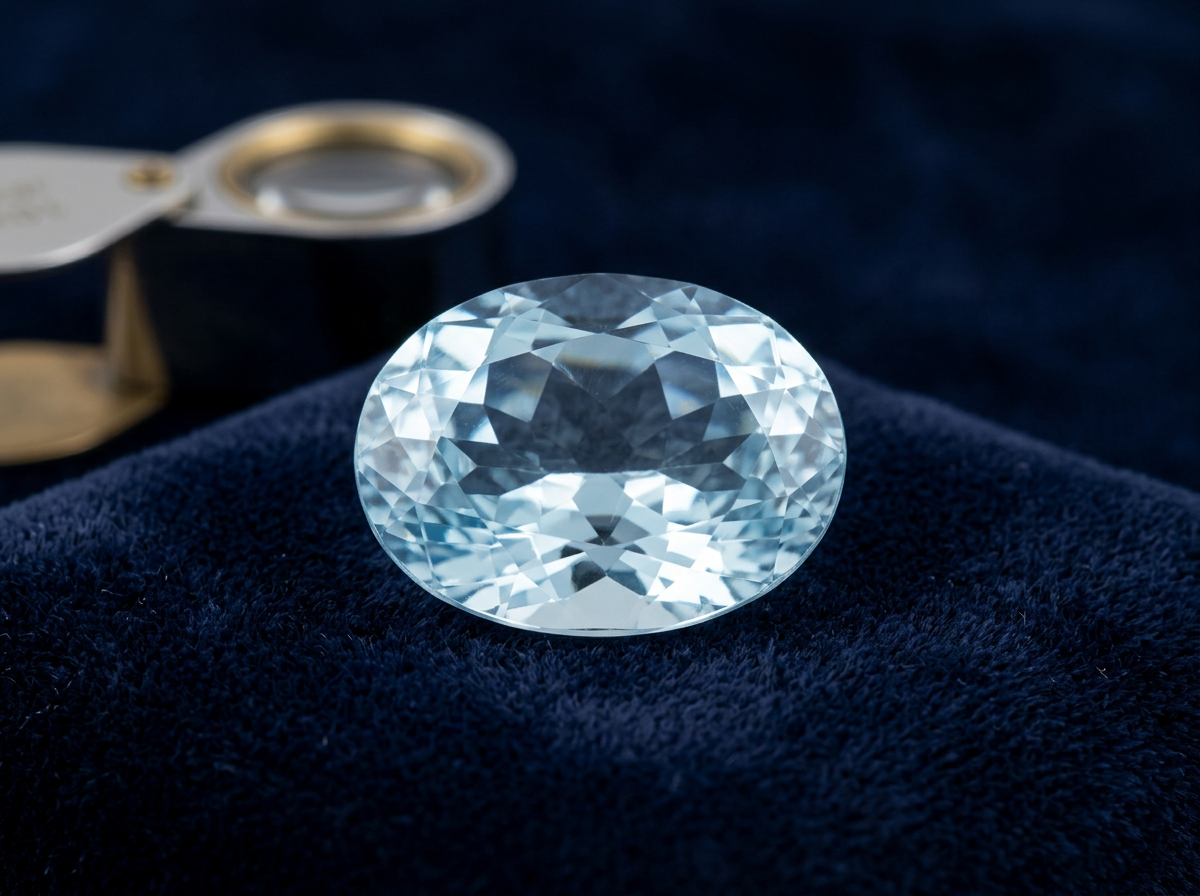
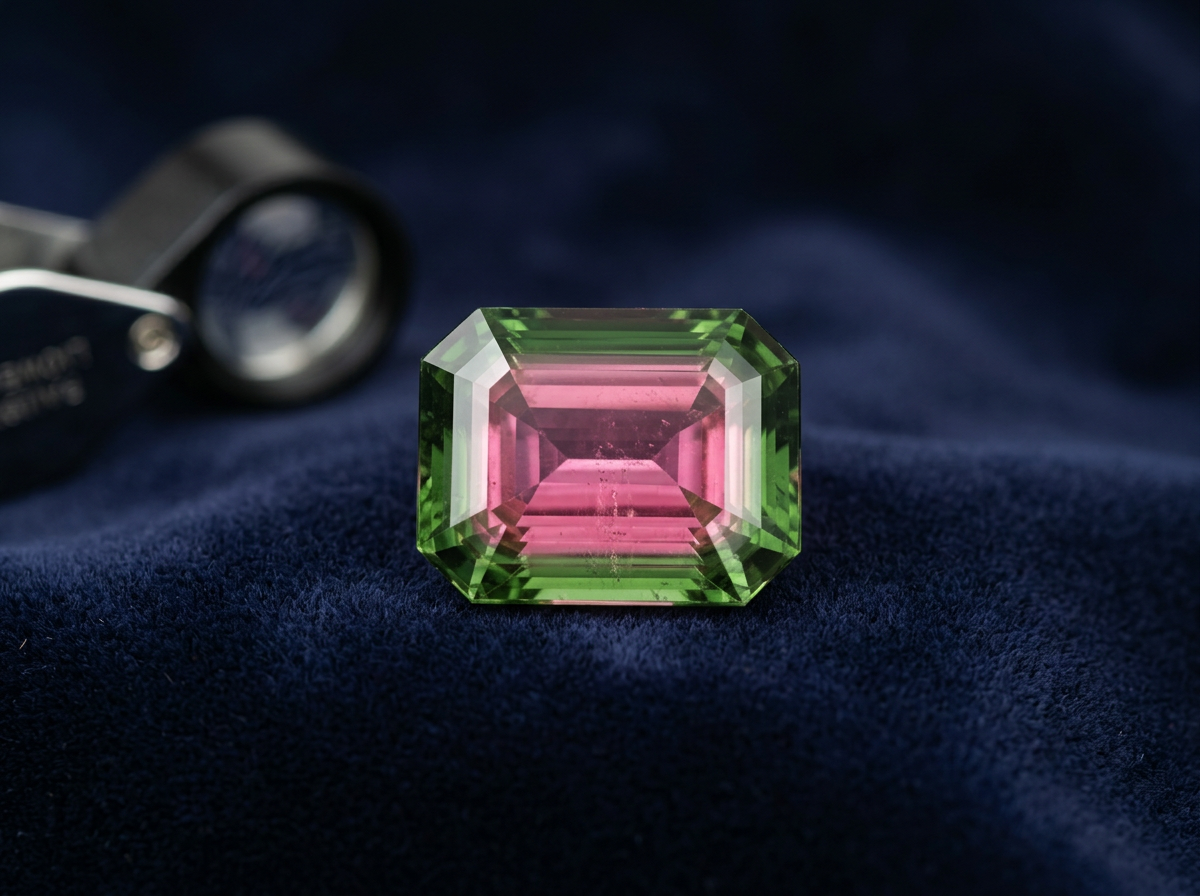
It is not the brand. It is the rock the stone formed in. The darker, inky blue sapphire is from a basalt field in Thailand or Australia — geologically young lava that carried aluminum-rich rock up from 50 kilometers under the surface and with it corundum that absorbed a great deal of iron. The brighter, livelier blue stone is a Sri Lankan or Madagascar sapphire from metamorphosed rock that lost its iron and kept its titanium, giving a saturated but bright royal blue with occasional silk. They are both sapphire — both Al₂O₃, both corundum, both 9 on the Mohs scale — but they crystallized in fundamentally different chemical environments, and every difference in color, silk, inclusion profile, treatment response, and price traces back to that fact.
This module explains those environments. You do not need a geology degree to sell sapphires, but the associate who can say “this one grew in basalt and this one in marble — that’s why they look different” is the associate the client trusts.
Corundum is corundum: the geochemistry behind source differences
Sapphire and ruby are both the mineral corundum, with the chemical formula Al₂O₃ — aluminum oxide. In its pure form, corundum is colorless. Color comes from trace elements that replace a small fraction of aluminum atoms in the crystal lattice: chromium produces the red of ruby and the pink of some sapphires; iron and titanium in combination produce blue (the Fe²⁺-Ti⁴⁺ intervalence charge transfer we will cover properly in Module 5); iron alone produces yellow and green; vanadium can produce a range of colors including the purple-to-blue change seen in some fancy sapphires.
The critical point for selling is this: which trace elements are present, how much rutile silk forms, and what mineral inclusions grow inside the crystal are all determined by the rock the corundum grew in. Host rock controls chemistry; chemistry controls color and inclusions; inclusions tell gemologists where the stone came from. Two broad families dominate gem corundum:
-
Basalt-hosted (magmatic) corundum forms when aluminum-rich rocks are carried down a subduction zone, metamorphosed into corundum at ~50 km depth, and then erupted rapidly in alkali basalt lava. The surrounding magma is iron-rich, so the sapphires absorb iron — producing inky blues, dark greens, golden yellows and parti-colors with strong color zoning. These sapphires rarely contain rutile silk because of the high iron and high-temperature formation, so they do not form clean asterism and their color does not respond to simple heat treatment the same way metamorphic sapphires do. Key sources: Thailand/Cambodia (Chanthaburi-Trat, Pailin, Kanchanaburi), Australia (New England, NSW/Queensland), Nigeria, China (Shandong, Penglai, Mingxi), southern Vietnam basalt fields, Madagascar’s northern basalt-related deposits.
-
Metamorphic (marble and related) corundum forms during regional metamorphism — particularly during continental collisions — in aluminum-rich marble or gneiss where iron is scarce. These stones have low iron content, producing bright, saturated colors: pigeon’s-blood red in Mogok rubies, royal blue in Ceylon and Mogok sapphires, pinks, padparadscha, and — because rutile (titanium oxide) exsolves as fine needles when iron is low — they commonly contain the silk that produces asterism and the “velvet” of Kashmir. Key sources: Myanmar (Mogok, Mong Hsu), Sri Lanka (Ratnapura, Elahera), Vietnam (Luc Yen/Quy Chau), Kashmir (India/Pakistan, now essentially exhausted), Afghanistan (Jegdalek), Tajikistan (Snezhnoe), Nepal, Madagascar (Ilakaka and other southern deposits), Mozambique ruby (Montepuez is amphibole-related metamorphic rock, not marble, but low-iron and bright).
That is the essential distinction. When you hear a gemologist refer to “basalt sapphire” versus “metamorphic sapphire,” that is the split they are referencing. The price difference between the two bridal sapphires at the start of the module is not arbitrary — it reflects rarity (far more fine royal blue comes from low-iron metamorphic deposits than from basalt deposits) and consumer preference for bright, saturated color.
[MEDIA: video | C17-M02-V1]
Watch: Sapphire and Ruby Mine in Pailin, Cambodia — GIA (Vincent Pardieu in the field)
Why here: Watch Pardieu show a working alluvial basalt-corundum mine — high-pressure wash hoses, jig separation, Mr. Doy’s family team, and the explanation that field gemologists collect samples directly from miners to establish pre-treatment reference material for the lab.
Source: https://www.youtube.com/watch?v=q6CRKlDpEGE
Use: embed
Environment 1: Alkali basalt — dark sapphire and ruby
Rock type: Extrusive igneous — alkali basalt lava flows erupted from volcanoes at continental margins associated with subduction zones.
Depth of formation: Corundum itself forms at roughly 45–50 km depth in the mantle or lower crust where aluminum-rich rocks (shale, laterite, bauxite carried down a subduction zone) are metamorphosed; alkali basalt magmas pick up corundum crystals as xenocrysts (foreign crystals) and carry them rapidly to the surface.
Typical gems: Blue sapphire (usually dark/inky), fancy sapphire (green, gold, yellow, parti-color — particularly Australian), some basalt-field rubies (Thailand/Cambodia), and some basalt-associated spinel.
Classic localities: Chanthaburi-Trat and Pailin (Thai/Cambodian border), Kanchanaburi (Thailand), Australia’s New England district (NSW/Queensland), Penglai/Hainan (China), Mingxi/Fujian and Changle/Shandong (China), southern Vietnam, several Nigerian and Madagascar deposits, Montana’s alluvial deposits have a more complex igneous history (lamprophyre/metasomatic) but are sometimes grouped loosely with magmatic sapphires.
Visual signature: Dark blue that often appears inky or navy in low light; greenish dichroism when viewed from the side; strong color zoning in fancy colors; generally no rutile silk (rarely stars); heat treatment commonly lightens color and reduces greenish overtones.
Levinson & Cook (1994) is the anchor paper for this environment — their subduction-xenocryst model explains why gem corundum is associated specifically with alkali basalt in subduction zones rather than with basalt in general (most basalt on Earth is mid-ocean-ridge tholeiite, which does not carry gem corundum). The GIA video from Pailin shows what these deposits look like at the mining end — alluvial secondary deposits, because the basalt itself weathers easily and the dense corundum accumulates in river gravels. Most basalt-field sapphire is actually mined from gravels, not blasted from bedrock.
Client: “So this darker sapphire is worse?”
Associate: “Not worse — different. The darker color is the geological signature of sapphires that formed in iron-rich basalt. Some clients love that deep navy. The price difference is because bright royal blue is rarer, and the market pays a premium for it. Let me show you both in different light and tell me which color you actually prefer — you might like the darker one better, and that’s fine as long as you know what you’re looking at.”
Environment 2: Pegmatites — tourmaline, beryl, topaz, kunzite and quartz
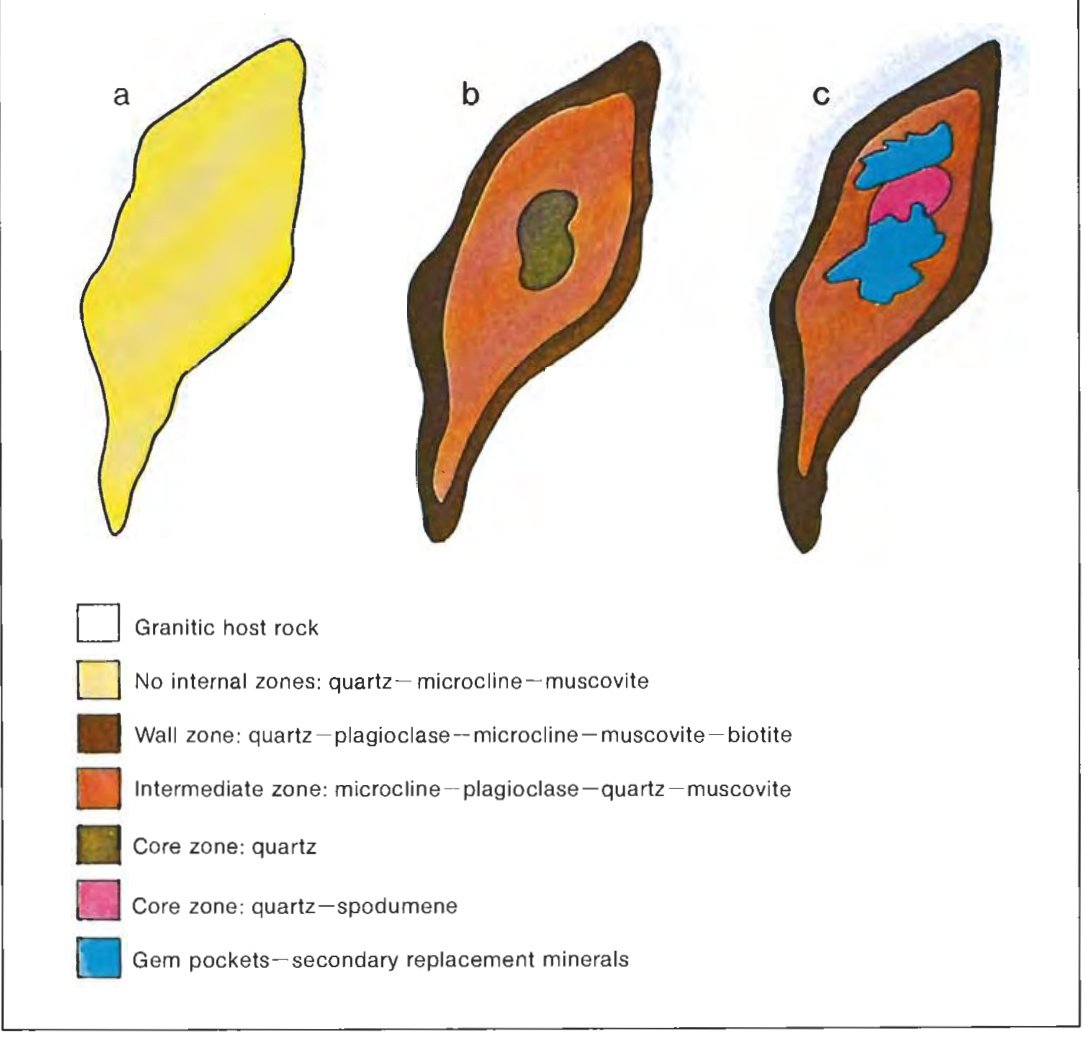
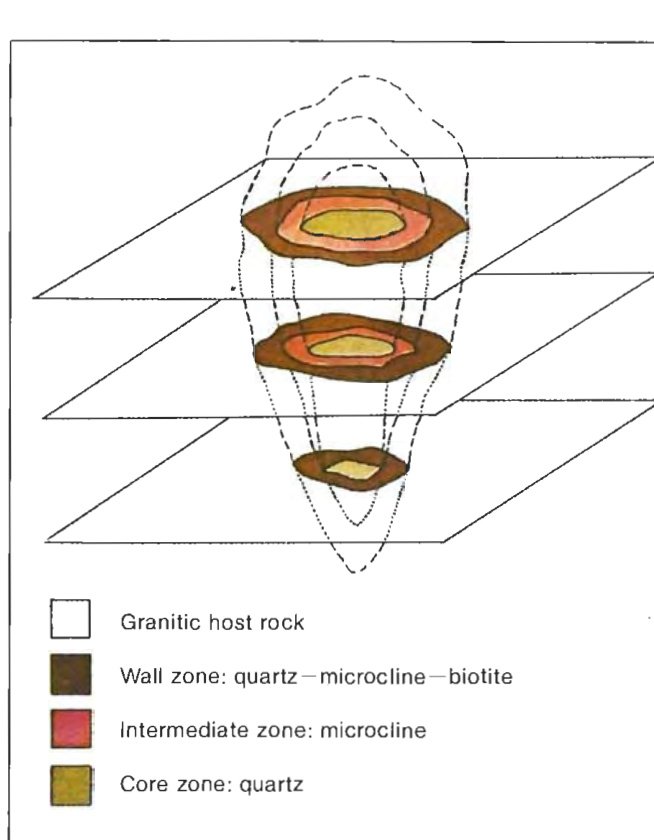
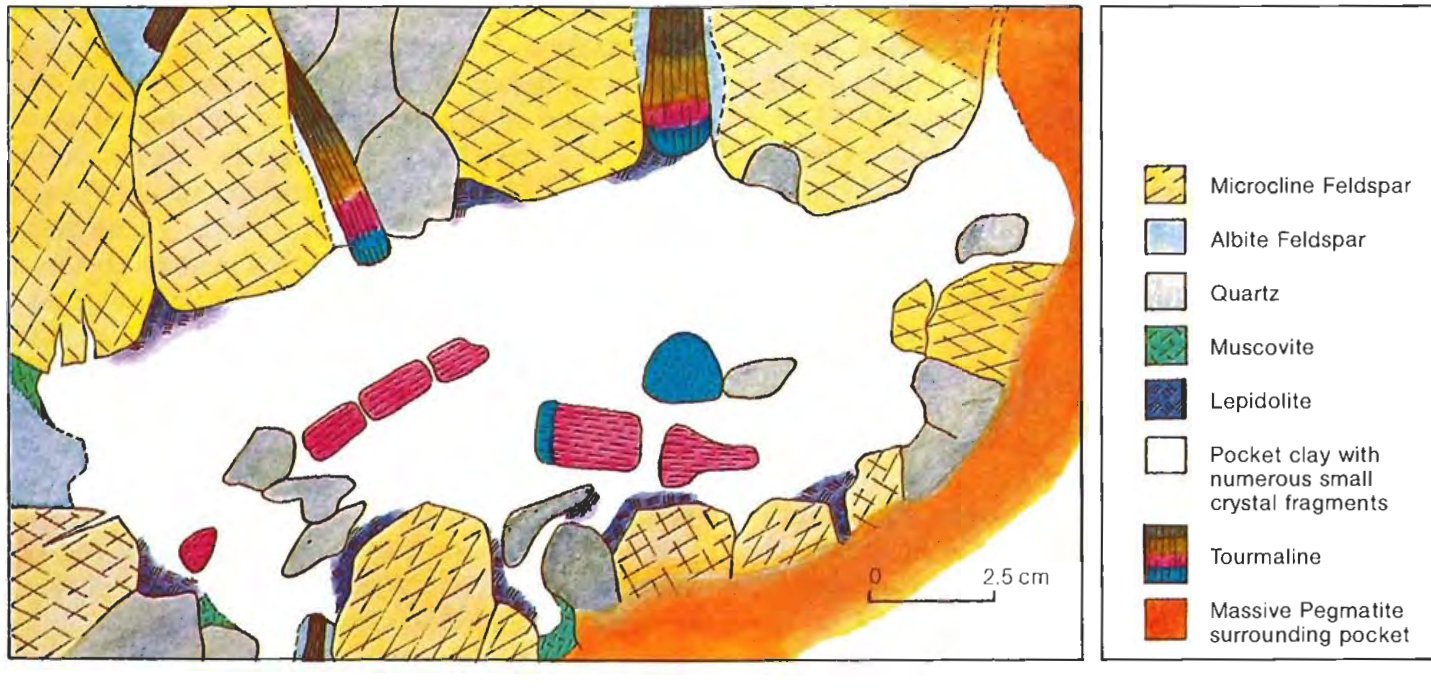
Rock type: Igneous, but not erupted — pegmatites are exceptionally coarse-grained igneous rocks that form as the last water- and volatile-rich residual magma cools at the margins of a granite pluton.
Depth of formation: Shallow to mid-crust (typically a few to 10 km); the key is slow cooling and high water content, which allows atoms to move freely and grow very large crystals (pegmatite pockets can yield crystal groups weighing hundreds of kilograms).
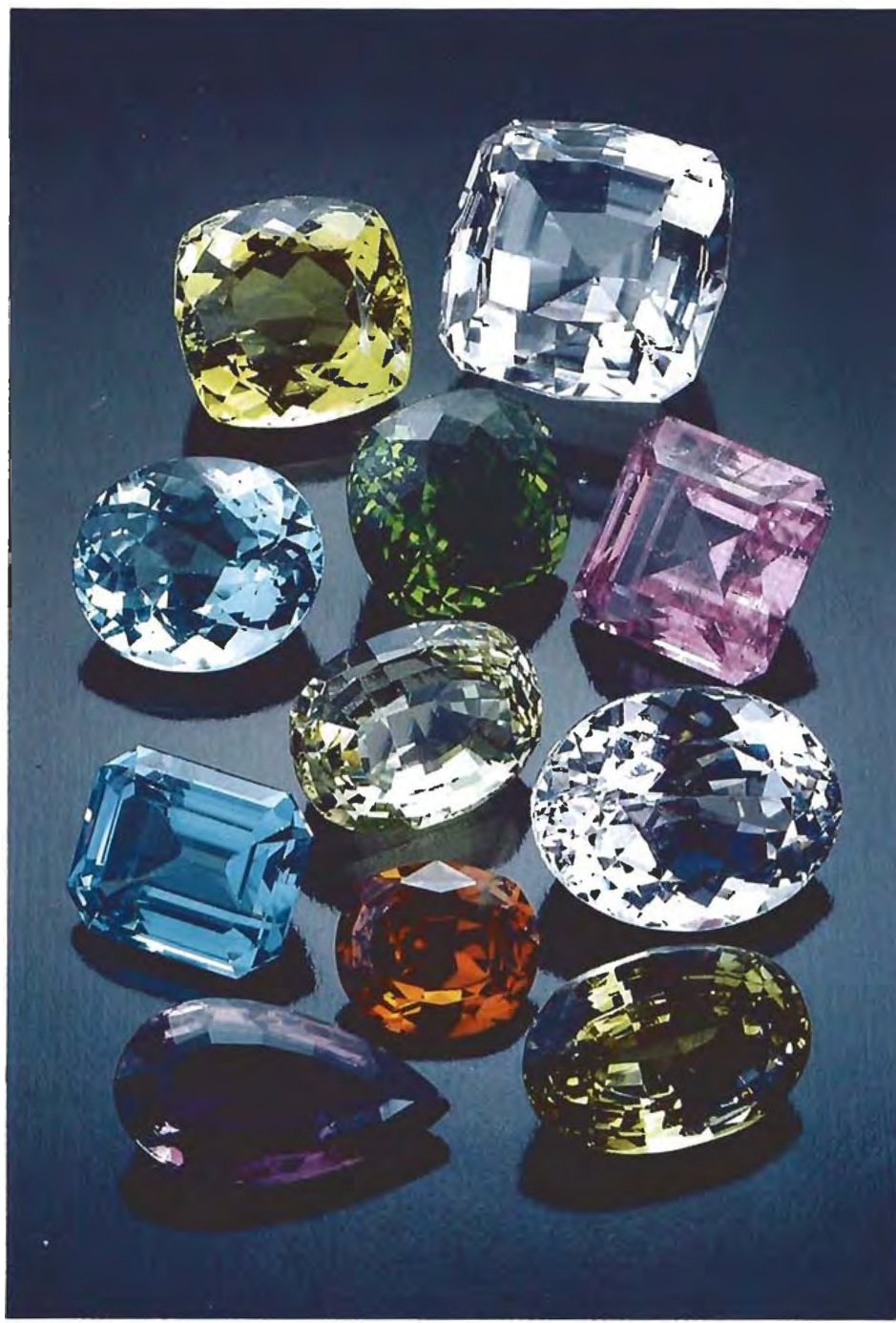
Typical gems: Beryl in every variety (aquamarine, morganite, heliodor, goshenite, green beryl — not most emerald, which is usually hydrothermal/schist-hosted rather than simple pegmatite, though some emerald deposits are pegmatite-related), tourmaline (including Paraíba-type cuprian tourmaline from Brazil’s Batalha mine and Mozambique), topaz (much commercial colorless/blue topaz starts as pegmatite material before irradiation), kunzite (lilac spodumene, from Afghanistan/Pakistan and San Diego County), spessartine garnet, quartz (smoky, citrine, amethyst commonly from pegmatite veins), feldspar (moonstone, amazonite, labradorite in related alkali pegmatites), brazilianite, and many rare collector species.
Classic localities: Minas Gerais (Brazil) — Governador Valadares, Araçuaí, Ouro Preto region; San Diego County and Maine (United States); the Himalayan deposits of Pakistan/Afghanistan (Skardu, Gilgit-Baltistan — source of much fine aquamarine, tourmaline and kunzite); Madagascar (especially the southern pegmatite fields around Anjanabonoina and Mt. Ibity); Nigeria and Mozambique (2000s–2010s discoveries).
Visual signature: Large crystals with elongate prismatic habits; aquamarine is typically blue/green and eye-clean (pegmatites are relatively low-stress environments), morganite is pink-to-peach beryl with few inclusions; tourmaline commonly shows color zoning along the crystal (watermelon tourmaline is a pegmatite signature), Paraíba-type tourmaline carries copper and manganese to produce neon blue/violet colors; kunzite shows strong pink/violet pleochroism and perfect cleavage.
The anchor reference is Shigley & Kampf (1984), which remains the canonical review of gem-bearing pegmatites; Proctor (1985) covers the Minas Gerais tourmaline district specifically.
One rare gem that looks like a pegmatite find but isn’t is red beryl (bixbite) from the Wah Wah Mountains of Utah — Shigley et al. (2003) showed it forms in topaz rhyolite as a vapor-phase mineral (volcanic gases reacting with the host lava), not in pegmatite. It is one of the rarest gemstones on Earth — roughly 60,000 carats produced in 25 years with only ~10% facetable — which makes fine red beryl an order of magnitude rarer than emerald.
(Production metrics confirmed by Shigley et al., Gems & Gemology, Winter 2003: Wah Wah Mountains red beryl rough production totaled roughly 60,000 carats over a 25-year span, with gem-quality facetable material comprising only an estimated 10%.)
Environment 3: Hydrothermal deposits — emerald, imperial topaz, quartz
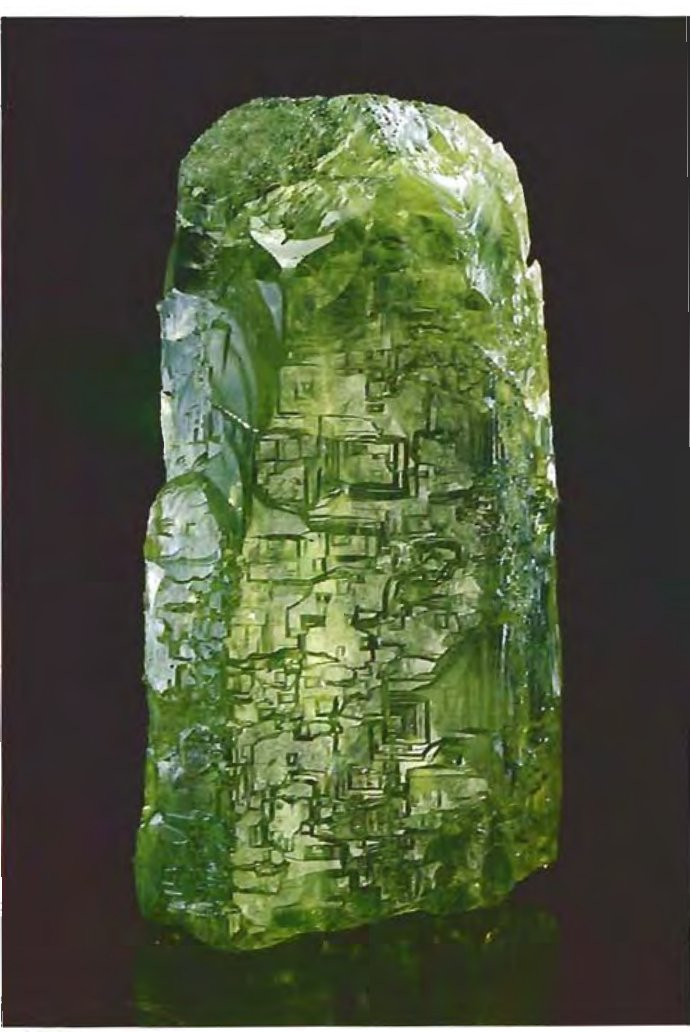
Rock type: Hydrothermal veins form when hot, pressurized, mineral-rich water flows through fractures in pre-existing rock and precipitates new minerals as it cools or reacts with the host. The temperature and chemistry of the fluid determine which gems form.
Depth of formation: Shallow to mid-crust; fluid is usually derived from cooling magma bodies, metamorphic reactions, or deeply circulating groundwater.
Typical gems and subtypes:
– Colombian emeralds (Muzo, Chivor, Coscuez, La Pita, Coscuez) form in sediment-hosted hydrothermal veins — hot fluids carrying beryllium (from nearby igneous intrusions) flow through Cretaceous black shales and limestones, reacting with vanadium- and chromium-bearing carbonate to deposit emerald in narrow veins. The shale-country-rock signature produces three-phase (gas, liquid, salt cube) inclusions and yellow/iron-oxide staining; vanadium-dominant chemistry produces the signature slightly warm, saturated Colombian green.
– Schist-hosted/pegmatite-related emeralds (Zambia Kagem, Brazil Nova Era/Itabira/Belmont, Sandawana Zimbabwe, Ethiopia Kenticha/Shakisso, Afghanistan Panjshir) form when pegmatite-derived beryllium-rich fluids react with chromium/vanadium-bearing mafic or ultramafic schists. These emeralds tend to be darker, more included with biotite/actinolite mica, and are the major commercial source today (Kagem alone is estimated at ~20% of global emerald production). (Industry operational data from Gemfields and GIA Field Gemology Expedition 44 indicates Kagem alone accounts for approximately 20% to 25% of global rough emerald volume by weight.)
– Imperial topaz from Ouro Preto, Minas Gerais (Brazil) forms hydrothermally in itabirite (metamorphosed iron formation) at Capão do Lana and adjacent mines, per Keller (1983) — this remains the only commercial imperial topaz source on Earth, similar to tanzanite’s single-source status.
– Quartz varieties (amethyst, citrine, ametrine) commonly grow in hydrothermal veins and volcanic geodes; ametrine’s distinctive purple-and-yellow zoning comes from a combination of growth zoning and differential irradiation in hydrothermal quartz from the Anahi mine (Bolivia).
Visual signature: Colombian emeralds typically show warmer, slightly yellowish/velvety green with three-phase inclusions; schist-hosted emeralds (Zambia/Brazil/Afghanistan) tend to be cooler, more bluish-green with mica/actinolite inclusions; imperial topaz shows characteristic reddish-orange to orange-pink bodycolor from chromium color centers, and is found only in Ouro Preto; hydrothermal quartz often shows color zoning and “tessin” or growth features.
Environment 4: Metamorphic rocks — marble-hosted ruby/sapphire, Kashmir sapphire, jadeite
Rock type: Metamorphic — rocks transformed by heat and pressure (often during continental collision) without fully melting. The two gemologically most important metamorphic environments are marble (metamorphosed limestone, i.e., recrystallized calcite or dolomite) for corundum, and high-pressure/low-temperature serpentinite mélange (in subduction zones) for jadeite.
Depth of formation: Medium to high-grade metamorphism at roughly 20–80 km depth. The Himalayan orogeny (~45 million years ago, as India collided with Asia) and the older Pan-African orogeny (~550 million years ago, which left a belt of gem-producing rock running from Mozambique through Kenya/Tanzania, Madagascar, southern India and Sri Lanka) are responsible for many of the world’s finest colored stone deposits.
Typical gems:
– Marble-hosted ruby: Mogok (Myanmar), Mong Hsu (Myanmar), Luc Yen/Quy Chau (Vietnam), Jegdalek (Afghanistan), Snezhnoe (Tajikistan), Nepal — low iron, bright saturated red (“pigeon’s blood” in top grades), calcite/dolomite inclusions and apatite/rutile crystals common, often with strong red fluorescence under long-wave UV because of low iron. Mong Hsu material often has a dark blue/black core that is routinely removed (or at least lightened) by heat treatment with flux before entering the market.
– Marble/metamorphic blue sapphire: Sri Lanka (Ratnapura, Elahera — geuda sapphire that is commonly heat-treated to bright blue), Burma (Baw Mar and Mogok sapphires) and Kashmir. Kashmir sapphire (India/Pakistan, discovered 1881, essentially mined out by the 1930s) is described by Schwieger (1990) and Atkinson/Kothavala (1983) as forming in metasomatized (fluid-altered) pegmatoid rock within marble — its “velvet” color comes from submicroscopic rutile and dust-like inclusions that scatter light.
– Mozambique ruby (Montepuez, discovered 2009): Though technically amphibole/metasomatic rather than pure marble-hosted, Montepuez ruby shares the low-iron bright-red chemistry of marble-hosted rubies and now dominates the fine ruby market.
– Jadeite jade forms exclusively in HP/LT metamorphic serpentinite mélange along faulted subduction-zone contacts, where sodium- and aluminum-rich fluids react with serpentinite to form jadeite pyroxene. The two dominant commercial sources are Hpakant (Kachin State, Myanmar — the source of nearly all high-grade imperial jade) and the Motagua River Valley (Guatemala, rediscovered in the 1970s).
[MEDIA: video | C17-M02-V2]
Watch: Gems of Northern Madagascar — GIA (Wim Vertriest explains Pan-African geology and a demantoid skarn deposit)
Why here: Vertriest gives the cleanest 4-minute explanation of how the Pan-African orogeny — which connected what are now East Africa, Madagascar, Sri Lanka, and southern India — produced one of the planet’s richest colored-stone belts. He also explains skarn formation (a sixth, hybrid environment worth knowing: a magmatic intrusion cooking sedimentary rock to produce new minerals like demantoid garnet).
Source: https://www.youtube.com/watch?v=cVs68sGjcqc
Use: embed
Environment 5: Sedimentary and supergene deposits — opal, turquoise, malachite, and the gravels that concentrate everything else
This category covers two different things, but they both happen near the surface and so group naturally:
(a) Gem minerals that form in sedimentary or weathered rock.
- Opal is amorphous silica (SiO₂·nH₂O, not a crystalline mineral) that forms when silica-rich water percolates through weathered rock and deposits microscopic silica spheres in voids and cracks. The play-of-color comes from visible-light diffraction off those ordered spheres (more in M05). Australian opal forms in sedimentary host: Queensland boulder opal forms in ironstone concretions of the Cretaceous Winton formation (Wise 1993); Lightning Ridge produces black opal; Coober Pedy white opal; and Ethiopian precious opal (Welo and Shewa provinces) forms in Tertiary volcanic nodules as a weathering product (hydrophane opal absorbs water, which changes its appearance — more in M09 treatments).
- Turquoise forms by supergene (near-surface) alteration of copper-aluminum-rich rock by groundwater, producing blue-to-green hydrated copper aluminum phosphate.
- Malachite (and azurite, chrysocolla) forms as secondary copper-ore alteration — the bright green banded material from the D.R. Congo (Katanga) and other copper belts.
(b) Placer deposits — gravels that concentrate gems eroded from older rock.
Many of the world’s most important colored stone sources are mined from sediment even though they formed in igneous/metamorphic rock, because gem minerals (hard, dense, chemically inert) survive weathering and accumulate in river and beach gravels. Sri Lanka’s gem gravels (illam) have produced sapphires, rubies, star sapphires, cat’s-eye chrysoberyl, spinel, garnet, zircon, peridot, and topaz for over two thousand years. Ilakaka, Madagascar (discovered 1998) produced — and still produces — vast quantities of alluvial sapphire from the gravels of an ancient river system. Montana’s sapphire gravels (Rock Creek, Gem Mountain, Missouri River, Yogo Gulch) are alluvial or paleoplacer deposits derived from weathered lamprophyre dikes. Queensland boulder opal is mined from weathered Cretaceous sandstone. The Pailin deposit Pardieu shows in GIA-CS-03 is an alluvial working.
The gemological significance of placers is that (1) they often mix stones from multiple primary sources — Sri Lankan gravels famously carry rubies and sapphires from different parent rocks side-by-side, which complicates origin determination, and (2) rounded alluvial crystals show abrasion marks (from being tumbled down a river) that can be diagnostic under magnification.
A quick reference table: five environments at a glance
| Environment | Host rock | Typical gems | Signature |
|---|---|---|---|
| Alkali basalt (igneous) | Alkali basalt lava, subduction-zone | Dark blue sapphire, green/yellow/parti sapphire, some ruby | Inky blue, iron-rich, rarely stars, often heat-treated to lighten |
| Pegmatite (igneous) | Coarse-grained late-stage granite | Aquamarine, morganite, tourmaline (incl. Paraíba-type), kunzite, spessartine, topaz, quartz | Large clean crystals, elongate prisms, occasional color zoning, eye-clean material common |
| Hydrothermal veins | Fracture-filling mineral deposits from hot water | Emerald (Colombian and schist-hosted subtypes), imperial topaz, amethyst/citrine/ametrine | Three-phase inclusions (Colombian), mica/actinolite inclusions (schist-hosted), vein occurrence |
| Metamorphic (marble, HP/LT) | Marble, gneiss, amphibolite, serpentinite mélange | Bright ruby (Mogok, Mong Hsu, Montepuez), Ceylon/Kashmir/Burma sapphire, jadeite | Bright saturated color, often low-iron, rutile silk and stars common, three-phase and calcite inclusions in marble-hosted material |
| Sedimentary / supergene / placers | Weathered sedimentary rock, volcanic nodules, river gravels | Opal (Australian sedimentary, Ethiopian volcanic), turquoise, malachite; plus ALL species in placers | Opal play-of-color; rounded alluvial crystals; concentration of durable dense gems |
(Note: red beryl in topaz rhyolite, demantoid garnet in skarn, tanzanite in hydrothermally altered metamorphic dolomite, and lapis lazuli in contact-metamorphosed limestone are all important specialty environments that don’t fit neatly into the five — that is normal; the five-environment model is a sales-floor framework, not a complete petrology textbook.)
What this means for the counter
You will never need to explain subduction-zone geochemistry to a bride. But the geology gives you a way to talk about what she is looking at without making anything up.
- When a client asks why two sapphires of the same carat weight and shape have different prices, the answer starts in the rock. “This one grew in an iron-rich basalt, so it’s darker; this one grew in marble, which gives a brighter blue with silk, and those are much rarer in fine quality. Which color do you actually prefer?”
- When a client asks for “Colombian emerald” by name, they are asking for a geological product, not a country of origin per se — the warm vanadium-green emerald from shale-hosted hydrothermal veins, with three-phase inclusions and typical clarity enhancement. Schist-hosted emeralds (Zambia, Brazil, Ethiopia, Afghanistan) can be every bit as beautiful, but they look different because they formed differently.
- When a client is looking at Paraíba-type tourmaline, they are looking at a pegmatite gem — and the cuprian chemistry that produces neon blue is tied directly to the unusual granite chemistry of the Batalha (Brazil) and later Mozambique/Nigeria pegmatites.
- When a client is comparing opal to a crystalline gem, you can say: “Opal is not a crystal at all — it’s silica that settled in a gel in sedimentary rock, which is why it has play-of-color and why it needs different care.”
The geological story is also a selling story. “This Mozambique ruby is from a deposit discovered in 2009 in rock that formed when Gondwana split apart 500 million years ago” is a much more interesting sentence than “it’s a nice red stone.”
On the floor: applying it this week
- Monday (10 minutes): If your store carries blue sapphire from different origins, pull two and compare color in daylight and overhead light. Note which is dark/inky and which is bright. If you don’t have labeled material, ask your buyer or gemologist which sources your store carries.
- Tuesday (5 minutes): Read the GIA Gem Encyclopedia entry for one species in your case and look for its “source” or “formation” section — most species pages describe formation in plain language.
- Wednesday (practice): Practice saying this sentence: “These are both sapphire, but they formed in different types of rock — that’s why the color looks different, and why the price is different.” You do not need to say “alkali basalt” out loud to a client unless they ask; the plain version is “formed in iron-rich volcanic rock” versus “formed in marble.”
- Friday (5 minutes): Watch the two videos embedded in this module (C17-M02-V1 and V2) — they’re three minutes and fifteen minutes respectively. Vertriest’s geology segment in the Madagascar video (around the 3:00–6:00 mark) is the cleanest five-minute plate-tectonics-of-gems explainer GIA has made.
Objections, mistakes and edge cases
| Situation | The trap | Better move |
|---|---|---|
| Client says “So darker sapphire is worse?” | Calling basalt sapphire “lower quality” | Frame it as a different geological signature with a different price tier; some clients prefer the inky navy look. Darker is different, not worse — saturation, not lightness alone, determines quality. |
| Client asks “Which origin is the best?” | Declaring one source “best” across the board | Every source produces a range of quality. Fine Mogok ruby, fine Kashmir sapphire, and fine Muzo emerald command premiums at the top of the market, but a fine Madagascar sapphire beats a mediocre Kashmir every time. Talk quality before origin. |
| Client assumes all emeralds are from Colombia | Assuming Colombian means “better” and schist-hosted means “worse” | Explain that Zambia (Kagem), Brazil, Ethiopia and Afghanistan also produce fine emeralds with different color profiles; the preference is aesthetic, not absolute. This prevents a client from rejecting a beautiful Zambian stone because they’ve only heard of Colombian. |
| Client says opal is “just glass” or “soft quartz” | Agreeing that it’s a form of quartz | Opal is amorphous (non-crystalline) silica with water content, not quartz; that’s why it shows play-of-color and why care rules differ. |
| Client asks if red beryl is “just red emerald” | Saying yes (a common sales simplification) | Red beryl is beryl, like emerald, but colored by manganese + other elements rather than chromium/vanadium, formed in volcanic rhyolite rather than hydrothermal veins, and rarer than emerald by a wide margin. “It’s in the same family as emerald but it’s not emerald” is the precise answer. |
| Edge case: tanzanite | Trying to force tanzanite into one of the five boxes | Tanzanite (blue-violet zoisite) forms in hydrothermally altered metamorphic dolomite in the Merelani Hills, Tanzania — a specific hybrid metamorphic-plus-hydrothermal environment. Single-source, like red beryl and imperial topaz. |
Self-check
- Why are the two bridal sapphires in the opening scenario priced differently?
- Which trace element produces red in ruby?
- What are the two broad families of gem corundum, and which produces inky blue sapphires and which produces bright royal blue?
- Name three gemstones that form in pegmatites.
- How do Colombian emeralds differ geologically from Zambian emeralds?
- Why does Kashmir sapphire show “velvet”?
- In what two rock types does jadeite form (at the subduction zone)?
- How does opal differ structurally from crystalline silicate gems like sapphire or emerald?
- Why do Sri Lankan gem gravels contain stones from multiple sources?
- If a client asks “which origin is best?”, what is the better question to ask first?
Go deeper
- Video: Sapphire and Ruby Mine in Pailin, Cambodia (GIA-CS-03) — 3 minutes, shows alluvial basalt-corundum mining. Linked above.
- Video: Gems of Northern Madagascar (GIA-CS-02) — 15 minutes, Vertriest on Pan-African geology and skarn deposits. Linked above.
- Levinson A.A., Cook F.A. (1994) Gem Corundum in Alkali Basalt: Origin and Occurrence. G&G 30:4 — https://www.gia.edu/gems-gemology/winter-1994-corundum-occurence-levinson — 20 minutes, anchor paper for basalt corundum.
- Shigley J.E., Kampf A.R. (1984) Gem-Bearing Pegmatites: A Review. G&G 20:2 — https://www.gia.edu/gems-gemology/summer-1984-pegmatite-shigley — 25 minutes.
- Shigley J.E. et al. (2003) Red Beryl from Utah. G&G 39:4 — https://www.gia.edu/gems-gemology/winter-2003-red-beryl-utah-shigley — 20 minutes, covers the unique rhyolite-vapor formation environment.
- Keller P.C. (1983) The Capão Topaz Deposit, Ouro Preto, Minas Gerais, Brazil. G&G 19:1 — https://www.gia.edu/gems-gemology/spring-1983-topaz-brazil-keller — 15 minutes, imperial topaz in hydrothermal itabirite.
- Wise R.W. (1993) Queensland Boulder Opal. G&G 29:1 — https://www.gia.edu/gems-gemology/spring-1993-queensland-boulder-opal-wise — 15 minutes, opal formation in sedimentary ironstone.
- GIA Gem Encyclopedia (https://www.gia.edu/gem-encyclopedia) — species entries for emerald, sapphire, opal, and red beryl each contain a formation section. 10 minutes per species.
Media credits
- Video: “Sapphire and Ruby Mine in Pailin, Cambodia, by GIA” by GIA (Gemological Institute of America), https://www.youtube.com/watch?v=q6CRKlDpEGE. Embedded via YouTube; embedding enabled, verified 2026-09-11.
- Video: “Gems of Northern Madagascar” by GIA (Gemological Institute of America), https://www.youtube.com/watch?v=cVs68sGjcqc. Embedded via YouTube; embedding enabled, verified 2026-09-11.