Physical Properties: Hardness, Toughness, Stability, RI, SG, and Durability in Design
The tanzanite that came back cracked
Three months after purchase a client returns with a tanzanite ring. The girdle is chipped, a fracture runs through the crown, and she is upset. She wore it every day, cleaned it in her home ultrasonic, and keeps saying “but the salesman told me it was precious.”
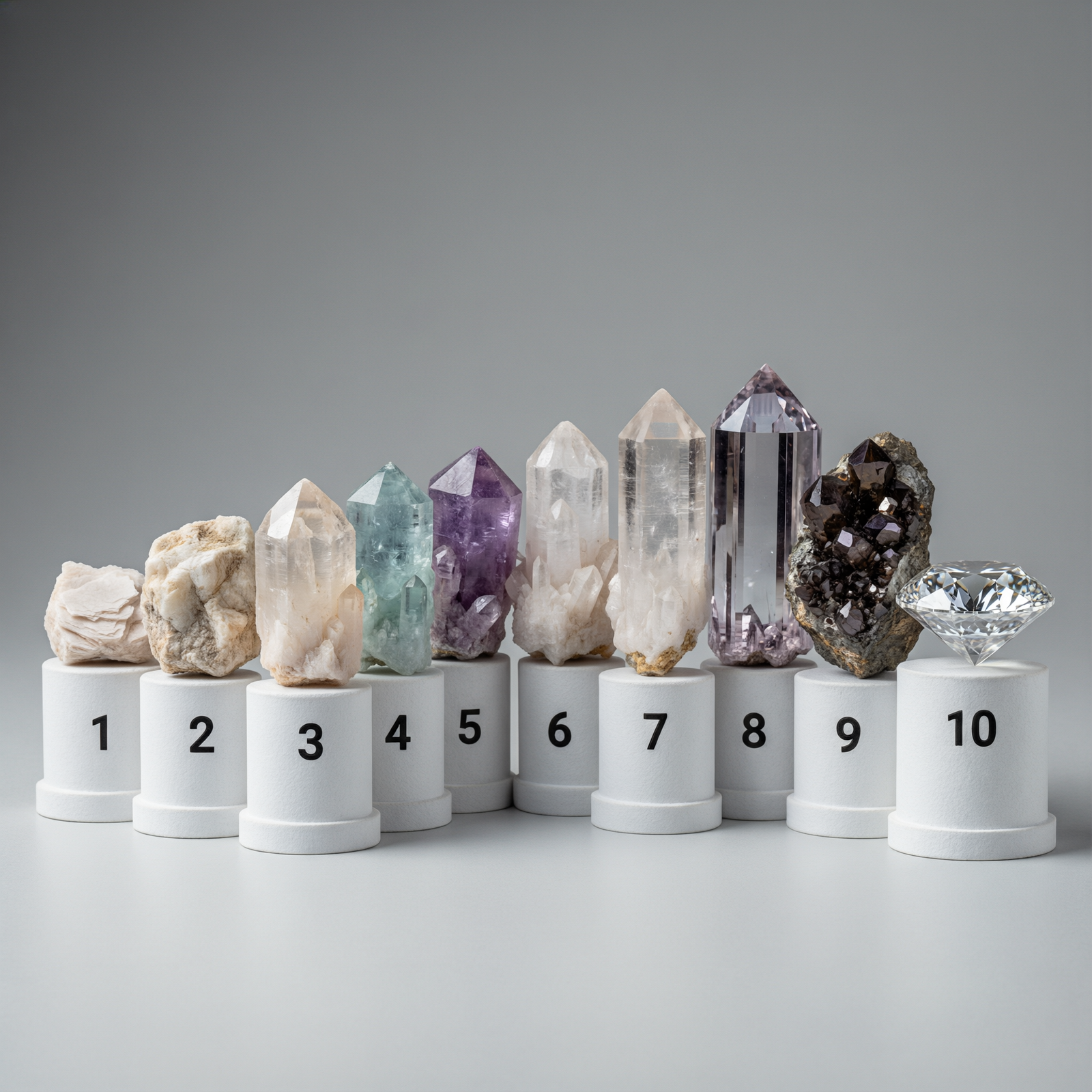
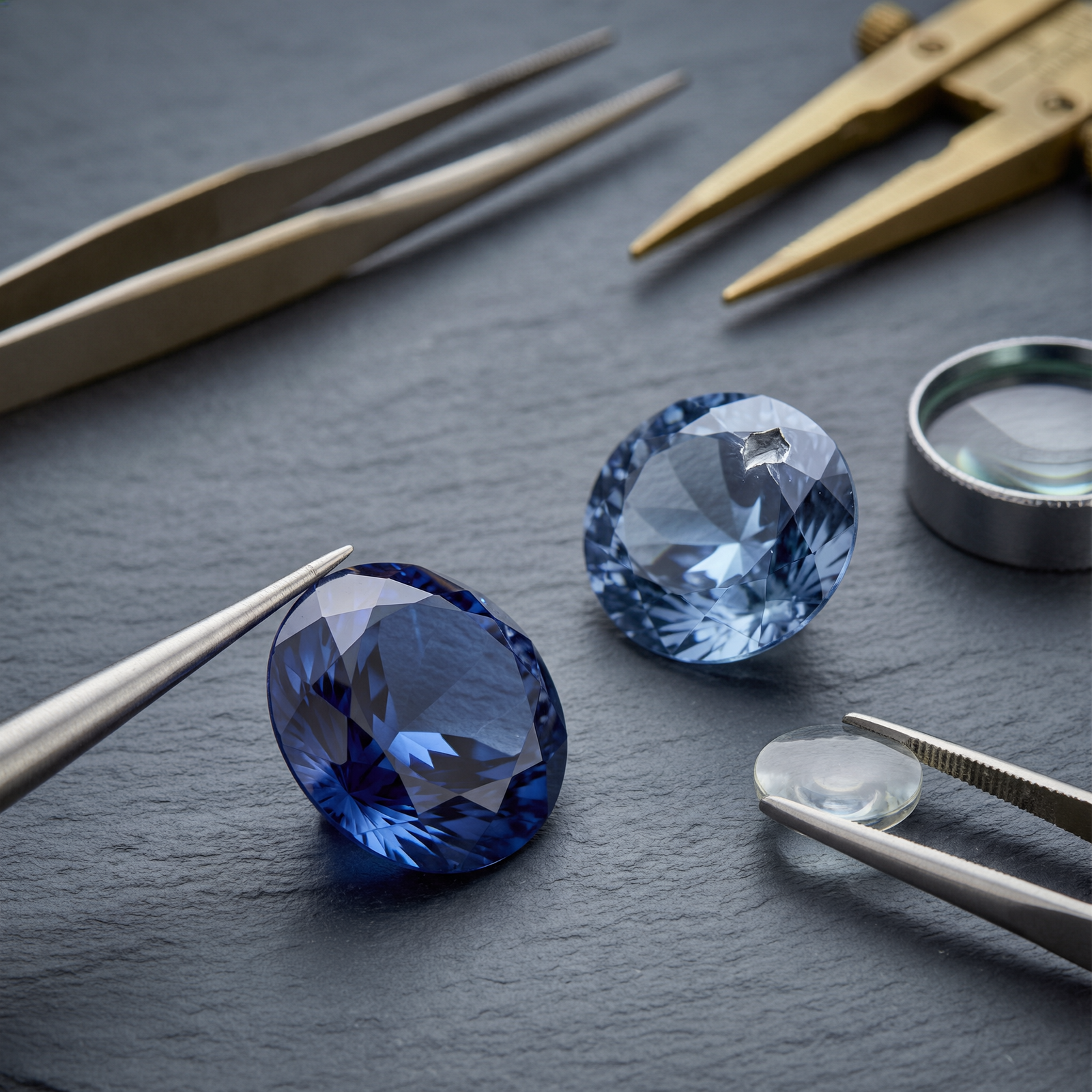
No one lied. Tanzanite is genuinely precious — rare, single-source, prized by collectors, and genuinely beautiful. But it sits at 6–6.5 on the Mohs scale (a full 2.5 points below sapphire, 3 points below diamond), has perfect cleavage in one direction, and is brittle enough that a single knock against a doorframe can produce the chip on her ring. No one mentioned that at the counter.
Tanzanite is not the only stone this happens to. Opal cracks in sudden temperature changes. Emerald fractures propagate if the stone is set without clearance. Pearls dissolve in vinegar and abrade against every-day dust. Kunzite fades in prolonged strong sunlight. These are not mysteries — they are predictable consequences of measurable physical properties. This module covers the six numbers every colored-stone associate needs, and how to translate them into the pre-sale conversation that prevents the return.
The anchor reference for this entire module is Denise D. Martin’s 1987 G&G paper “Gemstone Durability: Design to Display,” which covers 31 species and is still the standard bench reference for setting, repair, cleaning, and display.
Durability has three parts, not one
When a client asks “is this stone durable?”, the answer has three dimensions. A stone must be hard enough to resist scratches, tough enough to resist breaking, and stable enough to resist heat, light, and chemicals — and many stones are strong in one of these and weak in another.
- Hardness is resistance to scratching and abrasion. That is what the Mohs scale measures.
- Toughness is resistance to breaking, chipping, and cracking from impact. A stone can be very hard and relatively brittle (diamond cleaves perfectly in four directions and will chip or cleave if hit at the right angle; tanzanite is both soft and cleavage-prone; topaz at Mohs 8 has perfect cleavage and chips easily despite high hardness). A stone can be moderately hard and exceptionally tough (nephrite jade sits at 6–6.5 Mohs but its interlocking fibrous structure makes it one of the toughest natural materials on Earth).
- Stability is resistance to chemical attack, heat, light, and humidity. Pearls are soft and chemically sensitive (they dissolve in acid). Opal contains water and can craze with heat or dryness. Emeralds are commonly oiled, and the oil can sweat out with heat, dry out over time, or be removed by solvents. Kunzite fades in prolonged strong sunlight. Lead-glass-filled rubies are degraded by common household acids and even by lemon juice.
The classic counter-intuitive examples:
– Diamond: 10 Mohs (hardest natural material) but can cleave — one sharp blow at the right angle splits it cleanly.
– Nephrite jade: 6–6.5 Mohs but so tough it was used for axe heads in prehistory.
– Topaz: 8 Mohs but has perfect basal cleavage and chips notoriously easily if knocked; not a good daily-wear ring stone for an active client.
– Peridot: 6.5–7 Mohs, no strong cleavage, but relatively soft and sensitive to acid and sudden heat — can be worn in rings but should avoid rough exposure.
This is the reason “precious stone” is not a durability claim. Precious/semiprecious is a cultural-marketing distinction from 19th-century jewelry tradition; it does not map onto wearability. A garnet (7–7.5 Mohs, good toughness) may be a better daily-wear stone for an active client than an emerald (7.5–8 but heavily included and fracture-prone) or a tanzanite.
Hardness and the Mohs scale
Friedrich Mohs, a 19th-century Austrian mineralogist, created the scale that still bears his name. It is a scratch-resistance scale: each mineral scratches every mineral below it and is scratched by every mineral above it. The scale is relative, not linear — on an absolute hardness scale, diamond (Mohs 10) is about four times harder than corundum (Mohs 9), which is about twice as hard as topaz (Mohs 8). The single most important implication for daily wear:
Household dust contains quartz (Mohs 7). Any stone at or below 7 will accumulate fine scratches from ordinary dust over years of daily wear — if it is worn unprotected. Anything above 7 resists dust abrasion in normal conditions.
That one fact explains why sapphire, chrysoberyl, spinel, topaz, beryl (emerald/aquamarine/morganite), and garnet hold up better than opal, moonstone, tanzanite, peridot, pearl, lapis, turquoise, or amber for everyday ring wear. It does not mean stones below 7 cannot be worn — but it changes the setting conversation (bezel settings protect soft stones), the wear guidance (avoid daily wear for active clients), and the long-term expectations.
| Group | Species | Mohs | Daily-wear notes |
|---|---|---|---|
| Corundum | Ruby, sapphire | 9 | Excellent for rings; resists dust and abrasion; heat-safe; ultrasonic-safe for untreated material (caution with heavily fractured or filled stones) |
| Chrysoberyl | Chrysoberyl, alexandrite, cat’s-eye | 8.5 | Excellent; chrysoberyl is one of the best-kept secrets in colored-stone daily wear |
| Beryl | Emerald, aquamarine, morganite, heliodor, goshenite | 7.5–8 | Aquamarine/morganite: good, relatively durable ring stones. Emerald: lower effective durability because inclusions/fractures create weakness — treat with care; emeralds are often oiled and should avoid heat/solvents |
| Topaz | Blue, colorless, imperial topaz | 8 | Hard but perfect basal cleavage; vulnerable to chipping from sharp impact; avoid ultrasonic on irradiated blue topaz to be safe (thermal shock); imperial topaz is a collector stone |
| Spinel | All colors | 8 | Excellent ring stone; no cleavage, tough, often underrated |
| Garnet group | Almandine, pyrope, rhodolite, tsavorite, demantoid, spessartine | 6.5–7.5 (varies by species) | Most garnets are good daily-wear stones; demantoid (6.5–7) is slightly softer, still wearable with care |
| Zircon | Blue zircon (heat-treated), other colors | 6.5–7.5 | Brittle; chip-prone at facet edges; showstopping dispersion but not for rough daily wear |
| Tourmaline | All colors incl. Paraíba-type | 7–7.5 | Good ring stone; no strong cleavage; avoid ultrasonic if heavily included; can accumulate dust scratches over decades |
| Quartz | Amethyst, citrine, ametrine, rose quartz, smoky quartz | 7 | Dust scratches quartz over time; still fine for pendants/earrings; wearable in rings but expect some wear over many years |
| Peridot | Peridot | 6.5–7 | Can be worn in rings; avoid rough wear, acid, ultrasonic, sudden heat; set in protective mounting for daily wear |
| Jade | Jadeite, nephrite | 6–7 | Nephrite is among the toughest gems despite modest Mohs; jadeite is very tough too; excellent for carved pieces, bangles, cabochons; avoid harsh chemicals and ultrasonic on dyed material |
| Tanzanite | Blue-violet zoisite | 6–6.5 | Moderate hardness, perfect cleavage, brittle — treat as a dress piece; not an everyday ring for active wear; avoid ultrasonic and steam |
| Opal | Precious opal, boulder opal | 5.5–6.5 | Soft, water-containing; avoid impact, heat, dryness, ultrasonic; doublets/triplets must not be submerged; boulder opal slightly more durable in ironstone host |
| Moonstone/feldspar | Moonstone, amazonite, labradorite | 6–6.5 | Perfect cleavage in feldspar; prone to chipping; best in pendants/earrings or bezel-set rings with care |
| Lapis lazuli | Lapis | 5–5.5 | Soft, often dyed; best in pendants/earrings, not daily rings; avoid water/ultrasonic/chemicals |
| Turquoise | Turquoise | 5–6 | Soft, porous; often stabilized; avoid cosmetics, chlorine, ultrasonic, household chemicals; cabochon pieces should be worn against skin carefully |
| Pearl/coral | Natural/cultured pearl, coral | 2.5–4.5 | Very soft, acid-sensitive; last on, first off; wipe with soft cloth; never ultrasonic |
| Amber | Amber | 2–2.5 | Soft, low-melting, attacked by alcohol/perfume; warm-water and mild soap only |
| Malachite, azurite | Malachite | 3.5–4 | Soft, copper-bearing; sensitive to acid and abrasion |
This table is a sales-floor reference. Learn the corundum/spinel/beryl/garnet/quartz rows by heart — they are what you sell most often. The rest you can look up as needed.
Emerald is the important exception to the Mohs number. At 7.5–8, emerald should in principle be a good ring stone. In practice, the jardin (French for “garden,” the term for the natural inclusions and fractures in emerald) means most emeralds are internally fractured to one degree or another. A single knock on a prong tip can extend a feather across the table. Emeralds are also routinely clarity-enhanced with oils or resins that can dry out, discolor, or be removed by heat or solvents. Treat emerald as a stone of moderate durability in ring settings — bezel settings protect it, and emerald-set rings should be checked annually by a jeweler.
Cleavage, fracture, and toughness: why hardness misleads
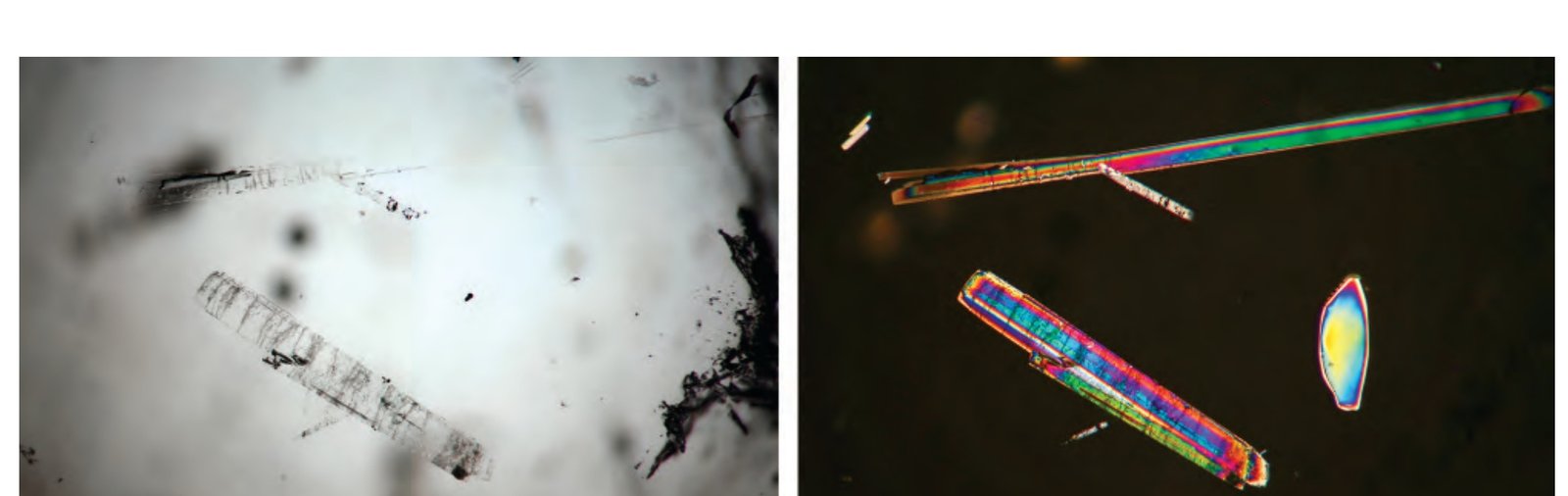
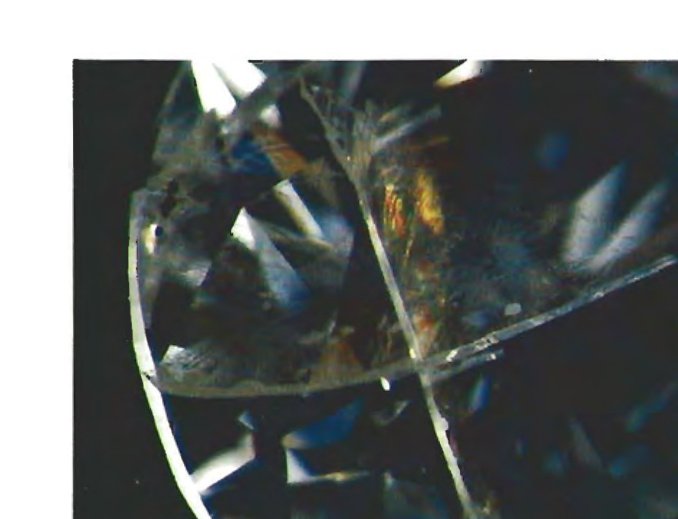
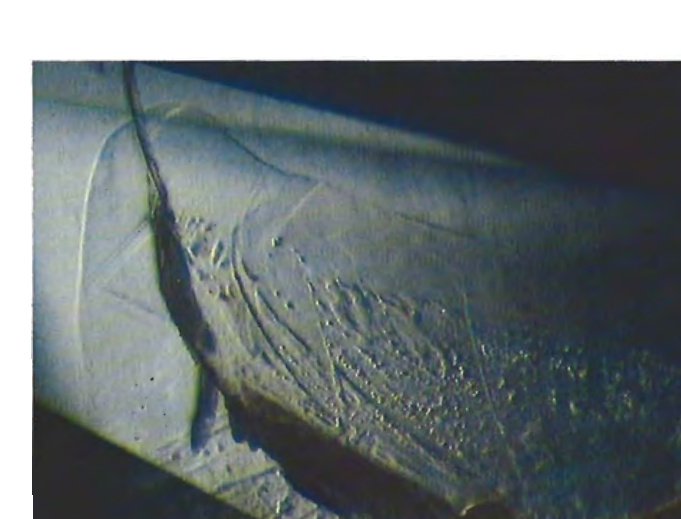
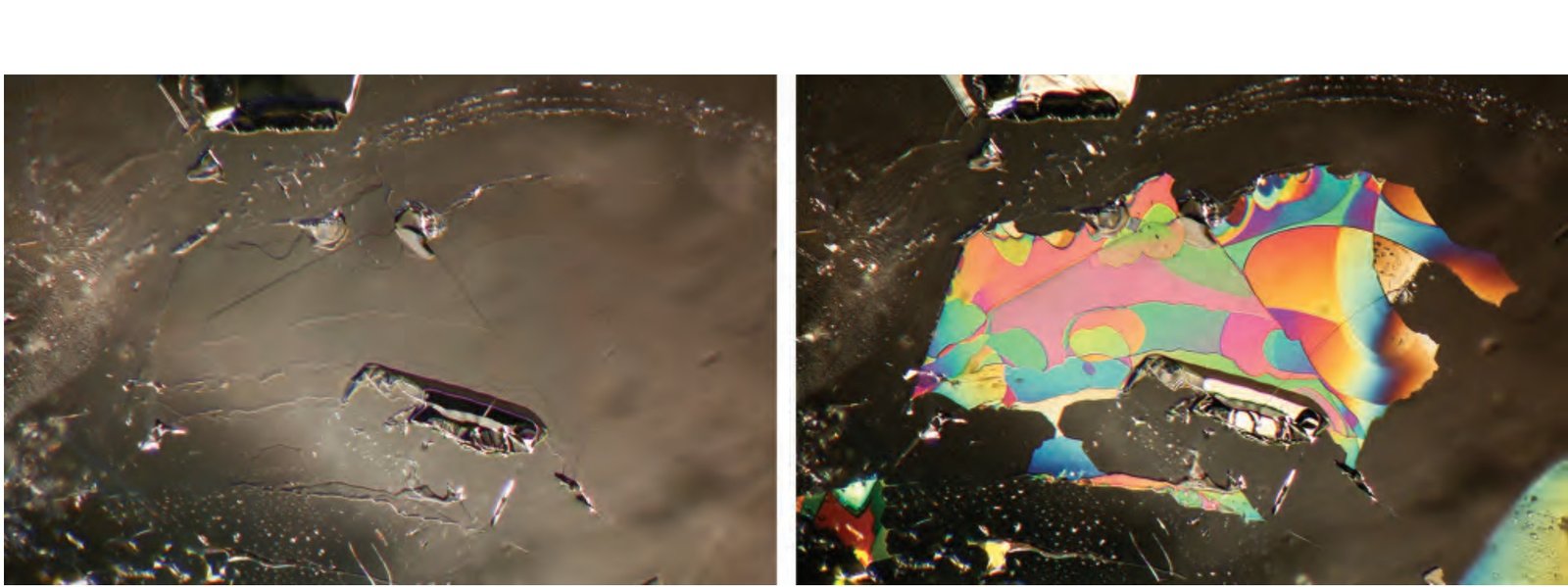
Cleavage is a plane of weakness in the crystal where atomic bonds are weaker in one direction. Hit a crystal on a cleavage plane and it splits cleanly. Several important colored stones have pronounced cleavage:
– Topaz: perfect basal cleavage (one plane) — famous for chipping at the girdle or culet if knocked.
– Tanzanite (zoisite): perfect cleavage in one direction — the source of the cracked stone in our opening scenario.
– Kunzite (spodumene): perfect cleavage in two directions — cutters must orient carefully; avoid impact.
– Feldspar (moonstone, amazonite): two directions of cleavage — cabochons can chip.
– Diamond: perfect cleavage in four directions (octahedral) — this is how diamonds are cleaved for cutting, and also why a girdle blow can chip a diamond.
Corundum (ruby/sapphire) does not have true cleavage, but it shows parting — breakage along planes of weakness caused by twinning. This is why a sapphire can still chip under very hard impact, even though it has no cleavage.
Fracture is how a stone breaks when there is no cleavage plane. Most gems show conchoidal (shell-like) fracture — the curved break you see on chipped glass, quartz, opal, and peridot.
Toughness is the combined resistance to chipping, cracking, and breaking — it is harder to quantify than hardness or cleavage, but experience gives clear rankings. Nephrite jade is at the top among gems, followed by jadeite, corundum, spinel, chrysoberyl, then quartz, garnet, beryl, tourmaline, then tanzanite, topaz, zircon, opal, and the soft organics at the bottom.
The practical consequence: two stones can share the same Mohs number and have very different real-world durability. Topaz (Mohs 8, perfect cleavage, brittle) wears very differently from spinel (Mohs 8, no cleavage, very tough). Know both.
Optical constants: RI, birefringence, dispersion, SG
You are not a gemologist — that is what a lab is for — but three numbers help you understand what a gemologist sees, why origin and identity reports can be confident, and why you should never try to identify a stone at the counter based on color alone.
Refractive index (RI) is a measure of how much a gem bends light — technically, the ratio of the speed of light in air to its speed in the gem. A gemologist measures RI with a refractometer, a bench instrument that shines light through a contact fluid and reads the critical-angle shadow line. RI values are diagnostic for most species — you do not need to memorize them all, but knowing the characteristic ranges for major species helps you understand identification:
| Species | RI range | Birefringence | SG (specific gravity) | SR / DR |
|---|---|---|---|---|
| Diamond | 2.417 | 0 (SR) | 3.52 | SR |
| Corundum (ruby/sapphire) | 1.762–1.770 | 0.008 | 4.00 | DR |
| Chrysoberyl (alexandrite, cat’s-eye) | 1.746–1.755 | 0.009 | 3.73 | DR |
| Spinel | 1.712–1.718 | 0 (SR) | 3.60 | SR |
| Tanzanite (zoisite) | 1.69–1.70 | 0.009 | 3.35 | DR (trichroic) |
| Peridot (olivine) | 1.654–1.670 | 0.036 (high) | 3.34 | DR |
| Topaz | 1.61–1.63 | 0.008–0.010 | 3.53 | DR |
| Tourmaline | 1.62–1.64 | 0.014–0.021 | 3.06 | DR |
| Garnet (varies by type) | ~1.73–1.89 (over RI of fluid for demantoid) | 0 (SR) | 3.6–4.2 | SR |
| Beryl (emerald/aquamarine/morganite) | 1.57–1.59 | 0.005–0.009 | 2.72 | DR |
| Quartz | 1.544–1.553 | 0.009 | 2.66 | DR |
| Opal | 1.45 | 0 (SR amorphous) | 2.10 | SR |
A few things to notice even without gemological training:
– Spinel is singly refractive (SR); corundum and tanzanite are doubly refractive (DR). A red spinel and a red ruby can look identical at arm’s length, but their optics differ — which is one reason refractometry is the first step in identification.
– Doubly refractive stones show two RI values; when magnification is high enough, you can see doubling of the pavilion facets viewed through the table. Zircon and peridot show this most dramatically (peridot has high birefringence of 0.036, so doubling is visible to a trained 10× loupe on a large clean stone).
– Specific gravity (SG) is density — how heavy the gem feels for its size. Corundum at SG 4 feels distinctly denser than quartz at SG 2.66; this is why jigs work in mining (dense gems sink) and why hydrostatic weighing is used to help identify gems.
– Dispersion is a gem’s ability to split white light into spectral colors — this is the “fire” in diamond (dispersion 0.044). Demantoid garnet (0.057) and zircon (0.038) show noticeably more fire than diamond; sapphire (0.018) shows very little.
Do not try to identify a customer’s unknown stone at the counter with a loupe. You can give a courteous “it looks like X — but that’s a guess; a gemologist can confirm with a refractometer.” Identity guesses from color alone are where most costly counter mistakes happen (synthetic vs natural, glass vs gem, spinel vs ruby, garnet doublets vs ruby).
Stability: heat, light, chemicals, humidity
The third dimension of durability is where most post-sale damage happens. A stone can be hard and tough and still be ruined by household chemicals or an ultrasonic cleaner. Key stability points for everyday selling:
| Species | Ultrasonic/steam safe? | Heat / light / chemical notes |
|---|---|---|
| Ruby/sapphire (untreated or heat-only) | Yes, generally | Safe; avoid steam on heavily fractured or glass-filled material. Corundum is one of the most inert gems — this is why untreated or heat-only corundum is ideal for daily wear. |
| Lead-glass-filled ruby | No | Filler is damaged by ultrasonic, steam, mild acid, even some household cleaners. Must be treated gently. |
| Beryllium-diffused sapphire | Generally yes (consult lab) | Heat treatment has penetrated the lattice; surface-diffused material is more fragile if the coating is thin; beryllium-diffused is lattice-diffused and usually stable (deepened in M09). |
| Emerald (oiled/resin-filled) | No — ultrasonic, steam, and hot water can remove/damage fillers; even solvents like alcohol can affect some fillers. Use warm soapy water, soft brush. | |
| Aquamarine/morganite (heat-treated) | Yes, usually | Stable; morganite heat-treatment is stable. |
| Spinel | Yes | Spinel is one of the most stable gems; fine for daily wear. |
| Garnet (most) | Yes (avoid if heavily fractured) | Generally stable; demantoid can be oiled — treat like emerald. |
| Tanzanite (heat-treated) | No | Heat treatment is permanent, but tanzanite is sensitive to thermal shock, has cleavage, and can crack in ultrasonic/steam. Warm soapy water only. |
| Topaz (irradiated blue) | Usually yes, but avoid sudden temperature changes | Irradiated blue color is stable to light; imperial topaz is generally stable; avoid steam to be safe. |
| Tourmaline | Usually yes, avoid on heavily included stones | Stable; copper-bearing (Paraíba-type) generally stable but heat-sensitive in treatment (the treatment is done at the mine/cutter, not in jewelry). |
| Quartz (amethyst, citrine, ametrine, rose) | Usually yes (avoid steam on amethyst to be safe) | Some amethyst fades in prolonged strong sunlight — do not display in direct sun long-term. |
| Peridot | No ultrasonic/steam recommended | Sensitive to sudden heat and acid; warm soapy water; avoid harsh chemicals. |
| Jade | Generally no (dyed jade especially must not be steamed/ultrasonic-cleaned) | Nephrite is tough, but polymer-impregnated/dyed jade (B-jade, C-jade) can be damaged; untreated A-jade is more stable. |
| Opal | No ultrasonic or steam (risk of cracking); avoid sudden temperature changes and prolonged dryness | Opal contains water; clean with damp soft cloth; boulder opal slightly more durable; doublets/triplets must not be submerged. |
| Moonstone/feldspar | Avoid ultrasonic | Cleavage-prone; warm soapy water. |
| Lapis lazuli | No | Often dyed; porous; avoid hot water, acid, soaking; wipe gently. |
| Turquoise | No | Porous, often stabilized; avoid chlorine, perfume, cosmetics, household cleaners; wipe with soft cloth. |
| Pearl/coral | No — ultrasonic/steam can crack pearls and damage nacre | Last on, first off; wipe with soft cloth after wear; avoid perfume, hairspray, chlorine, vinegar; clean with mild soap and damp cloth only. |
| Amber | No | Low melting point; attacked by alcohol, perfume, nail polish remover; warm water and mild soap. |
| Malachite | No | Soft, copper-bearing; acid-sensitive; avoid abrasion. |
For daily counter use, the safest default is: if you are unsure, recommend warm soapy water and a soft toothbrush. That is the cleaning method that cannot hurt any of these species — including pearls, opal, and emerald. Ultrasonic and steam are appropriate for hard, tough, untreated, unfilled, non-fractured stones (most diamond, ruby/sapphire, aquamarine, spinel, garnet, topaz, quartz) and dangerous for everything else.
What this means for mounting and care
Durability determines how a stone should be set and worn.
- Protective settings for soft or cleavage-prone stones. Tanzanite, opal, moonstone, and emerald benefit from bezel settings, half-bezels, or prong settings with plenty of metal around the girdle. Tension settings are a poor choice for tanzanite and opal (risk of cracking from pressure). Low-profile settings reduce knock exposure for everyday rings.
- Daily-wear vs dress-piece guidance. Be explicit before the sale. Sapphire, spinel, chrysoberyl, aquamarine, morganite, garnet, and most tourmaline are excellent daily-wear ring stones. Tanzanite, opal, peridot, moonstone, emerald in a fine ring, and pearl are best thought of as dress pieces or as everyday pieces for clients who can commit to careful wear and regular inspection.
- Wear guidance. Tell an emerald or opal client to take the ring off for gardening, sports, washing dishes, and moving furniture — not because the stone is “fragile” (that sounds alarming) but because a hard knock at the wrong angle can chip it, and taking the ring off is simple insurance.
- Storage. Opal pieces should not be stored in a bank vault long-term (the dry air can cause crazing); store in a sealed bag with a damp cloth if long-term storage is unavoidable. Pearls should be stored in a soft pouch away from harder gems (pearls scratch easily).
- Annual inspection. Every set emerald, tanzanite, opal, and pearl should be checked by a jeweler at least once a year for loose stones, worn prongs, or damaged filler. Say this up front — it is part of the sale, not an add-on.
On the floor this week
- Monday (5 minutes): Pull out a refractometer if your store has one and ask a gemologist to show you how they read RI. You are not going to use it tomorrow — but seeing the shadow line once demystifies the numbers in this module.
- Tuesday (10 minutes): Walk your case with the hardness table above and identify three stones you would categorize as “daily-wear” and three you would categorize as “dress piece” based on properties. Check with your gemologist.
- Wednesday (practice): Say out loud: “The safest home cleaning for any colored stone is warm soapy water with a soft toothbrush — that works for everything in the store, including emeralds, opal, and pearls.”
- Thursday: Before selling any tanzanite or opal ring, say one sentence about care: “Tanzanite is a beautiful stone but it sits lower on the hardness scale than sapphire, so I’d suggest wearing it a bit more carefully than your diamond ring — take it off for sports and cleaning. We can also set it in a bezel for extra protection if you’d like.”
- Friday (5 minutes): Re-read the stability care table for the three species you sell most often.
Objections, mistakes and edge cases
| Situation | The trap | Better move |
|---|---|---|
| Client says “I want a daily-wear colored stone that can take anything” | Recommending tanzanite, opal, or emerald because they love the color | Recommend corundum (sapphire/ruby), spinel, chrysoberyl, garnet (tsavorite/rhodolite), or aquamarine/morganite. Then offer the softer stone as a dress piece if they still love the color. |
| Client wants to clean their emerald in an ultrasonic at home | Saying “sure, that’s fine” | Explain that emeralds are commonly clarity-enhanced with oils/resins; ultrasonic can remove or damage the filler. Recommend warm soapy water and an annual checkup at the jeweler. |
| Client asks “is tanzanite precious?” | Saying “no, it’s semiprecious” (implying lesser value) | Explain that precious/semiprecious is a historical term, not a wearability or value classification. Tanzanite is rare, valuable, and beautiful — but it is softer than sapphire, has cleavage, and should be worn with the same care as pearl or opal jewelry. |
| Client shows a “ruby” they bought online and asks you to confirm it | Identifying it by eye | Say “it has the look of ruby, but I can’t confirm at the counter — red spinel, garnet, glass, doublet, and synthetic ruby can all look similar. A gemologist uses a refractometer and microscope to be sure.” Offer to send it to a lab. |
| Client has an opal they want to store in a safe deposit box for a year | Saying “that’s a good idea” | Opal can craze in very dry air; suggest storing it in a sealed plastic bag with a damp piece of cotton if it will be in a dry vault long-term. Boulder opal in ironstone is less risky. |
| Client wants to set an opal in a tension ring | Saying “we can do that” | Tension settings place the girdle under pressure — a bad choice for opal. Recommend a bezel or protective prong setting. |
| Client has a pearl ring she wears every day washing dishes | Not warning her | Pearls are soft and acid-sensitive — detergents and chlorine will dull nacre over time; “last on, first off” is the rule. Recommend saving pearl rings for occasions and wearing pearl necklaces against skin only after applying perfume/hairspray. |
| Edge case: lead-glass-filled ruby | Selling it as “ruby, 7+ Mohs, durable” | Disclose the glass filling clearly — durability and care rules change dramatically (no ultrasonic, avoid acid, vulnerable to chipping at filled fractures). Covered in depth in M09. |
Self-check
- Name the three dimensions of durability.
- Why is nephrite jade (6–6.5 Mohs) more durable in daily wear than tanzanite (same Mohs range)?
- What does household dust contain that makes 7 a meaningful Mohs cutoff for daily-wear rings?
- If hardness doesn’t tell the whole story, why is emerald (7.5–8 Mohs) less durable in practice than aquamarine (same range)?
- Name three colored stones with perfect cleavage (other than diamond).
- Which is more accurate at identifying a stone: color, or refractive index?
- Which of these are safe in an ultrasonic cleaner: untreated sapphire, emerald, opal, spinel, lead-glass-filled ruby?
- Why can’t a colored stone be reliably identified by eye at the counter?
- What home-cleaning method is safe for every species in the store?
- What is the right pre-sale line for a tanzanite or opal ring before the client leaves the store?
Go deeper
- Martin D.D. (1987) Gemstone Durability: Design to Display. G&G 23:2 — https://www.gia.edu/gems-gemology/summer-1987-gemstone-durability-martin — anchor reference; 31-species durability table for setting, repair, cleaning, display. 30 minutes.
- GIA Gem Encyclopedia — https://www.gia.edu/gem-encyclopedia — each species entry includes a care & cleaning section.
- Re-watch GIA-CS-01 (Introduction to the GIA Laboratory) if you want to see a refractometer, spectroscope, and microscope in use (https://www.youtube.com/watch?v=5q9Xo6vY01A).