Treatments: Heat, Diffusion, Filling, Oiling, Irradiation, Coating, Dyeing — and Disclosure
The lead-glass-filled ruby that came back damaged
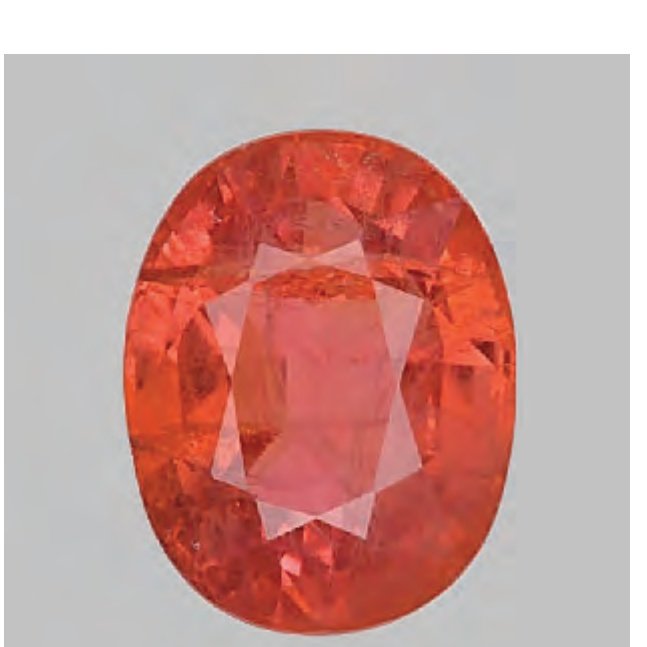
A client returns a year after buying a “ruby” ring from you. She cleaned it at home in a commercial jewelry cleaner (a mild acid dip) and now the stone looks cloudy, with white spots along several fractures and a dull surface. She is angry: “You told me ruby is 9 on the Mohs scale and almost as hard as diamond. How is this possible?”
The stone is a lead-glass-filled ruby. A high volume of fine fractures in the original rough had been filled with high-lead-content glass to make the stone look transparent. The glass is not corundum. It is soft, soluble in mild acid, melts under a jeweler’s torch, shatters under ultrasonic/steam, and chips easily. You sold it as “ruby” without disclosing the fill and without giving her the care rules. The damaged stone is the result.
This module is about making sure that scenario does not happen. Treatments are ancient (Nassau 1984 documents emerald oiling in Roman literature, agate heat treatment in Pliny, dyeing of turquoise and chalcedony for millennia), modern, ubiquitous, and in most cases legitimate — but the FTC Jewelry Guides (Overton 2004) are unambiguous: any treatment that is not permanent, affects value, or requires special care must be disclosed to the buyer before sale. The client in our opening scenario didn’t stand a chance of caring for her stone because she didn’t know what she had bought.
[MEDIA: video | C17-M09-V1]
Watch (or re-watch): How to Classify a Lead Glass–Filled Ruby — GIA (GIA-CS-06)
Why here: The 5-minute video shows the four detection features and says explicitly that lead-glass-filled ruby is a manufactured composite that requires special care. Use this video to train your eye.
https://www.youtube.com/watch?v=evrQv-HNrI0
Why treatments exist, and why disclosure is the law
Treatments improve a gem’s appearance or durability. Almost every colored stone in commercial jewelry has been treated in some way:
– Roughly 95–99% of commercial rubies and sapphires are heat-treated (estimates vary by source; the proportion of unheated fine material is small and commands a major premium).
– 100% of commercial tanzanite is heated to remove the brown component.
– Nearly all commercial blue topaz is irradiated.
– The overwhelming majority of emeralds in jewelry have been oiled or resin-filled to some degree.
– Most aquamarine is heated to remove green.
– A significant share of commercial rubies on the market today (especially the lower-price bracket) are lead-glass-filled.
– A small but meaningful share of orange and pink sapphire on the market (especially after the early 2000s) is beryllium-diffused.
– Most turquoise in commercial jewelry is stabilized.
Treatment in itself is not deceptive — a client can understand that heat improves a sapphire’s blue, or that oil fills tiny natural fissures in emerald. The deception is selling a treated stone as untreated, or failing to disclose that a treatment imposes care rules or durability limits. Overton (2004) is the legal anchor: under the FTC Jewelry Guides, the unqualified word “ruby,” “sapphire,” or “emerald” implies that the stone is natural and untreated (or that any treatment is a permanent, industry-standard stability-preserving process, such as simple heat treatment of corundum or standard oiling of emerald that is properly disclosed at point of sale). Material that is filled, diffused, dyed, coated, irradiated to produce a color not seen naturally, or assembled must be labeled as such. The industry shorthand: disclose everything a reasonable buyer would want to know.
A useful stability framework divides treatments into three categories:
1. Permanent, no special care required. Simple heat treatment of corundum (no fill, no flux residue issues), irradiation of blue topaz, heat of aquamarine. These are universally accepted and do not materially change care; disclosure is still expected on accompanying paperwork but the stone is handled like untreated material.
2. Generally stable but requires some care. Standard oil/resin filling of emerald (F1–F2); irradiation of amethyst (stable under normal wear); polymer-impregnated turquoise; beryllium-diffused corundum (color is permanent once penetrated, but repolishing can remove surface-diffused material if the treatment is shallow — note: Be diffusion penetrates the lattice; simple heat/flux residuals). Avoid solvents/heat on these; disclose.
3. Fundamentally changes durability or is not permanent. Lead-glass-filled ruby; surface-diffused sapphire; coatings (mystic topaz, coated tanzanite); some dyed material; heavily filled F3 emerald; B-jade (polymer-impregnated jade). These require strict care rules and must be disclosed without exception.
Treatment by treatment
| Treatment | Primary species | What it does | Detection | Stability / care | Disclosure |
|---|---|---|---|---|---|
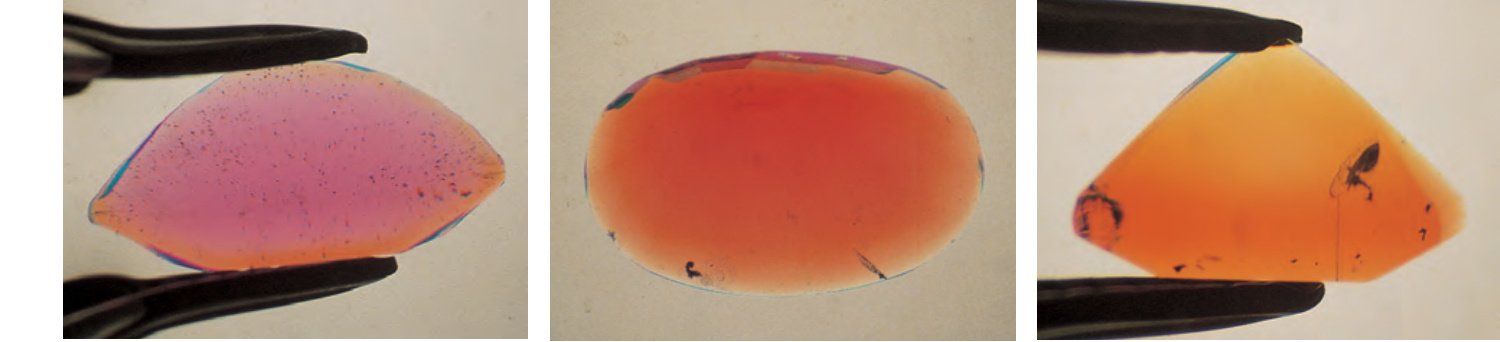
| Heat (standard) | Ruby, sapphire, tanzanite, aquamarine, morganite, amethyst/citrine/prasiolite, amber, zircon, some tourmaline | Heat (1600–1800°C for corundum, lower for other species) dissolves rutile silk (improving clarity), alters Fe/Ti oxidation to improve blue in sapphire, removes the brown trichroic component from tanzanite, removes green from aquamarine to deepen blue, converts amethyst to citrine/prasiolite, lightens dark zircon | Dissolved/coarsened rutile silk; “snowflake” inclusions around altered crystals; discoid fractures around crystals; pitted girdle if overheated (Koivula 2013 visual clue) | Permanent; standard care; generally ultrasonic/steam safe on clean material; standard care for the species | Expected (usually on the lab report — “H” or “heat” comment; industry-standard and widely accepted) |
| Low-temperature heat / flux-assisted heat / flux healing | Most Mong Hsu ruby, many Mozambique/Madagascar rubies | Heat below melting point with borax/silica flux that melts into fractures, precipitating synthetic corundum to heal fissures; removes dark blue cores in Mong Hsu | Flux fingerprints (planar, whitish/golden); healed fractures with flux residue; discoid fractures | Permanent under normal wear; treat as heated corundum for care | Disclosed on lab reports; standard for modern commercial ruby |
| Surface diffusion (titanium) | Blue sapphire (historical 1980s–90s) | Ti is diffused at very high temperature just below melting, producing a thin blue layer on the surface while body remains colorless | Color concentration at facet edges and girdle; when repolished, blue can polish through to colorless; immersion reveals surface layer | Color layer is thin — repolishing removes it; avoid abrasion; not as stable as bulk-heated stone | Required (rare in modern market; largely replaced by Be-diffusion and heat-only) |
| Beryllium lattice diffusion | Orange, pink, yellow, padparadscha-like sapphire; some ruby | Be penetrates the entire lattice at ~1800°C, producing orange/pink/yellow color; no thin surface layer | Color is through-and-through; detection requires LA-ICP-MS / LIBS chemistry (Be detection), not visual features; visual suspicion includes atypically bright padparadscha/orange colors with weak zoning | Color is fully penetrated and permanent; normal corundum care; ultrasonic/steam OK | Required — “lattice diffused” or “beryllium treated” on report; one of the most important disclosure cases because the stone can look natural and no visual feature is definitive |
| Cobalt diffusion on spinel | Spinel (Saeseaw 2015) | Co diffused into spinel to produce vivid blue; similar to surface diffusion on sapphire | Color concentrated at facet edges; cobalt spectrum; RI/SG may be slightly off | Thin layer — avoid repolish | Required |
| Diffusion-induced star | Synthetic and some natural star corundum | Ti-diffusion creates rutile silk at the surface producing stars | Unnaturally perfect stars, no movement, surface silk | Surface-layer silk — avoid repolish/abrasion | Required (synthetic star must be called synthetic; diffusion-induced stars on natural must disclose treatment) |
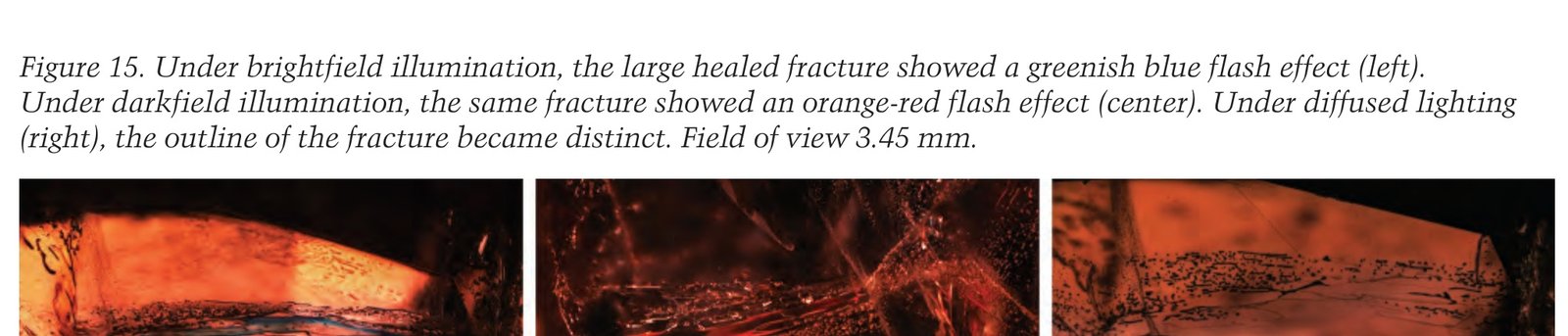
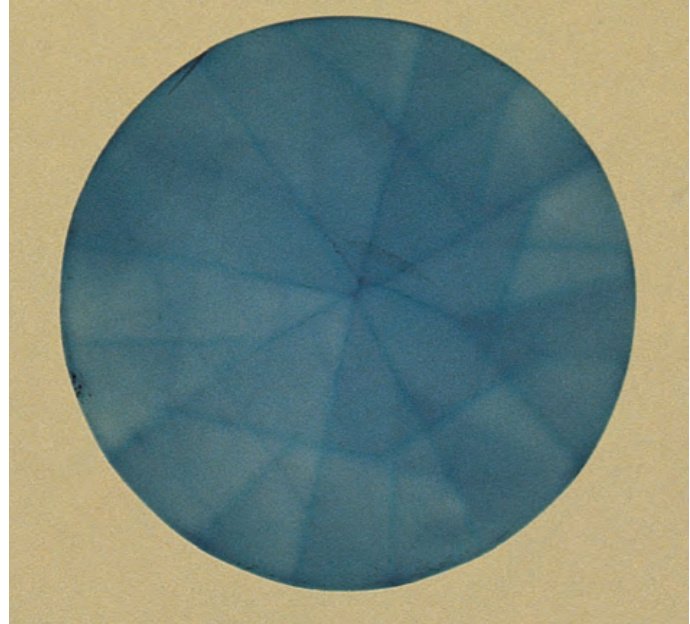
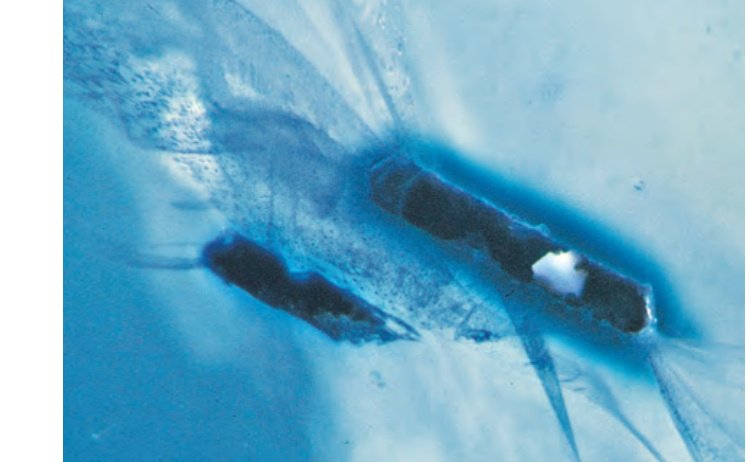
| Lead-glass filling | Ruby (some sapphire) — low-grade heavily fractured Mong Hsu/Mozambique/Madagascar/Wat-that-Noi material | Surface-reaching fractures are filled with high-lead glass (R.I. close to corundum), making fractures transparent to the eye and dramatically improving apparent clarity | Flash effect (blue/orange flashes at fractures in reflected light); large gas bubbles trapped in glass; flattened gas bubbles at glass-corundum interface; flash at facet joints; lower luster on filled areas | Glass vulnerable to acid (lemon juice, household cleaners, jewelry dip), ultrasonic, steam, jeweler’s torch (melts at ~500°C), and abrasion; warm soapy water only, no harsh chemicals; treat as a composite; any repair/setting work must be done by a bench jeweler who knows it is filled | Mandatory disclosure — GIA reports the fill as a comment and identifies the stone as a manufactured composite; never sell without disclosure and care instructions |
| Emerald oiling / resin filling (F0–F3) | Emerald | Surface-reaching fractures are filled with oil (traditionally cedarwood oil) or polymer resin (Opticon, etc.), reducing fracture visibility | Flattened gas bubbles in fissures; colored flash in reflected light; dried filler chalky in old stones; IR detects resins; GIA grades F0 (no indication of clarity enhancement), F1 (minor), F2 (moderate), F3 (significant) | Oils can dry out with heat/UV; resins more durable but can be damaged by strong solvents, steam, and ultrasonic; warm soapy water only; re-oiling is routine maintenance and not a flaw | Required — clarity enhancement grade is on the report (F0–F3); tell clients oiling is standard and that re-oiling may be needed over time |
| Irradiation | Blue topaz (all commercial: London blue, Swiss blue, sky blue); smoky quartz; some yellow sapphire; Maxixe-type beryl; some pink/green quartz; some diamond colors | Gamma/electron/neutron irradiation creates color centers; sometimes followed by annealing | No visible inclusions; detection by spectroscopy; blue topaz is universally accepted | Blue topaz color is stable (does not fade in normal wear); irradiated topaz held until residual radiation is at safe background levels per NRC regulation; Maxixe beryl fades; some irradiated kunzite fades | Required for irradiated colored stones whose color is not naturally occurring |
| Coating | Tanzanite (cobalt/titanium-coated to imitate fancy sapphires); topaz (mystic topaz, mystic quartz); azotic/titanium-coated quartz | Thin-film deposition of metal/oxide layer on pavilion (or all surfaces) to create iridescent fancy colors | Bubbles in coating layer; iridescent film at facet edges/girdle; coating can be scratched or abraded; uncoated culet if pavilion-coated | Film abrades with wear; avoid ultrasonic, steam, repolishing, and abrasion; store separately | Required; coated stones must not be sold unlabeled |
| Dyeing | Lapis lazuli (dyeing calcite portions), turquoise, howlite “turquoise,” dyed chalcedony/agate, coral, pearls, jadeite C-jade, dyed jade, dyed bone as coral imitation | Dye impregnated into porous material | Dye concentrations in fractures/grain boundaries; color wiped off on acetone swab (only test with permission); unnatural concentration of color | Dye can bleed or fade with water/alcohol/acetone/perfume; avoid solvents and abrasion | Required; dyeing is among the easiest treatments to spot and the most important to disclose |
| Bleaching + polymer impregnation (B-jade) | Jadeite | Acid bleaching removes brown stains and iron oxide; polymer resin is impregnated to improve transparency and luster (C-jade adds dye) | Polymer detected by infrared spectroscopy (IR); visual: pitted/”orange-peel” surface, unusually clean texture, loose internal structure | Polymer can degrade with heat/chemicals; avoid ultrasonic, steam, harsh chemicals; warm water only | Required — A-jade (untreated), B-jade (bleached/impregnated), C-jade (dyed) are standard classifications |
| Sugar/acid treatment | Andamooka matrix opal (Brown 1991) and some other matrix opal | Soaking in sugar solution then acid carbonizes sugar in pores, darkening bodycolor to intensify play-of-color | Darkened bodycolor is patchy, surface-concentrated; carbon in pores is visible under magnification | Generally stable; standard opal care applies | Required |
| Smoke treatment | Some Ethiopian/Welo opal | Smoke deposits carbon at surface, darkening bodycolor | Surface darkening, smoky concentration at edges | Smoke layer is on surface; avoid abrasion/ultrasonic | Required |
| Stabilization | Turquoise, lapis, some opal, some coral | Polymer or wax impregnation seals porosity and improves hardness/stability | Polymer detected by IR or hot-point (plastic smell); wax is more temporary | Generally stable under normal wear; avoid strong solvents and heat | Expected/standard for porous gems; disclose polymer-stabilized material |
| Waxing/oiling of nephrite/turquoise | Nephrite, serpentine, turquoise, lapis | Surface wax/oil improves polish appearance | Subtle surface luster; reapplication is routine | Generally stable; wipe to clean | Standard maintenance; disclose if significant |
| Pressed amber (ambroid) | Amber | Small amber pieces heat-fused into larger blocks; may show flow lines | Flow structures, elongated bubbles, boundary lines between pressed fragments | Same care as natural amber (avoid heat/solvents) | Required |
| Synthetic overgrowth | Corundum (Lechleitner, Saeseaw 2015) | Thin synthetic layer on natural seed | Growth boundary visible at layer; seed plate | Same care as treated corundum | Required |
One thing to emphasize: simple heat treatment of corundum (dissolving silk, altering color) is so standard in the industry that many GIA reports carry it as a standard comment, and the care rules for a heated corundum are the same as for unheated corundum. The disclosure line between “expected standard treatment” and “material treatment requiring special disclosure” moves over time — today, the treatments that are never optional to disclose are lead-glass filling, beryllium (lattice) diffusion, surface diffusion, coating, dyeing, B/C-jade polymer/dye, and assembled stones (from M08).
Reading a GIA colored-stone report
GIA reports use standardized comment language. Key treatment-related phrases to recognize:
– “No indications of heating” or “No gemological evidence of heat treatment” = unheated. Commands a major premium for ruby/sapphire, especially in fine sizes.
– “Indications of heating” / “H” = standard heat treatment.
– “Indications of heating with residues” = flux-assisted heat, common on ruby.
– “Clarity enhancement” (for emerald) with F0/F1/F2/F3 grades = oil/resin filling.
– “Glass residues in surface-reaching fractures” or “Lead-glass filled” = lead-glass-filled composite ruby; this is a major care/disclosure flag.
– “Lattice diffusion” / “Beryllium treated” = Be-diffused.
– “Surface reach[ing] fractures filled with foreign material” = filling of some kind; read the full comment for type.
– “Coating” = coated; “Dye” = dyed; “Impregnation” = polymer/wax.
– “Assembled stone” = doublet/triplet.
Always read the entire report, not just the species and weight. Many clients (and some sales associates) look only at the color photo and the carat weight and miss the treatment comment entirely.
Counter scripts for disclosure
Disclosure needs to be simple and happen before the client makes a decision, not after. You don’t need to give a mineralogy lecture — you need one sentence that tells them what the treatment is and how it affects care.
- Heat-treated sapphire/ruby: “Nearly all commercial sapphires and rubies are heated to improve color and clarity — it’s the industry standard and it’s permanent, so this one is just cared for like any other corundum: ultrasonic and steam are fine.”
- Heated tanzanite: “All commercial tanzanite is heated to bring out that blue — the heat treatment is permanent and doesn’t change how you wear it.”
- Irradiated blue topaz: “Blue topaz is irradiated to produce the blue color — the treatment is permanent and the stones are tested and certified safe before sale. Ultrasonic is fine.”
- Emerald (F1/F2 oil): “Emeralds commonly have natural inclusions, and this one has been oiled with a clear resin to make the fissures less visible. The care is simple: avoid harsh cleaners, don’t put it in an ultrasonic, and we can check and re-oil it for you annually — that’s routine maintenance for emerald, not a defect.”
- Lead-glass-filled ruby: “This ruby is a composite stone — natural ruby with lead glass filling the fractures to improve transparency. That makes it affordable at this size, but it requires special care: no ultrasonic, no steam, no jewelry cleaner, no lemon juice or household chemicals, and any repair work needs to be done with the stone out of the mounting. I’ll give you a care sheet for it.”
- Beryllium-diffused padparadscha/orange sapphire: “The orange color in this sapphire is produced by a lattice diffusion treatment — the color goes all the way through and is permanent, but it’s important that you know it’s treated because that affects the price compared to a natural padparadscha.”
- B-jade: “This is treated jadeite (Type B) — it’s been bleached and impregnated with polymer to improve the appearance. It’s wearable but avoid harsh chemicals and high heat.”
- Doublet opal: “This is an opal doublet — a thin slice of natural precious opal on a dark backing. It’s more durable than solid opal and a great value at this price, but it shouldn’t be submerged in water for long periods.”
Care by treatment: quick reference
| Treatment | Ultrasonic? | Steam? | Special care |
|---|---|---|---|
| Untreated / heat-only corundum | ✅ generally (avoid if heavily fractured) | ✅ generally | Standard corundum care |
| Flux-healed ruby | usually OK (avoid if heavily fractured) | usually OK | Standard corundum care |
| Lead-glass-filled ruby | ❌ | ❌ | Warm soapy water only; no acid/detergent dips; remove for cleaning/sport; protect from knocks; remove before repair torch work |
| Emerald (oiled/resin-filled F0–F3) | ❌ | ❌ (F0 may tolerate steam but avoid) | Warm soapy water, soft brush; annual re-oiling/checkup |
| Aquamarine/morganite (heat-treated) | ✅ | ✅ | Standard beryl care |
| Tanzanite (heated) | ❌ | ❌ | Warm soapy water; avoid knocks (cleavage) |
| Irradiated blue topaz | ✅ | ✅ (avoid sudden temperature change) | Relatively hard but cleavage-prone |
| Coated tanzanite/topaz (mystic, azotic) | ❌ | ❌ | Avoid abrasion/solvents/steam |
| Dyed material (lapis, turquoise, jade C) | ❌ | ❌ | Wipe with damp soft cloth; avoid water/solvents |
| B-jade (polymer-impregnated) | ❌ | ❌ | Warm water, no chemicals |
| Opal solid | ❌ | ❌ | Avoid sudden temperature change; gentle wipe; avoid prolonged dryness (bank vault storage) |
| Opal doublet/triplet | ❌ | ❌ | Avoid submerging in water; gentle wipe |
| Stabilized turquoise | ❌ (usually) | ❌ | Wipe; avoid cosmetics/perfume |
| Pearl | ❌ | ❌ | Last on, first off; soft cloth wipe |
On the floor: applying it this week
- Monday (10 minutes): Pull three treated stones from your case and locate the treatment comment on their lab reports (or supplier invoice). If you can’t find the treatment disclosure on a filled/diffused/coated stone, flag the stone for the buyer until the correct disclosure documentation is on file.
- Tuesday (10 minutes): Watch GIA-CS-06 if you haven’t yet — the 5-minute lead-glass-fill demo.
- Wednesday (practice): Disclose treatment on the first treated stone you sell today. Not “oh, and by the way it’s filled” at the end of the sale — disclosure as part of the product description.
- Thursday: Check your care instructions — do you hand out a different care sheet for emerald, lead-glass-filled ruby, opal, and pearl, or one generic jewelry-care sheet? Generic sheets fail filled stones.
- Friday (15 minutes): Read Overton (2004) — it’s the FTC legal anchor and required reading.
Objections, mistakes and edge cases
| Situation | The trap | Better move |
|---|---|---|
| Client asks “is this ruby treated?” | Saying “all rubies are treated” and not distinguishing heat from glass fill | Be precise: “This one is heat-treated, which is industry standard and permanent. If a ruby is lead-glass-filled I’ll show you that explicitly because the care is different.” |
| Client is considering a lead-glass-filled ruby because of budget | Treating it as equivalent to a solid ruby | Frame filled ruby as a budget option with clear care limits. For a bridal/everyday ring, steer clients toward solid (heat-treated or unheated) ruby, pink sapphire, tourmaline, or garnet. Filled ruby is best in pendants/earrings or occasional-wear rings. |
| Client says “I don’t care if it’s diffused, I like the orange color” | Skipping disclosure because the client says they don’t care | Disclose anyway — the FTC doesn’t care whether the mind the client cares; the obligation exists regardless. Then they can decide with full information. |
| Client wants to put an emerald in an ultrasonic | Saying “it’s fine, 7.5 Mohs” | Emerald’s filling is vulnerable even if the beryl itself is hard. Warm soapy water only; annual check and re-oil. |
| Client has an heirloom opal triplet she thinks is solid black opal | Telling her it’s “fake” or worthless | It is a legitimate product; explain the construction and value relative to solid black opal without dismissing it. Many family-passed opals are triplets. |
| A salesman says “GIA doesn’t grade treatments” | Believing it | GIA reports carry treatment comments on every report where treatment is detected (H, F0–F3, glass residues, diffusion, coating, dye, impregnation, assembled). Read the full report. |
| Client wants a filled ruby re-cut to a smaller size | Promising to recut it | Recutting a glass-filled ruby fractures the glass fill and generally destroys the stone. Filled stones should not be recut; refer to a gemologist before any bench work. |
| Client assumes irradiated blue topaz is radioactive | Failing to reassure with facts | Commercial irradiated blue topaz is held after treatment until residual radiation decays to natural background levels (regulated by the NRC); it is safe to wear. |
| Edge case: Be-diffused padparadscha vs natural padparadscha | Using “padparadscha” loosely | True padparadscha is a rare pink-orange sapphire (mostly Sri Lankan, some Madagascar/Vietnamese); Be-diffused orange-pink sapphires are treated and must be labeled as such, not as “padparadscha” without qualification. GIA issues specific padparadscha color calls on treated vs untreated material per their criteria. |
| Edge case: Old-stock jewelry with undisclosed treatments (Vintage glass-filled ruby, coated stones from the 1990s) | Assuming old = untreated | Older treatments were less commonly disclosed historically; use the same detection criteria and disclose what you find on examination. If you can’t confirm, refer. |
Self-check
- Which legal paper anchors treatment disclosure for U.S. sales under the FTC Jewelry Guides?
- Which treatment produces “flash effect” with blue/orange flashes at fractures, large gas bubbles, and flattened bubbles — and what special care does it require?
- What do F0, F1, F2, F3 mean on a GIA emerald report?
- How is beryllium (lattice) diffusion detected, and why is it not identifiable by 10× loupe alone?
- What is the difference between standard heat treatment of corundum and lead-glass filling, in terms of durability and care?
- Why should emeralds not be cleaned in ultrasonic or steam cleaners?
- Is irradiated blue topaz safe to wear?
- How is B-jade (bleached/polymer-impregnated jadeite) detected definitively?
- What coating detection features are visible at 10× on mystic topaz or coated tanzanite?
- If a client asks “is this stone treated?” what two pieces of information should your answer always include?
Go deeper
- ★ Overton T.W. (2004) Gem Treatment Disclosure and U.S. Law. G&G 40:2 — https://www.gia.edu/gems-gemology/summer-2004-gem-treatment-disclosure-us-law-overton — legal anchor, 25 minutes.
- ★ McClure S.F. et al. (2006) Identification and Durability of Lead Glass–Filled Rubies. G&G 42:1 — https://www.gia.edu/gems-gemology/spring-2006-identification-lead-glass-filled-rubies-mcclure — anchor for lead-glass filling, 30 minutes.
- ★ Emmett J.L. et al. (2003) Beryllium Diffusion of Ruby and Sapphire. G&G 39:2 — https://www.gia.edu/gems-gemology/summer-2003-beryllium-diffusion-ruby-sapphire-emmett — Be-diffusion science, 35 minutes.
- ★ McClure S.F. et al. (1999) Classifying Emerald Clarity Enhancement at the GIA Gem Trade Laboratory. G&G 35:4 — https://www.gia.edu/gems-gemology/winter-1999-classifying-emerald-clarity-mcclure — F0/F1/F2/F3 scale.
- Nassau K. (1984) The Early History of Gemstone Treatments. G&G 20:1 — https://www.gia.edu/gems-gemology/spring-1984-gem-treatment-nassau — historical context.
- Nassau K. (1985) Altering the Color of Topaz. G&G 21:1 — https://www.gia.edu/gems-gemology/spring-1985-topaz-color-nassau — irradiation.
- McClure S.F., Shen A.H. (2008) Coated Tanzanite. G&G 44:2 — https://www.gia.edu/gems-gemology/summer-2008-coated-tanzanite-mcclure.
- Fritsch E. et al. (1992) Identification of Bleached and Polymer-Impregnated Jadeite. G&G 28:3 — https://www.gia.edu/gems-gemology/fall-1992-bleaching-jadeite-fritsch.
- Koivula J.I. (2013) Useful Visual Clue Indicating Corundum Heat Treatment. G&G 49:3 — https://www.gia.edu/gems-gemology/FA13-koivula-corundum-heat-treatment.
- Pardieu V. et al. (2015) Low-Temperature Heat Treatment of Mozambique Ruby. GIA Research & News — https://www.gia.edu/gia-news-research-low-temperature-heat-treatment-mozambique-ruby.
- Video: How to Classify a Lead Glass–Filled Ruby (GIA-CS-06) — 5 min, embedded above.