The Colored Stone Market: From Mine to Auction Block to Your Case
The $3 million sapphire vs the $8,000 sapphire
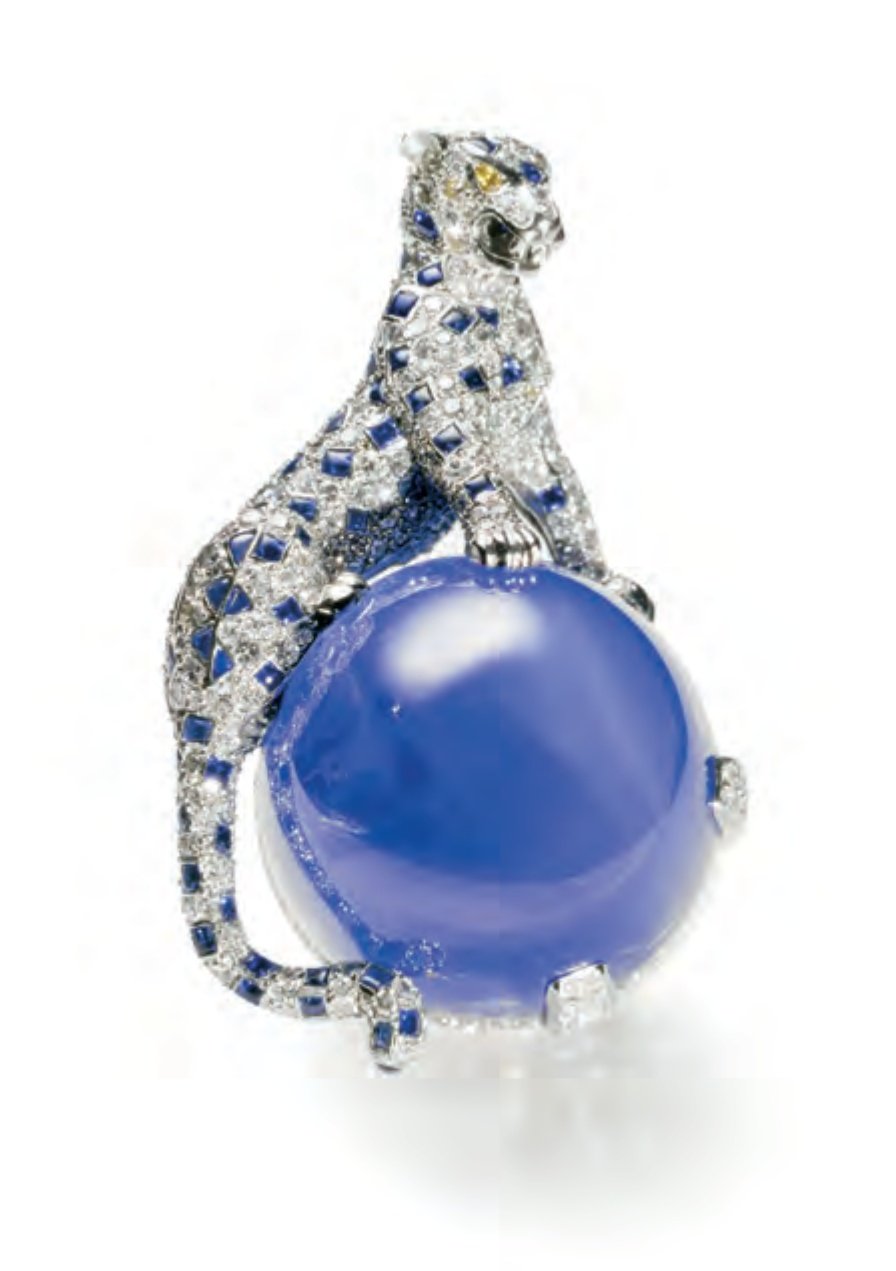
A client is browsing blue sapphires in your case. She finds a beautiful 3.05 ct oval Ceylon, heated, eye-clean, bright royal blue, priced at $8,400. She pulls out her phone and shows you a headline: “3.10 ct Kashmir sapphire sells for $3.2 million at Christie’s Hong Kong.” She looks up. “Why is yours $8,000 and that one $3 million? Is your markup that high?”
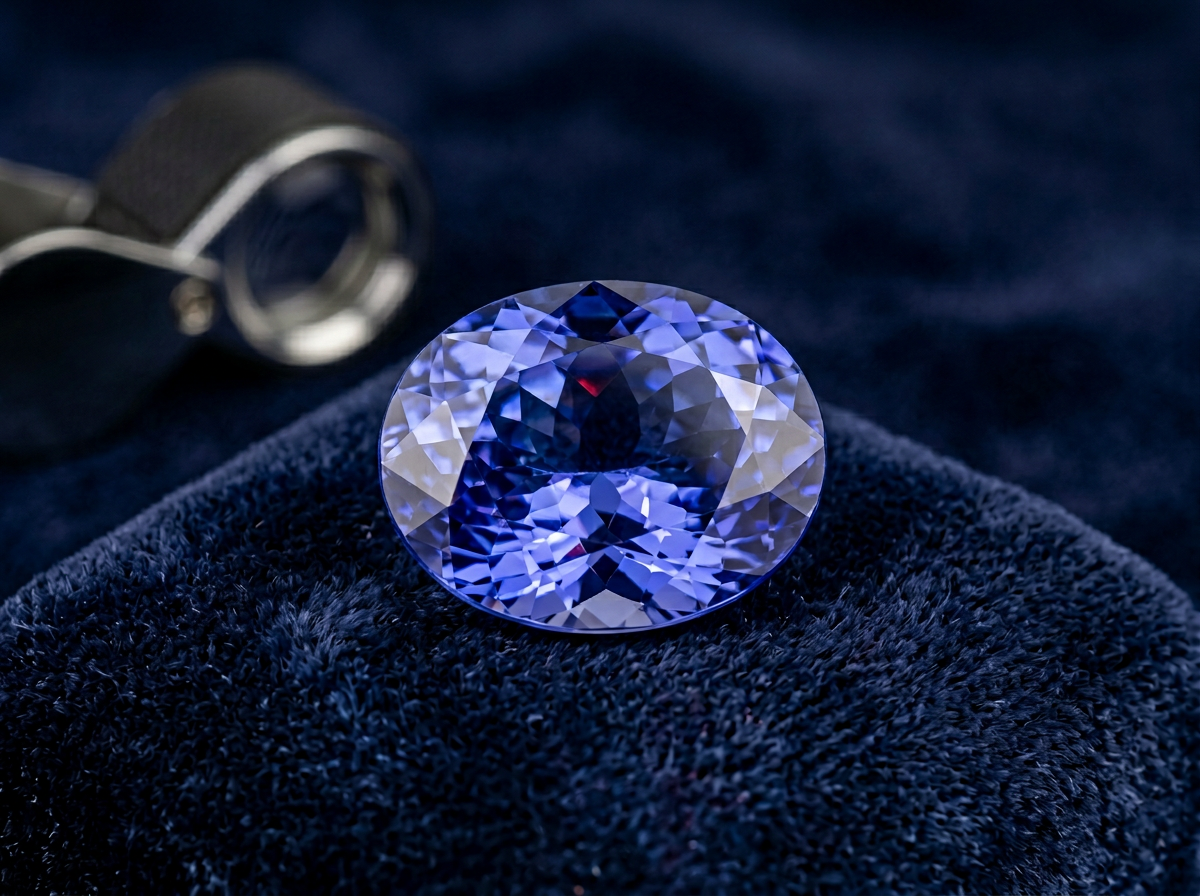
It’s not markup. The $3 million sapphire and the $8,000 sapphire are effectively different products. The auction stone is a finest-of-the-century Kashmir sapphire — a near-mythic origin, mined before 1930, with velvety saturated blue, no heat, impeccable pedigree, provenance likely dating back decades, and a buyer pool of collectors who compete at that level the way they compete for a Picasso. The sapphire in your case is a commercial-quality heat-treated Ceylon/Madagascar stone — beautiful, wearable, well cut — but it is to the Kashmir sapphire what a luxury production sedan is to a 1960s Ferrari 250 GTO. Same general category (blue sapphire / car), but different worlds.
This module walks through how the colored-stone market actually works: where stones come from, where they are cut and treated, how they trade, where auction prices come from, what certificates cost and mean, and what really drives price. Understanding the market keeps you from overpromising (you will not find a “Kashmir sapphire” for $8,000), from underpromising (a fine Ceylon/Madagascar/Montana stone is genuinely valuable even if it’s not an auction Kashmir), and from making embarrassing origin claims.
The pipeline, revisited
Module 3 walked through the mine-to-market pipeline: miner → local buyer → treatment → cutting → dealer → manufacturer → retail. Value (and cost) is added at every step, and the popular belief that jewelry retail is “all 10× keystone” is wrong for colored stones, especially in the mid-market where dealer and manufacturer margins are modest and competitive. The pipeline also has structural costs that don’t apply to diamonds:
- Rough is mined in small, often remote locations by a mix of large corporates (Gemfields, some Brazilian/Australian/African producers) and artisanal miners. Rough changes hands many times before reaching a treatment facility.
- Treatment (Chanthaburi): Most commercial corundum is heated in Chanthaburi (Thailand) — not a trivial step. Skilled heat treatment adds value when it improves color permanently; poorly executed treatment damages stones.
- Cutting (Jaipur, Bangkok, Idar-Oberstein, Panyu/Guangzhou, and producing regions): Cutters are paid per piece for commercial work, per day or per job for fine work. Labor cost is meaningful; high-end precision cutting costs more per stone than commercial cutting and produces a better face-up result.
- Certification: A GIA or GRS origin report adds cost ($100–$500+ per stone) but adds value by giving buyers confidence.
- Dealer parcels: Stones travel through multiple dealers before retail, each adding margin. Auction transactions (Gemfields Singapore, Tucson dealer trading, Hong Kong) are where wholesale price discovery happens.
Total retail markup on a commercial colored stone is typically in the 2–3× range from wholesale cost once all overheads (rent, staff, insurance, bench work, advertising, returns, certification) are included — not 10×, but not 1.2× either. On fine, auction-quality stones the situation is different: buyer competition, provenance, and scarcity determine price more than cost-plus markup.
Key mining regions — a quick reference map
This is the map you’ll draw from when you talk origins with clients. Full detail comes in species modules M11–M16.
| Region | Primary species | Notes |
|---|---|---|
| Mogok / Mong Hsu, Myanmar | Finest pigeon’s-blood ruby; blue sapphire; red spinel; peridot; many species | “Valley of Rubies,” restricted access for decades; marble-hosted; top rubies in auction history |
| Hpakant, Myanmar | Jadeite (imperial jade) | World’s dominant source of high-grade jadeite; drives the Chinese jade market |
| Chanthaburi-Trat / Pailin / Kanchanaburi (Thai/Cambodian border) | Basalt-field ruby/sapphire; the global corundum heat-treatment and trading hub | Historical production area; still produces basalt sapphires, but Chanthaburi’s importance today is treatment and trading |
| Sri Lanka (Ratnapura, Elahera) | Ceylon blue sapphire, padparadscha, pink/yellow/fancy sapphires, star sapphires, chrysoberyl, spinel, moonstone, garnet | The famous gem gravels (illam) — alluvial production for 2000+ years |
| Montepuez, Mozambique | Ruby (2009 discovery; Gemfields-operated) | Dominant modern ruby source; reshaped ruby market from 2012 onward |
| Madagascar (Ilakaka, Bemainty/Ambatondrazaka, Didy, Andilamena, Vatomandry, Ambahatra, northern deposits) | Sapphire (all colors, including padparadscha-like) and ruby; demantoid garnet (Antetezambato); tourmaline | Major sapphire rushes from the late 1990s onward; production overlaps Sri Lankan/Ceylon chemistry |
| Zambia (Kagem, Musakashi) | Schist-hosted emerald; amethyst | Kagem is the world’s largest emerald mine by volume (Gemfields) |
| Colombia (Muzo, Chivor, Coscuez, La Pita) | Hydrothermal emerald (black-shale-hosted) — Muzo warm green, Chivor slightly bluish-green | The historical emerald source; three-phase inclusions; top emeralds at auction |
| Brazil (Minas Gerais, Bahia, Goiás, Paraíba/Rio Grande do Norte) | Emerald (Belmont/Nova Era/Itabira/Goiás/Santa Terezinha); Paraíba-type cuprian tourmaline (Batalha); imperial topaz (Ouro Preto); aquamarine; morganite; tourmaline; chrysoberyl; amethyst; opal; quartz | One of the most diverse colored-stone producers |
| Australia (NSW/Queensland; Lightning Ridge; Coober Pedy/Mintabie; Queensland opal fields) | Basalt-field blue/green/parti/yellow sapphire; black opal (Lightning Ridge); white/crystal opal (Coober Pedy); boulder opal (Queensland ironstone) | The dominant opal-producing country; basalt sapphires typically dark |
| USA (Montana; Utah; San Diego/Maine; Oregon; Arizona) | Montana sapphire (Yogo/Rock Creek/Gem Mountain/Missouri River); Utah red beryl (Wah Wah Mountains); San Diego/Maine pegmatite (tourmaline, kunzite, morganite); Oregon sunstone; Arizona peridot | Montana sapphire is the most commercially important U.S. gem today |
| Pakistan/Afghanistan/Tajikistan/Kashmir | Panjshir emeralds (Afghanistan); Hunza/Kashmir aquamarine and peridot; Jegdalek and Snezhnoe rubies; Kashmir sapphire (India/Pakistan, essentially exhausted) | Kashmir sapphire is the most storied and expensive blue sapphire origin |
| Vietnam (Luc Yen, Quy Chau) | Ruby and fancy sapphire (marble-hosted) | Comparable to Burmese material in chemistry |
| Kenya/Tanzania (Merelani Hills, Taita Hills, Umba Valley, Komolo, Mangare/Morogoro) | Tanzanite (Merelani Hills, single-source); tsavorite garnet (Kenya/Tanzania border); Umba sapphires; fancy color-change garnets; ruby; tourmaline; spinel (Mahenge) | East Africa’s gem belt (Pan-African orogeny) |
| Nigeria, China (Shandong/Penglai/Mingxi/Fujian), southern Vietnam | Basalt-field sapphire/yellow/parti sapphire | Secondary sources |
| Ethiopia (Kenticha/Shakisso; Welo/Shewa) | Emerald (schist-hosted, discovered ~2010s); precious opal (Welo hydrophane) | Significant 2010s producer |
| Guatemala (Motagua River Valley) | Jadeite jade (rediscovered 1970s) | Secondary jadeite source, smaller than Hpakant |
Treatment and cutting hubs
Where the stones are actually worked on.
- Chanthaburi, Thailand is the global corundum heat-treatment capital. Abraham (1982) documented the early Bangkok/Chanthaburi heat-treatment scene, and Emmett/Douthit (1993) documented Rock Creek/Montana sapphire heat treatment. Today, the vast majority of commercial ruby and sapphire passes through Chanthaburi for heat treatment (often before and after cutting).
- Jaipur, Rajasthan, India is the world’s colored-stone cutting capital, particularly for emerald, but also for ruby, sapphire, garnet, tanzanite, quartz, and beryl. Lucas et al. (2016) document Jaipur’s scale (thousands of small cutting workshops), its role in the emerald trade since the 18th century, and the modern manufacturing/export ecosystem. Jaipur is also famous for polki jewelry (traditional Indian jewelry using thin slices of rough/unpolished diamond and ruby).
- Bangkok, Thailand remains a major colored-stone trading, treatment, and jewelry-manufacturing hub; GIA Bangkok is one of the busiest colored-stone labs in the world.
- Idar-Oberstein, Germany is the historic agate-and-gem-carving capital of Europe and the birthplace of Bernd Munsteiner’s fantasy-cut revolution (Anderson 1991; “And Then Came the Fantasy Cut”). The volume of cutting is smaller today but Idar-Oberstein remains important for high-end carving and designer cuts.
- Panyu/Guangzhou, China has become a major jewelry-manufacturing hub (Hsu/Lucas document the Panyu manufacturing cluster) for both domestic and export markets; large-volume commercial cutting.
- Bogotá, Colombia is the emerald-trading capital of Colombia — most Colombian emeralds are traded and cut in Bogotá before export.
- Yangon/Mogok — internal Burmese ruby and jade trading, with limited access for foreign buyers.
- Tucson, Arizona is not a cutting hub but is the single most important annual colored-stone gathering in the world.
The shows: where wholesale price discovery happens
If you’ve never been to a major gem show, it is difficult to convey how many colored stones move through a single event. The three that matter most commercially:
- Tucson Gem Shows (February, AGTA / GJX / G&LW / JCK Tucson plus the Pueblo/Gem Mall/Holiday Inn shows) — the largest gathering of colored-stone dealers in the world; dealers from every producing country set up in hotel rooms and tents; prices at Tucson influence wholesale levels for the year ahead. GIA sends teams every year and publishes an annual G&G show report (Hsu/Pay 2010–2016). The AGTA Spectrum Awards at Tucson are the most visible colored-stone design competition in the US.
- Hong Kong Jewellery & Gem Fair (September and March) — the largest Asian colored-stone and pearl trade show; Gemfields typically holds its rough auctions (ruby and emerald) in Singapore or Hong Kong around the September fair.
- JCK Las Vegas (May/June) — the major US jewelry-industry show (more finished jewelry than rough, but significant colored-stone presence).
BaselWorld (Switzerland) was historically the key European luxury watch-and-jewelry show but has lost importance in recent years.
Auctions and record prices
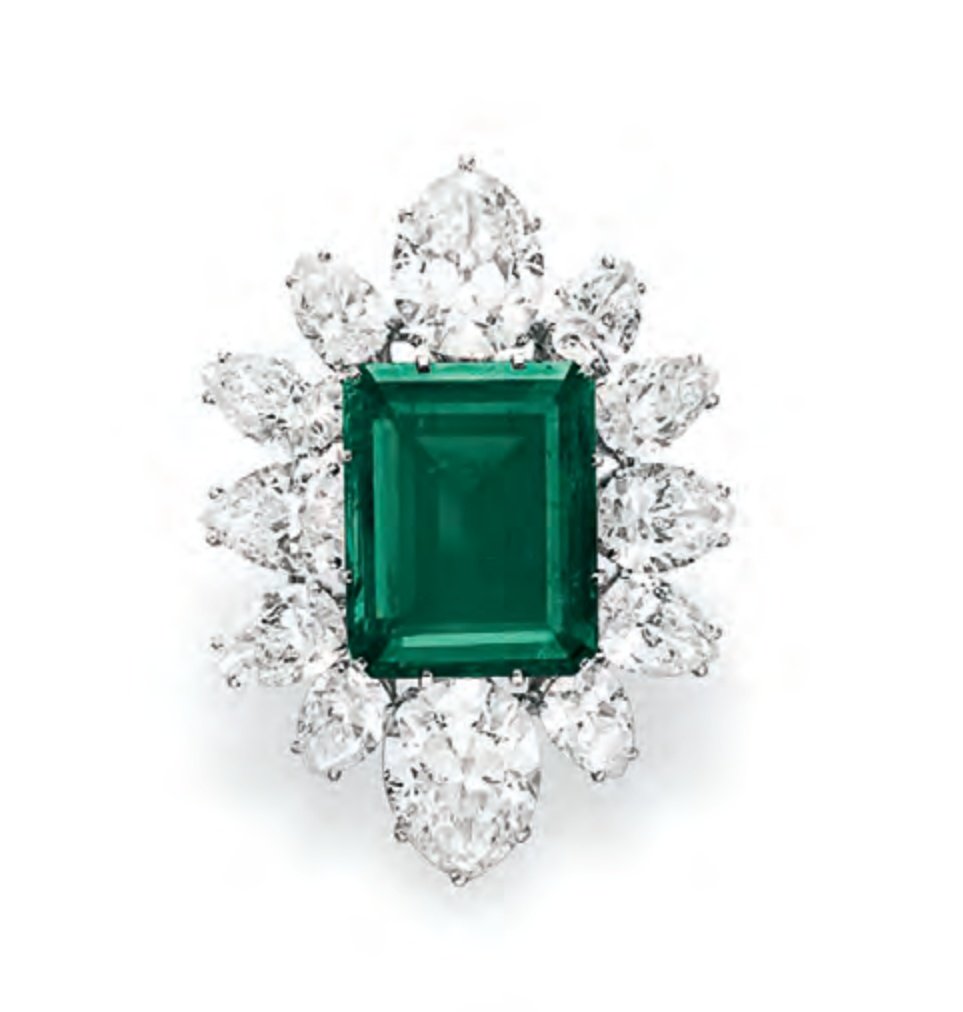
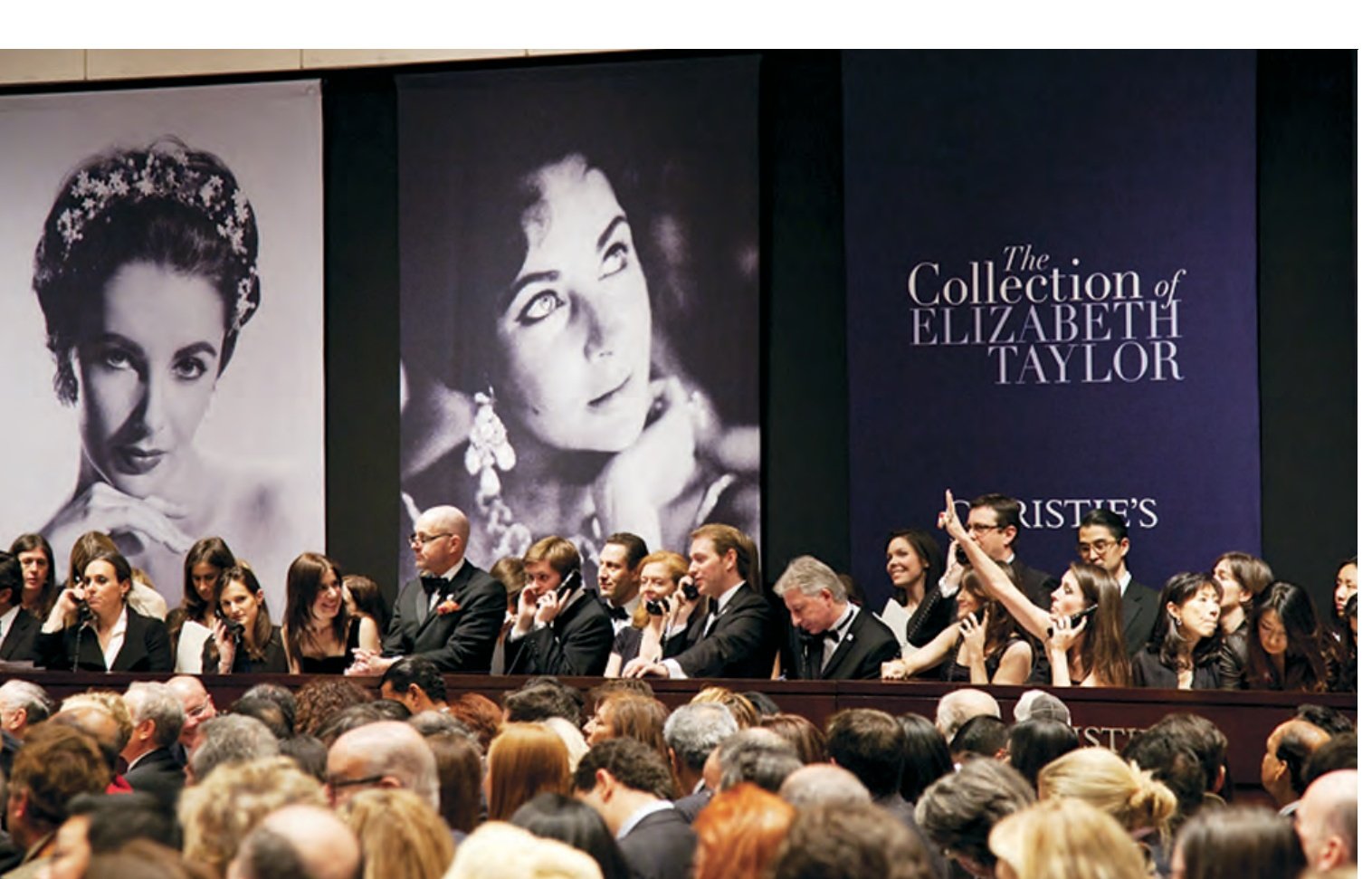
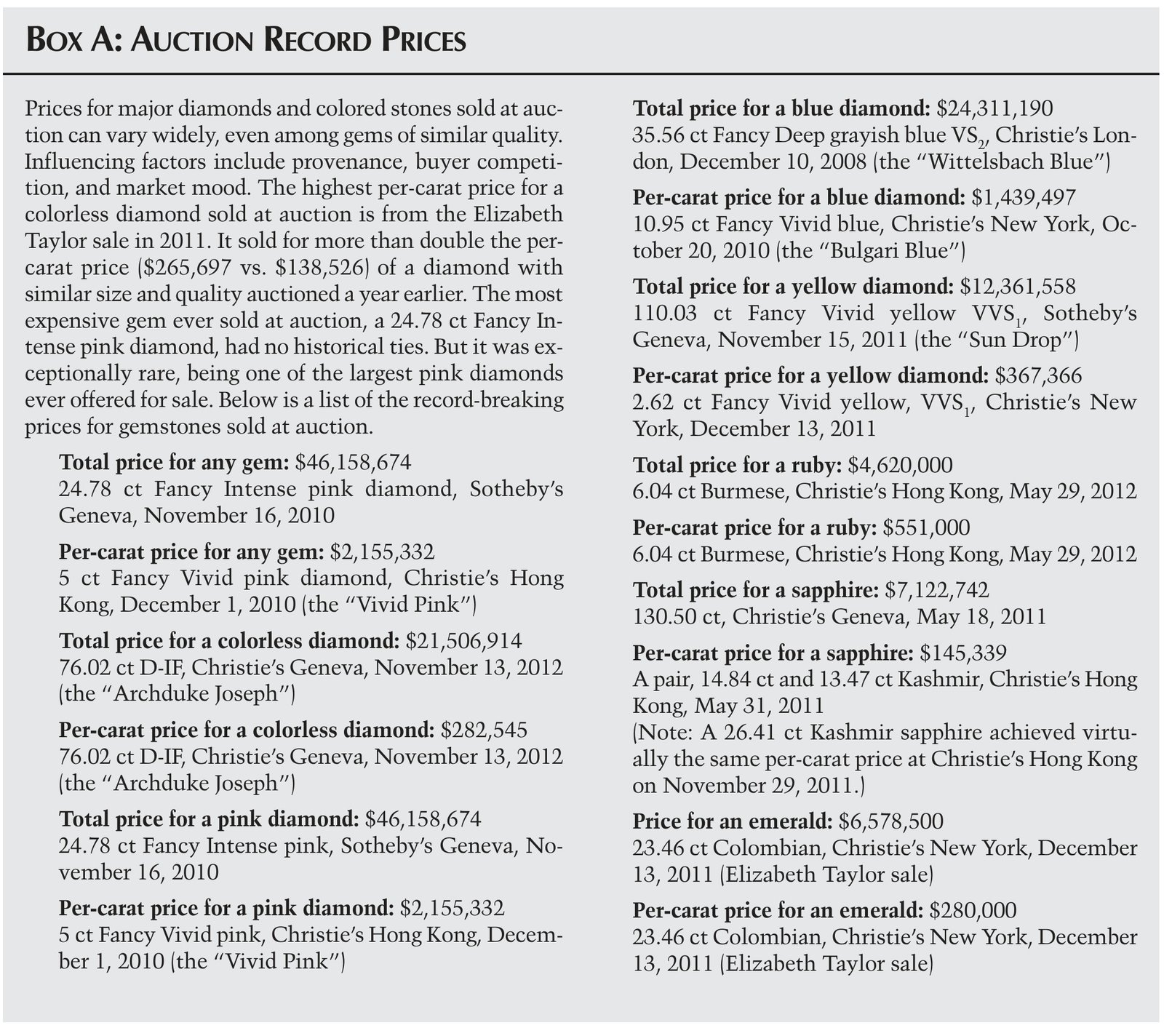
The record-breaking colored stones you see in headlines come from the major jewelry auctions — Christie’s, Sotheby’s, Phillips, Bonhams — held in Hong Kong, Geneva, New York, and London. These auctions set prices for the finest 0.1% of colored stones: Kashmir sapphires, Mogok pigeon-blood rubies, Muzo/Chivor emeralds with pedigree, natural pearls, imperial jadeite, and rare padparadscha/alexandrite. Shor (2013) documents how auction houses became the dominant price-discovery mechanism for major colored stones: the 1980s–2010s saw a series of record prices as international (especially East and Southeast Asian) buyer pools entered the market.
Famous records (as of 2026, these continue to move):
– The Sunrise Ruby (25.59 ct, Mogok, pigeon’s-blood, Cartier mounting, Sotheby’s Geneva 2015) set a colored-stone per-carat record.
– The Rockefeller Emerald (18.04 ct, Colombian, Christie’s 2017) set an emerald per-carat record.
– The Jubilee Ruby (15.99 ct, Mozambique? no — Burmese, Christie’s 2016) and the Crimson Flame (15.04 ct, Burmese, Christie’s Hong Kong 2015) were record Burmese rubies.
– Imperial jadeite (Hutton-Mdivani necklace, etc.) commands multimillion-dollar prices driven by the Chinese collector market.
– Kashmir sapphires above 5 ct routinely exceed $100,000 per carat at auction when the color and provenance are right.
The single most important counter point: auction records do not represent retail prices for the typical stone in your case. A 3 ct commercial-heated Ceylon or Madagascar sapphire is a wearable, beautiful stone in a completely different segment of the market from a 3 ct unheated Kashmir. Clients will see the headlines and ask; your job is to explain the difference without sounding dismissive. The words “that’s a collector piece at the very top of the market; here’s what you’re getting for your budget” are your friends.
Gemfields and branded rough
Gemfields (operator of Kagem emerald in Zambia and Montepuez ruby in Mozambique) has developed a model of selling rough at scheduled auctions in Singapore/London/Jaipur (Lucas/Pardieu 2014 first Singapore auction; Shor/Weldon 2014, 2015 analysis) with partner-compliance requirements and some downstream marketing. Other branded-rough programs include:
– Belmont mine (Brazil) — integrated mine-to-market emerald documented by Lucas et al. (2015).
– Some Montana sapphire operations (e.g., Gem Mountain offers mine-direct gravel; other producers offer branded rough with some mine-to-market tracing).
– Some Australian opal operations with direct sales.
Branded rough with partner compliance helps with traceability but does not by itself certify ethics — a brand is still a marketing claim unless there is independent audit. The careful phrasing (from Archuleta 2016, M03) remains: “this stone comes from a program that tracks its rough from the mine, which is more than most colored stones have — but origin is not ethics by itself.”
Certificates: labs, costs, and what they mean
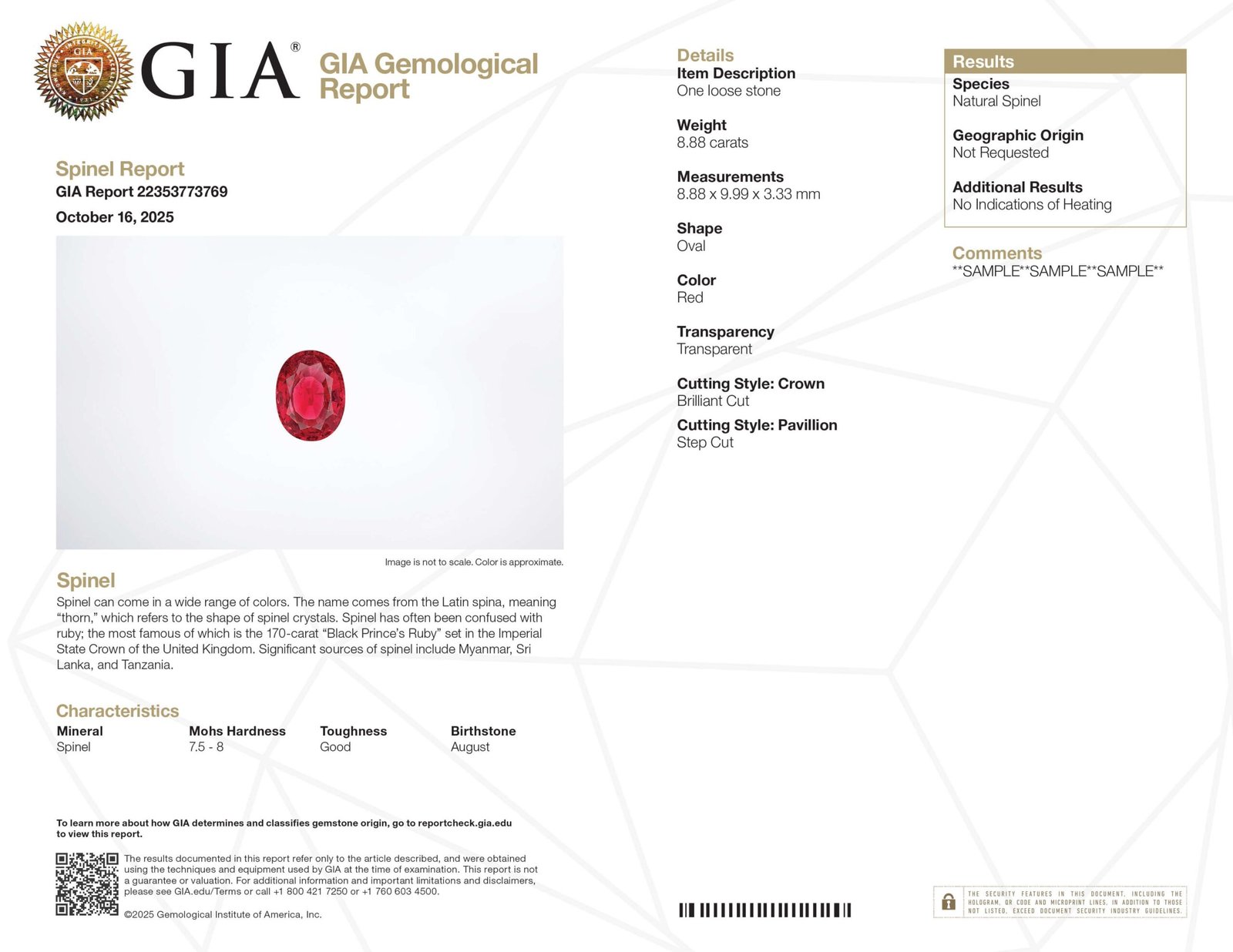
The major colored-stone labs operating internationally are:
– GIA (Gemological Institute of America) — the most widely recognized in the US; issues colored-stone origin reports (for the seven qualifying species: ruby, sapphire, emerald, Paraíba-type tourmaline, red spinel, alexandrite); reports identify species, weight, cut, shape, dimensions, color, origin, and treatment with comments. Add-ons include laser inscription, color calls (pigeon blood, royal blue, padparadscha), star/eye quality, and (emerging) origin-and-traceability services.
– GRS (Gemresearch Swisslab, Dr. A. Peretti) — very widely used in Asia; issues origin and treatment reports, especially for ruby, sapphire and emerald.
– Gübelin (Switzerland) — high-end Swiss lab; highly respected for colored-stone origin determination.
– SSEF (Swiss Gemmological Institute) — Basel; widely respected, especially for pearls and high-end colored stones.
– AGL (American Gemological Laboratories, New York) — issues detailed colored-stone origin and quality reports, particularly used at the high end.
– Lotus (Bangkok, R. Hughes) — respected for corundum origin and treatment work.
– AIGS (Asian Institute of Gemological Sciences, Bangkok) — a major Southeast Asian lab.
– GAAJ, CGL, and other regional labs — active in Japan and Asia.
Pricing for a colored-stone report varies widely — roughly $100–$200 for a basic identification/genuineness report on a small colored stone, $200–$500+ for a full origin-and-treatment report on a ruby/sapphire/emerald, and more for add-on services. As a rule, any colored stone priced above a few thousand dollars should be sold with a lab report, and any stone over ~$10,000 should have a recognized report.
Important caveats (clients sometimes ask “does the report guarantee it’s worth X”):
– A lab report is an expert opinion, not a value appraisal, not a guarantee of price.
– Different labs occasionally disagree on origin — particularly Sri Lanka vs. Madagascar sapphire (the two can overlap chemically and visually), and on heat treatment in borderline cases. This is normal; two competent gemologists can look at the same evidence and reach different conclusions when the signals are marginal.
– Reports are issued for the specific stone described; they are not transferable to a different stone. Verify that the dimensions, weight, and any laser inscription on the stone match the report.
– The report identifies the stone, its treatments, and (where possible) its origin. It does not say whether the price is fair, though an origin report makes the market value easier to determine.
What actually drives colored-stone price
In approximate order of importance (order varies by species):
1. Species. Ruby, emerald, and fine sapphire are the top-tier colored stones by price at fine quality. Fine alexandrite, padparadscha, Paraíba-type tourmaline, and red beryl exceed many rubies/emeralds/sapphires at the collector level, but in retail the “big three” lead.
2. Color (hue/tone/saturation). For every colored stone, face-up color is the single most important value factor. A 3 ct moderately saturated sapphire is worth a fraction of a 3 ct vividly saturated one.
3. Origin. Kashmir > Burma (Mogok) > Sri Lanka/Madagascar for blue sapphire at the top end (other origins price differently); Burma > Mozambique > Madagascar/Vietnam for ruby; Colombian emerald generally priced above Zambian/Brazilian at top, though Zambia and Brazil also produce fine stones. Origin premiums are for fine qualities only — a low-quality Burmese ruby can be worth less than a fine Mozambique ruby.
4. Size (carat weight). Colored-stone prices-per-carat rise non-linearly at certain thresholds — 1 ct, 2 ct, 3 ct, 5 ct are common “steps” where supply drops off sharply. Fine 5 ct+ rubies, 10 ct+ Kashmir sapphires, 5 ct+ Colombian emeralds are rare and priced accordingly.
5. Treatment. Unheated material commands a 2–10× premium over heated of similar quality; lead-glass-filled material trades at a fraction of natural; beryllium-diffused material trades at a large discount to natural padparadscha/orange sapphire.
6. Clarity. Unlike diamonds, colored stones are not graded on a universal clarity scale; visible inclusions that break the surface or threaten durability matter most. Inclusions (jardin) in emerald are expected and priced accordingly. Eye-clean rubies command a premium.
7. Cut. A well-cut stone (bright, even color, no window/extinction, good symmetry/polish) commands a substantial premium over a native-cut or poorly cut stone of the same material.
8. Provenance. Auction-pedigree, royal history, documented mine origin, famous-dealer histories all add value, as with fine art.
9. Phenomena quality (for stars, cat’s-eyes, alexandrite color-change strength, opal play-of-color pattern).
Traceability: where things actually stand today (reprise)
A point worth repeating from M03: an origin report is not traceability. A report saying “Burma (Myanmar)” tells you the country of origin; it doesn’t tell you which mine, which miner, or under what conditions it was mined. Mine-to-market programs exist for a small minority of goods — Belmont emerald, Gemfields-branded Kagem/Montepuez production (downstream partner compliance required but not always mine-to-consumer), some Montana sapphire producers, some Australian opal operations, and a handful of smaller ASM co-op programs. The vast majority of commercial colored stones do not have mine-level traceability.
The honest line, again, is: “This stone is [country] per the GIA report. We don’t have mine-level traceability on this parcel — that’s still unusual in colored stones. If mine-traceability matters to you, I can show you pieces from [specific program].”
On the floor: applying it this week
- Monday (15 minutes): Ask your buyer what percentage of the store’s colored stones come with GIA/GRS/Gübelin reports, and which origins your inventory actually is. If you’ve been saying “Sri Lankan” or “Burmese” based on what a supplier told you without a report, stop.
- Tuesday (10 minutes): Go to Christie’s and Sotheby’s websites and look at the last three colored-stone auction results for Kashmir sapphire and Burmese ruby. Notice the color, clarity, size, and descriptions. It calibrates your eye to what the top 0.1% looks like.
- Wednesday (practice): When a client references an auction price, don’t argue — explain. “That was a top-0.1% collector stone with documented provenance; here’s what you get in the wearable range at our price point.”
- Thursday: If you sell any filled/diffused/coated stone this week, make sure the treatment is disclosed both verbally and on the sales receipt. Confirm care sheets match.
- Friday (10 minutes): Read Shor 2013 (auction paper) and one Jaipur/Tucson Research & News piece.
Objections, mistakes and edge cases
| Situation | The trap | Better move |
|---|---|---|
| Client compares your sapphire to an auction Kashmir | Taking offense or arguing | Explain that auction prices reflect the very top collector tier; show the client what their budget buys at wearable commercial quality, and let them decide. |
| Client assumes every sapphire from Sri Lanka is valuable | Confusing origin with quality | Origin matters most when quality is already high. A pale, windowed, heavily included Ceylon sapphire is not valuable just because it is Ceylon. Quality before origin. |
| Client asks “Is this better because it has a certificate?” | Treating all certificates as equal | A GIA/GRS/Gübelin/SSEF/AGL origin report adds confidence (and value) to a fine stone because it documents identity, treatment, and origin. A cheap mall “certificate of authenticity” that does not identify treatment or origin provides no meaningful information. Explain which labs are credible. |
| Client wants a “Kashmir sapphire” at $10,000 | Sourcing one to make the sale | A fine Kashmir sapphire of 2+ ct starts at many times that. Offer Ceylon/Madagascar/Burmese/Montana as the realistic options, and explain why Kashmir is a collector stone. |
| Client asks “is Gemfields emerald ethical?” | Saying yes or no based on marketing | Gemfields operates at scale with visible auctions and partner compliance, but “ethical” is a big word; “Gemfields’ Kagem mine is a large-scale, audited operation — more transparent than most emerald supply chains, though no colored-stone supply chain is fully audited end-to-end yet” is the honest answer. |
| Client brings an old stone with a 1970s “CGL” or unknown certificate | Treating it as equivalent to a modern GIA report | Certificate standards and detection capabilities have improved dramatically since the 1970s/80s. Older reports did not know to look for beryllium diffusion (which appeared ~2001) or modern lead-glass fill (2000s). For a high-value stone, recommend a fresh report. |
| Client believes “all colored stones are marked up 10×” | Defending yourself with outrage | Explain the pipeline costs (mining, treatment, cutting, certification, dealer margins, overhead) and show the range — commercial goods have modest markup, auction-quality stones are priced by scarcity and competition, not by cost-plus. |
| Edge case: an unheated stone vs heated stone that looks similar | Assuming clients will always pay for unheated | Some clients care deeply about unheated; others prefer heated for price. Disclose treatment, present both options at their respective price points, and let the client choose. Do not oversell unheated as “better” for every buyer. |
Self-check
- Which Thai city is the historic global center for corundum heat treatment?
- Which Indian city is the dominant colored-stone cutting capital (especially emerald)?
- Which annual February show in Arizona is the world’s most important colored-stone gathering?
- Why do auction-record prices for Kashmir sapphires not set the price for commercial blue sapphires in jewelry stores?
- Which two mines does Gemfields operate (emerald and ruby, respectively)?
- Name three internationally recognized colored-stone origin-report labs.
- Approximately how much does a GIA colored-stone origin report cost (range)?
- If two labs disagree on a sapphire’s origin (e.g., Sri Lanka vs. Madagascar), is that evidence of incompetence?
- Which factor is the single most important value driver for any colored stone?
- Is an origin report the same thing as mine-level traceability?
Go deeper
- ★ Shor R. (2013) Auction Houses: A Powerful Market Influence on Major Diamonds and Colored Gemstones. G&G 49:1 — https://www.gia.edu/gems-gemology/Spring-2013-shor-auction — anchor, 25 minutes.
- Lucas A. et al. (2016) Jaipur, India: The Emerald Cutting and Trading Powerhouse. GIA Research & News + G&G 52:4 — https://www.gia.edu/gems-gemology/winter-2016-jaipur-india — 20 minutes.
- Lucas A. et al. (2015) The Belmont Mine and an Emerald’s Journey from Mine to Market. GIA Research & News — https://www.gia.edu/gia-news-research/belmont-mine-emeralds-journey-mine-to-market.
- ★ Chapin M. et al. (2015) Mozambique: A Ruby Discovery for the 21st Century. G&G 51:1 — https://www.gia.edu/gems-gemology/spring-2015-mozambique-ruby-discovery-21st-century.
- ★ Archuleta J. (2016) The Color of Responsibility. G&G 52:2 — https://www.gia.edu/gems-gemology/summer-2016-color-responsibility-ethical-issues-solutions-colored-gemstones.
- Abraham J.S.D. (1982) Heat Treating Corundum: The Bangkok Operation. G&G 18:2 — https://www.gia.edu/gems-gemology/summer-1982-corundum-bangkok-abraham — historical Chanthaburi.
- Emmett J.L., Douthit T.R. (1993) Heat Treating the Sapphires of Rock Creek, Montana. G&G 29:4 — https://www.gia.edu/gems-gemology/winter-1993-montana-sapphires-emmett.
- Shor R., Weldon R. (2014, 2015) Gemfields articles. GIA Research & News (multiple pieces).
- Annual Tucson show reports (Hsu/Pay/Befi, G&G 2010–2016).
- “And Then Came the Fantasy Cut” (Munsteiner). GIA Research & News — https://www.gia.edu/munsteimer-gem-cut.