Blue Sapphire: Velvet, Cornflower and the Ring Diana Chose
The most famous sapphire is not the most valuable one
A bridal client sits down and says she wants “a sapphire ring like Kate Middleton’s.” She has done her homework: she knows the ring was Princess Diana’s, and she has also read that Kashmir sapphires sell for millions of dollars. She would quite like the second thing at the price of the first.
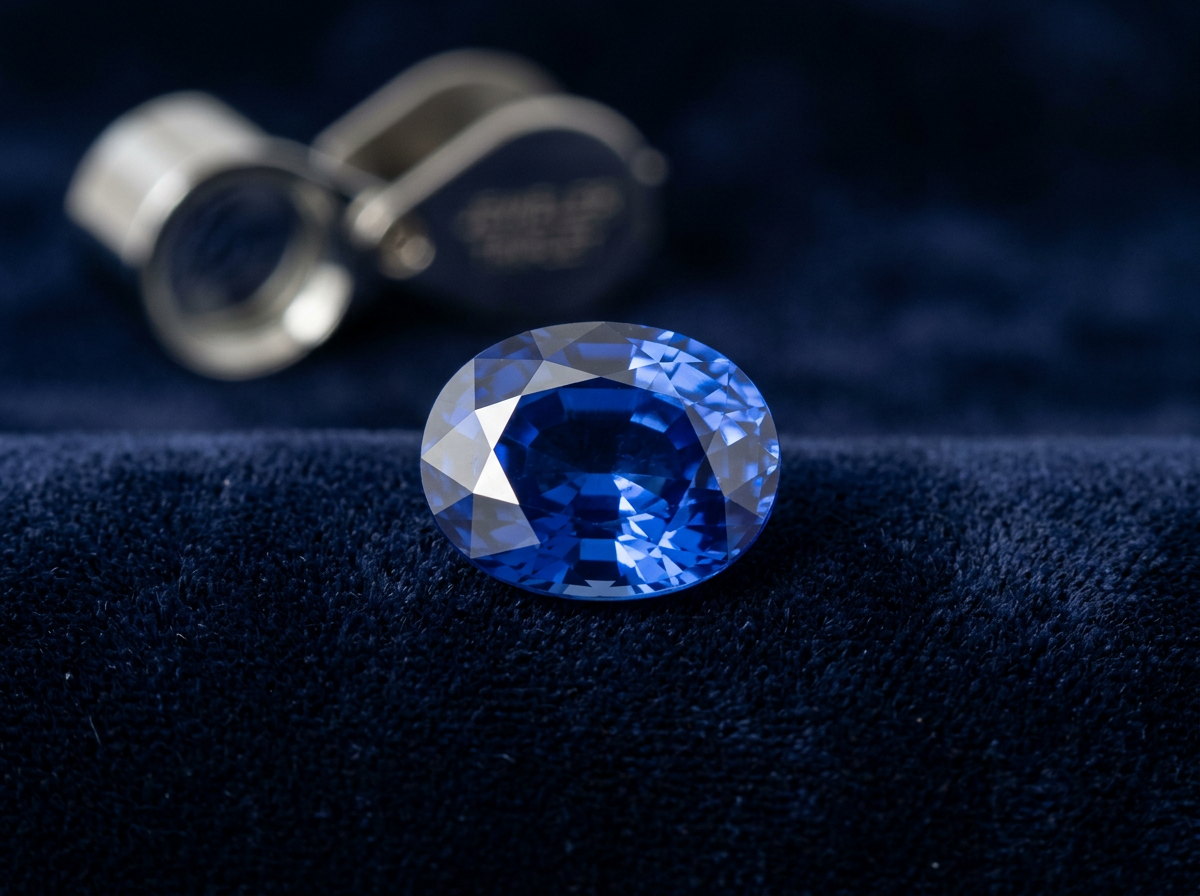
This is an unusually easy conversation if you know two facts.
The first: the ring is a Ceylon sapphire. Lady Diana Spencer chose a 12-carat oval blue sapphire surrounded by solitaires, made by Garrard, in 1981; it passed to Prince William and was given to Catherine Middleton in 2010. It is a Sri Lankan stone of good commercial-to-fine quality — a beautiful, accessible thing, and the reason sapphire engagement rings had a decade-long renaissance.
The second: Kashmir sapphire came from a deposit that essentially stopped producing a century ago. Discovered in the 1880s in the Zanskar range at around 4,000 m, mined for a few decades in a window of a couple of months a year, and largely exhausted by the 1930s. Everything that will ever be a Kashmir sapphire is already in a collection, an estate, or a vault.
Both are sapphire. They are a hundred years and roughly three orders of magnitude apart in price per carat. The client who understands that distinction is a client who buys well, so this module is largely about teaching you to explain it.
Why sapphire is blue: it takes two elements
Pure corundum is colorless. What makes a sapphire blue is not one impurity but a pair of them, working together.
Blue corundum requires both iron and titanium. The mechanism is intervalence charge transfer (IVCT) between adjacent Fe²⁺ and Ti⁴⁺ ions: an electron hops between them, absorbing light in the yellow-orange-red part of the spectrum and transmitting blue. Neither element does this alone.
That single fact explains three things you will use constantly:
- Treatment works. Because the color depends on the oxidation state pairing of Fe and Ti, heating in an oxidizing or a reducing atmosphere can develop, intensify, or lighten blue. This is why heat treatment is so powerful on sapphire and why Sri Lankan geuda — milky, near-worthless rough — becomes good blue in a furnace.
- Too much iron is a problem. Iron-only color (Fe²⁺–Fe³⁺ transfer) tends toward weak, greenish or excessively dark blue. This is exactly the character of basalt-hosted material, and it is why so much Australian rough is heated simply to lighten it.
- Colorless sapphire exists. White sapphire is just corundum without the chromophores — which is why it is a credible natural alternative to a diamond accent, and why it is not “a bad blue sapphire.”
| Property | Value | Note |
|---|---|---|
| Species | Corundum, Al₂O₃ | Same species as ruby |
| Cause of blue | Fe²⁺–Ti⁴⁺ intervalence charge transfer | Requires both Fe and Ti |
| Mohs hardness | 9 | Genuinely excellent for everyday wear |
| Toughness | Good; no cleavage | Still chips on a hard, sharp knock |
| RI | 1.762–1.770 | Separates sapphire from its imitations |
| SG | ~4.00 | |
| Optic character | Uniaxial (–) | |
| Pleochroism | Blue / greenish-blue (some violet-blue) | Why cutters orient the table for the bluer direction |
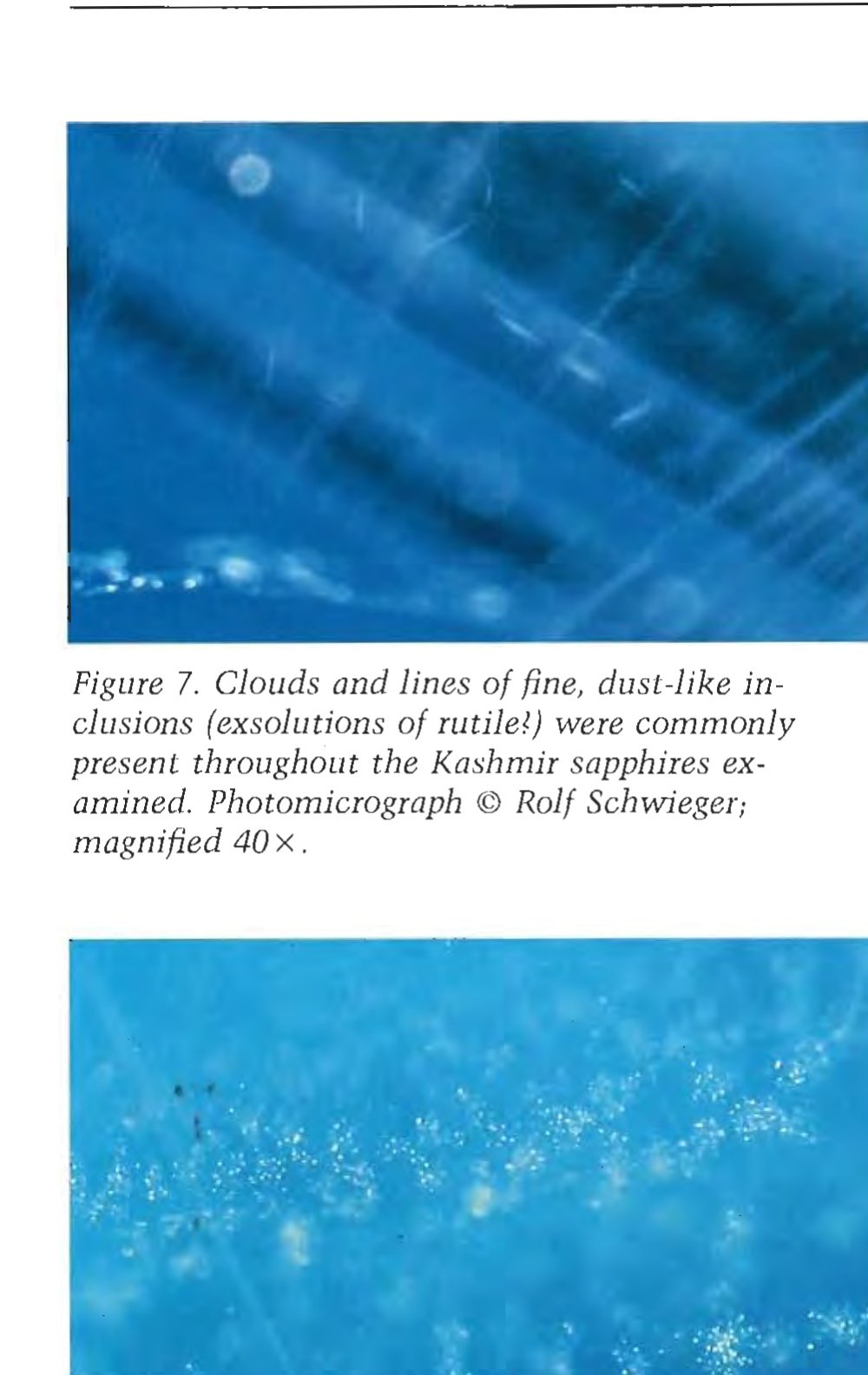
| Typical inclusions | Rutile silk, zircon with tension halos, fingerprints, boehmite needles | Silk is normal and often desirable |
Sources, look by look
| Source | Host / type | Typical look | Market position |
|---|---|---|---|
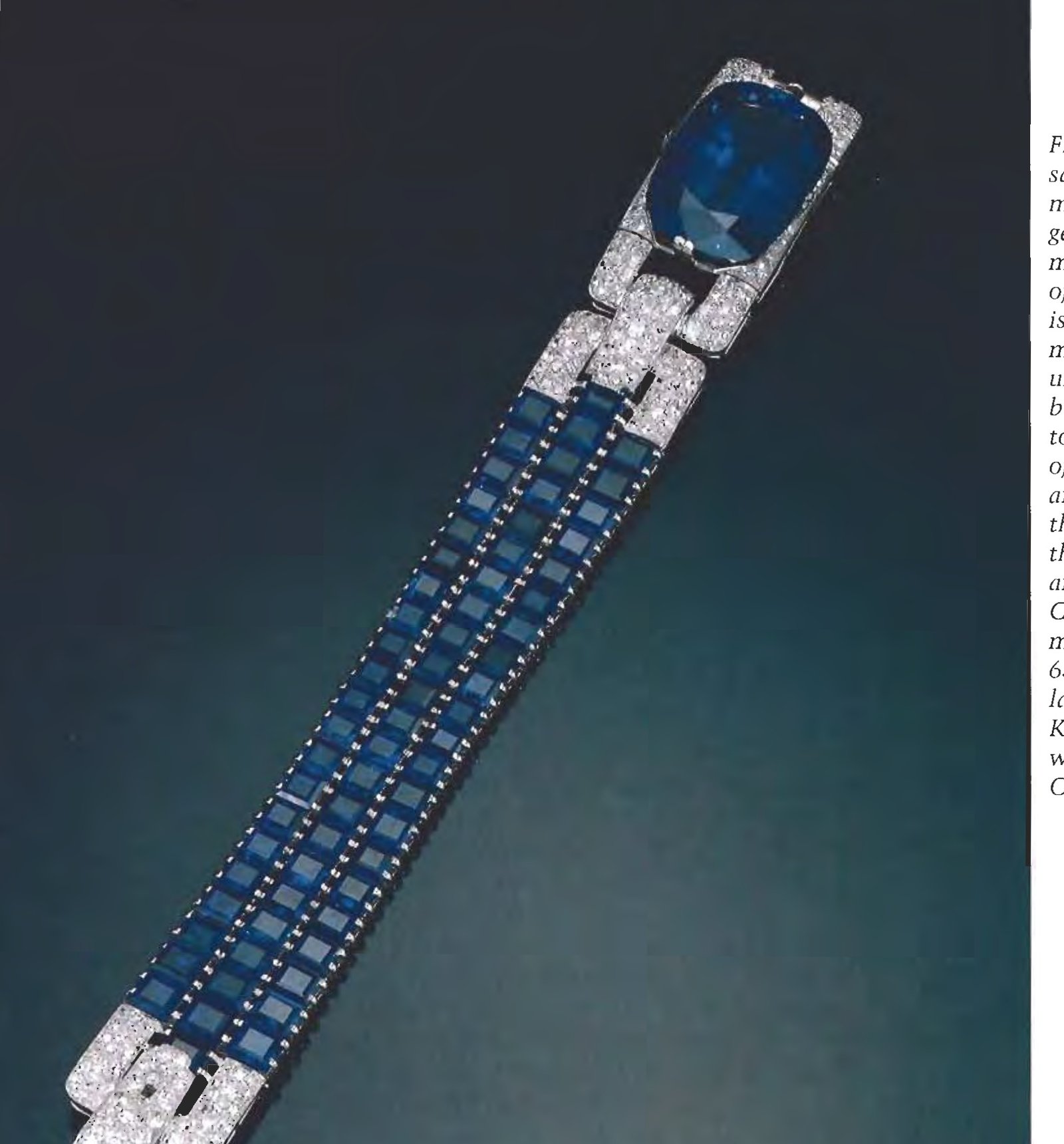
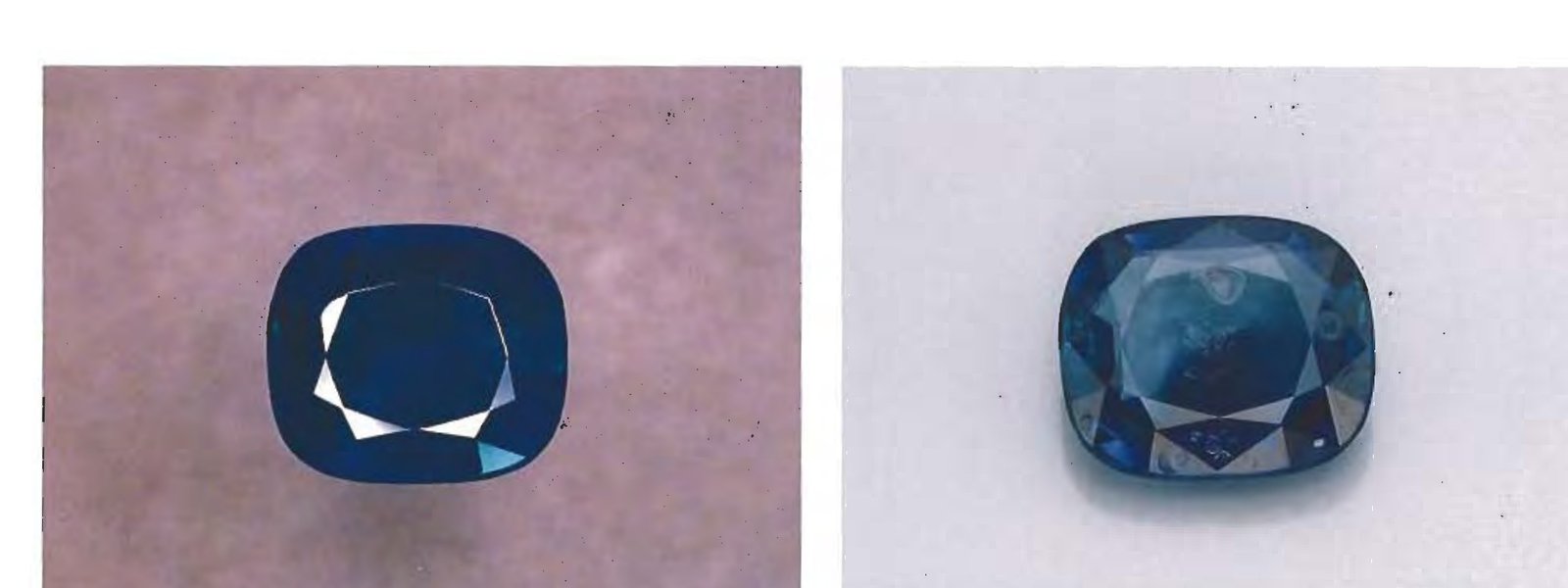
| Kashmir | Metamorphic, alpine | Velvety, soft cornflower blue — the trade benchmark | Effectively exhausted; museum and estate material |
| Burma (Mogok, Baw Mar) | Marble | Rich, saturated, slightly inky royal blue with fine silk | Top tier, close behind Kashmir |
| Sri Lanka (Ceylon) | Alluvial / metamorphic | Brighter, lighter cornflower-to-blue; home of geuda | The commercial-to-fine backbone of the market |
| Madagascar (Ilakaka, and others) | Alluvial | Wide range — commercial to genuinely fine, often overlapping Ceylon | Huge volume since the 1998 Ilakaka rush |
| Montana — Yogo Gulch | Igneous dike | Uniform cornflower blue, famously no heat needed | Small sizes (most cut stones under 1 ct), limited production |
| Montana — Rock Creek / Gem Mountain / Missouri River | Alluvial gravel | Pale or greenish in the rough, routinely heated | Domestic-origin story; Gem Mountain sells untreated and offers heat-treating as a service |
| Australia (New England NSW; Anakie/Rubyvale, Queensland) | Basalt | Dark, inky blue from high iron | Volume commercial; usually heated to lighten |
| Thailand/Cambodia (Pailin, Chanthaburi) | Basalt | Darker, iron-rich | Chanthaburi is also the world’s heat-treatment and trading capital |
| Nigeria, Ethiopia, China (Shandong), Laos, Colombia | Basalt | Commercial dark-to-medium blue | Volume commercial |
A few of these deserve expansion.
Kashmir and the word “velvet.” The classic Kashmir look is a soft, slightly hazy, intensely saturated cornflower blue. The usual explanation is that submicroscopic exsolved inclusions scatter light within the stone, so the color reads as a glow rather than a flat surface color. Whatever the precise physics, the practical point for you is a commercial one: Kashmir is a report question, not a look question. Material from Ceylon and Madagascar can look velvety. When a Kashmir stone is presented to you, the value rides entirely on the laboratory report — and on the reputation of the lab that issued it.
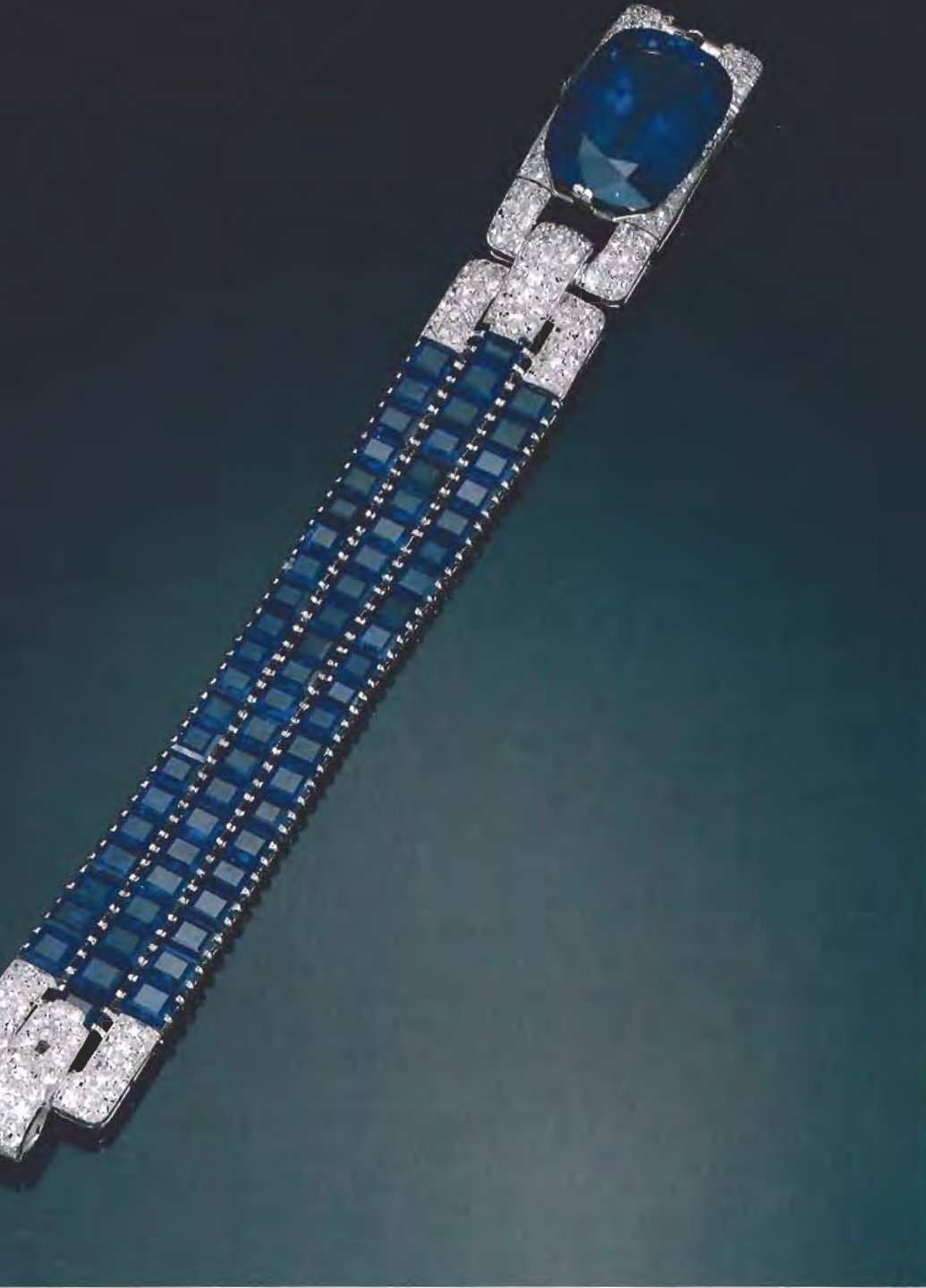
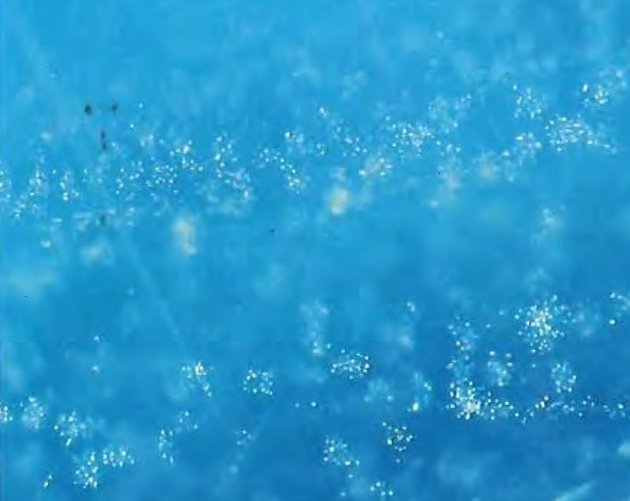
Ceylon is the most useful word in this table and the most abused. In the trade, “Ceylon sapphire” can mean (a) a sapphire mined in Sri Lanka, or (b) a bright cornflower-blue color, regardless of origin. Be precise about which you mean, because your client hears the first one. Sri Lanka is also the source of the trade’s great heat-treatment story: geuda, a milky, low-value corundum that becomes attractive blue in a furnace. Almost every affordable blue sapphire on the market today is heated material from somewhere, and a great deal of it started life as geuda.
Yogo vs Rock Creek is the Montana distinction worth having. Yogo sapphire comes from an igneous dike and is naturally a uniform cornflower blue that needs no heat — but the rough is small, so cut Yogo stones are usually well under a carat. Rock Creek, Gem Mountain and the Missouri River deposits are alluvial gravels where the rough is often pale or greenish and is routinely heat treated. If a client wants “American sapphire, untreated,” Yogo is the real answer and the size limit is part of the deal.
[MEDIA: video | C17-M12-V1]
Watch: Passion and Searching for Sapphires (Gem Mountain, Montana) — GIA (GIA-CS-07), 10:52
Why here: Gravel washing on a working American sapphire operation, plus heat-treating and faceting as a service, plus untreated Montana material. It ties together the recovery, the treatment and the domestic-origin story in ten minutes.
https://www.youtube.com/watch?v=NumMOkhsi_M[MEDIA: video | C17-M12-V2]
Watch: Sapphire and Ruby Mine in Pailin, Cambodia — GIA (GIA-CS-03), 2:59
Why here: A basalt-hosted corundum deposit in the field — the high-iron end of the source table.
https://www.youtube.com/watch?v=q6CRKlDpEGE
Treatment: heat, diffusion, and cobalt glass
Three treatments matter for blue sapphire, and they sit at very different places on the honesty scale.
Heat treatment — standard, permanent, disclosed. Heating dissolves or coarsens rutile silk, adjusts the Fe/Ti pairing to improve blue, and can lighten stone that is too dark. It is permanent, it does not change care, and the vast majority of commercial blue sapphire has been heated. GIA reports it as “indications of heating” (or “H”). It must be disclosed, but it is not a defect and you should never present it as one.
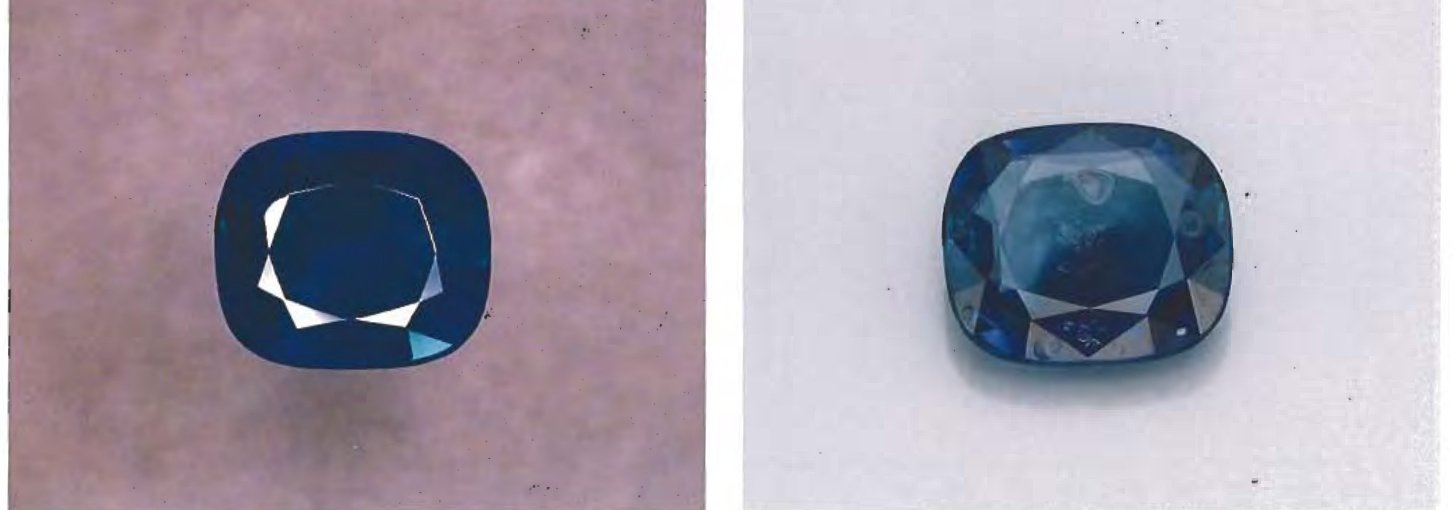
Beryllium lattice diffusion — the one you cannot see. Be diffusion (M09) penetrates the entire lattice at very high temperature and produces orange, pink, yellow and padparadscha-like colors. It is not a surface layer, so there is no rim to spot. Detection requires trace-element chemistry — LA-ICP-MS or LIBS — not a loupe. If an orange or padparadscha-colored sapphire looks too vivid and too cheap, the answer is a lab, not an opinion. It must be disclosed as diffused.
Cobalt-glass filling — the composite. Heavily fractured sapphire can be filled with a cobalt-doped glass, which both hides the fractures and, because cobalt is a powerful blue chromophore, can impart blue color. The detection features at 10×:
| Feature | What to look for |
|---|---|
| Flash effect | Bright blue/orange flashes along filled fractures and at facet junctions in reflected light — often more vivid than the flash you see in glass-filled ruby |
| Gas bubbles | Large rounded bubbles in the fill, and flattened bubbles at the glass/corundum interface |
| Color concentration | Blue concentrated along the fracture network rather than distributed through the body |
| Luster difference | Filled areas take a poorer polish and read duller than the surrounding corundum |
| Spectroscope | A cobalt absorption spectrum in the glass — the confirmatory test, and a lab tool rather than a counter tool |
Any stone that shows extensive surface-reaching fractures and an unexpectedly good blue should be referred to a laboratory rather than priced on the spot. Cobalt-glass-filled sapphire is a manufactured composite: mandatory disclosure, and composite care — no acid, no ultrasonic, no steam, no torch, never recut.
Synthetics and the diffusion trap
Blue sapphire has been synthesized in volume since the early twentieth century, and it is the single most common synthetic a retail associate will meet.
- Verneuil (flame-fusion) blue sapphire is abundant and cheap. Look for curved growth striae, rounded or elongated gas bubbles, and an unnaturally uniform, slightly electric blue.
- Flux and hydrothermal synthetics exist and are harder — flux fingerprints, growth zoning, seed plates.
- Synthetic overgrowth (a thin synthetic layer on a natural seed) is deliberately deceptive and is a lab problem, not a loupe problem.
- Diffusion-treated natural sapphire is the most commercially dangerous category, because the stone is natural but the color is not.
The working rule: an unusual color at an ordinary price gets a laboratory report before it gets a story. Never let a supplier’s verbal claim become your disclosure.
Value factors and honest price framing
Color first, as always. In blue sapphire the trade’s working vocabulary is worth knowing and worth using carefully:
- Cornflower blue — a lighter, brighter, slightly violet-tinged blue; the classic Ceylon descriptor.
- Royal blue — a richer, more saturated, slightly darker blue; the classic Burmese descriptor.
- Velvet blue — the soft, glowing Kashmir character, caused (in the usual account) by light scattering from submicroscopic inclusions.
- Inky / too dark — the common fault in basalt-hosted material, and the reason so much of it is heated.
GIA applies defined criteria to color terms on its reports rather than treating them as marketing language, so use the words descriptively and let the report be the authority.
Then, in order: origin (Kashmir and Burma command large premiums; Ceylon and Madagascar are the mainstream; Montana carries a genuine domestic-origin story); clarity (silk is normal — what you are paying for is transparency plus brightness, not loupe-cleanliness); size (sharp steps past 1, 3 and 5 ct in fine quality); and treatment (unheated commands a large premium over heated of comparable quality — the size of that premium varies widely by origin and quality, so do not quote a multiple you cannot defend).
| Budget band (per carat, commercial retail — directional) | What you are realistically buying |
|---|---|
| Under ~$300 | Commercial heated material, visibly included, often dark; synthetic is common in this bracket |
| ~$300–1,500 | Good heated Ceylon/Madagascar/Montana commercial quality — the heart of the bridal market |
| ~$1,500–7,500 | Fine heated material, and smaller unheated stones with good color |
| $7,500+ | Fine unheated Ceylon/Burma, larger sizes, top color, documented origin |
| Auction tier | Unheated Kashmir and Burma with provenance — five, six and seven figures per carat |
Compare that with the record for a 3-ct Kashmir stone in the millions and the client’s question answers itself: Kate’s ring is a lovely Ceylon sapphire, and you can buy her a Ceylon sapphire. Nobody is buying a Kashmir sapphire on a first-appointment budget, and no client should be told otherwise.
On the counter: the bridal conversation
Sapphire is a genuinely good everyday ring stone, and it is worth saying why in specific terms: Mohs 9 (second only to diamond among natural gems), no cleavage, an excellent polish, and a color that does not go out of fashion. Honest caveats, all of which you should volunteer:
- Heated is normal and fine. Say it as a plain fact early in the presentation.
- Hardness is not toughness. Sapphire chips on a sharp, hard knock. It is not a lifetime-proof stone; it is a very good one.
- Care depends on treatment. Clean heated sapphire can generally take ultrasonic and steam; filled, diffused or heavily fractured stones cannot. Warm soapy water is always safe.
- Ask for the report on anything significant. For a stone over your store’s threshold — $3,000 is a reasonable one — the report is part of the product.
On the floor: applying it this week
- Monday (10 minutes): Line up every blue sapphire in the case and sort them by look, not by tag: bright/cornflower, rich/royal, inky/dark. Note which ones you can identify by eye and which you cannot.
- Tuesday (10 minutes): Watch GIA-CS-07 (Montana, 10:52). Note the moment where heat treatment is described as a service — that is the sentence to borrow on the floor.
- Wednesday (practice): Present one sapphire today with the treatment stated as part of the description: “This is a heated Ceylon sapphire — heat is standard and permanent, and it’s on the report.”
- Thursday (10 minutes): Check which stones in your case have reports and which are described by origin on a supplier’s verbal claim alone. Anything you cannot document reverts to “sapphire.”
- Friday (15 minutes): Practice the Kate comparison out loud until it is fluent and not condescending.
Objections, mistakes and edge cases
| Situation | The trap | Better move |
|---|---|---|
| “I want a Kashmir sapphire like the ones at auction.” | Pretending you can source one, or explaining at length why she cannot afford it | “Kashmir has been effectively exhausted since the 1930s — today it’s estate and collection material with a report. What I can do brilliantly is a fine Ceylon sapphire, which is exactly what the ring you’re thinking of actually is.” |
| Client insists her stone is Kashmiri because it looks velvety | Agreeing | Velvet is a look, not an address. Ceylon and Madagascar produce velvety material too. Kashmir is a report question. |
| “Is it heated?” | Answering “no” because the supplier said so | The report is the answer. If there is no report, the honest answer is “I don’t know — let’s find out.” |
| A vivid orange/padparadscha sapphire at a modest price | Calling it natural padparadscha | Be-diffused material looks natural and cannot be detected at 10×. Send it to a lab. |
| A very clean, electric-blue stone at a low price | Selling it as a fine natural | Check for curved striae and gas bubbles — it is very likely Verneuil synthetic. |
| “Sapphire is 9 on Mohs so it can’t break.” | Equating hardness with toughness | Hardness is scratch resistance. Sapphire chips. Say so. |
| Client wants an ultrasonic for an estate sapphire | Saying yes without checking | Confirm the stone is not filled, diffused or heavily fractured. When in doubt: warm soapy water. |
| “Ceylon” used loosely by a vendor | Repeating it as an origin | Ask: “Do you mean mined in Sri Lanka, or the cornflower color?” Then say the precise thing to the client. |
| Estate sapphire with a 1980s report | Pricing off the old report | Treatment detection has advanced materially since then; recommend a fresh report for anything significant. |
| Montana sapphire described as untreated | Accepting it for all Montana | Yogo generally needs no heat; Rock Creek/Missouri River material is routinely heated. Different deposits, different answers. |
Self-check
- What two elements are required for blue sapphire, and what is the mechanism called?
- Why does heat treatment change the blue in corundum?
- What is geuda, and where is it from?
- Why is Kashmir the benchmark, and roughly when did mining effectively end?
- What is the key difference between Yogo and Rock Creek Montana sapphire?
- List the detection features of cobalt-glass-filled sapphire.
- Why can beryllium diffusion not be identified with a loupe?
- What are the three blue descriptors (cornflower, royal, velvet) and which sources do they attach to?
- Which synthetic-sapphire feature is the classic giveaway at 10×?
- What is the right answer to “is this sapphire heated?” when there is no report?
Go deeper
- Atkinson D., Kothavala R.Z. (1983) Kashmir Sapphire. G&G 19:1 — the Kashmir deposit and its history.
- ★ Emmett J.L., Douthit T.R. (1993) Heat Treating the Sapphires of Rock Creek. G&G 29:4 — https://www.gia.edu/gems-gemology/winter-1993-heat-treating-sapphires-emmett — the mechanism, and the Montana case.
- ★ McClure S.F., Shen A.H. GIA work on glass-filled and cobalt-glass-filled corundum — detection features.
- ★ Emmett J.L. et al. (2003) Beryllium Diffusion of Ruby and Sapphire. G&G 39:2 — https://www.gia.edu/gems-gemology/summer-2003-beryllium-diffusion-ruby-sapphire-emmett
- Fritsch E., Rossman G.R. color-mechanism series (see M05) — intervalence charge transfer.
- GIA Colored Stone Reports — https://www.gia.edu/colored-stone-reports — report language and origin services.
- Video: Passion and Searching for Sapphires, Montana (GIA-CS-07) — 10:52, embedded above.
- Video: Sapphire and Ruby Mine in Pailin, Cambodia (GIA-CS-03) — 2:59, embedded above.