Three Ways to Ask for the Sale

The Closing Paralysis: Where Beautiful Presentations Go to Die
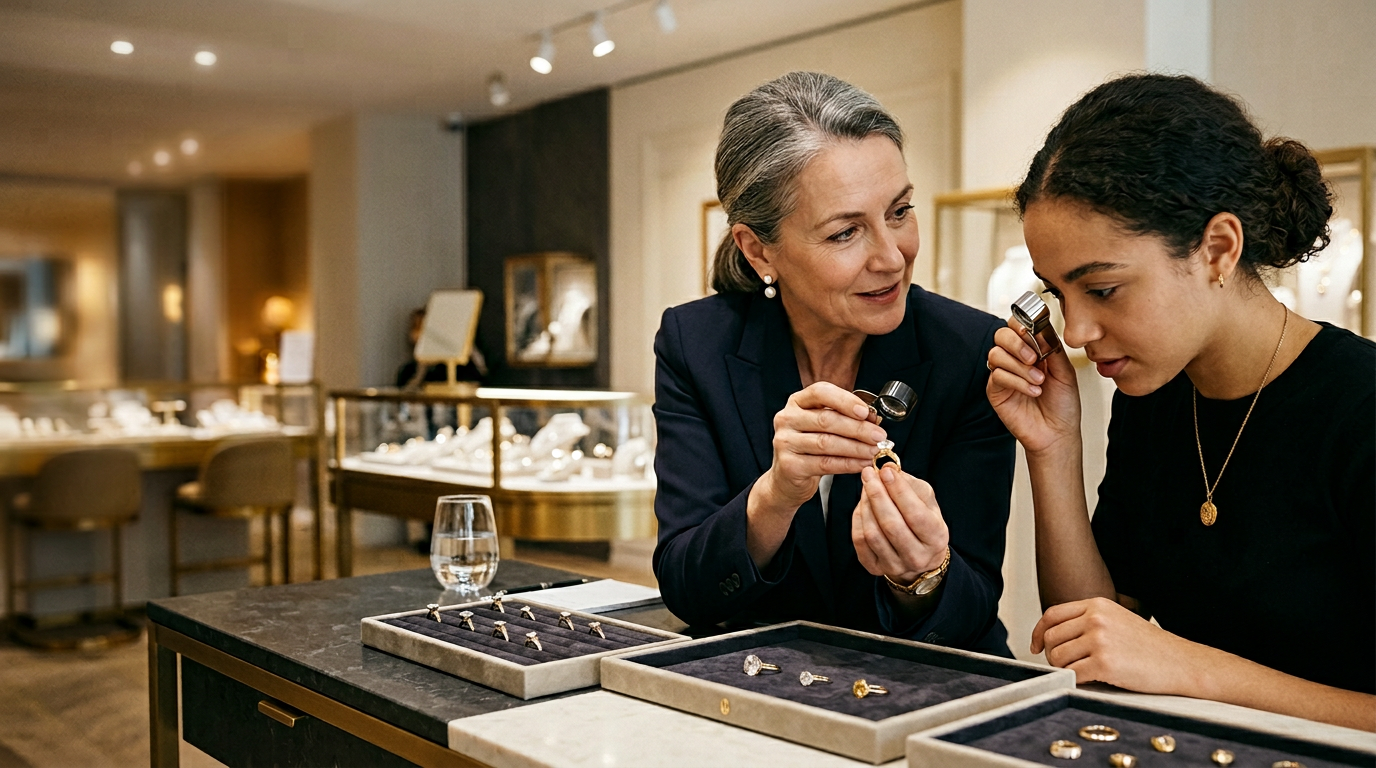
A client advisor has just conducted a breathtaking one-hour consultation.
She opened without friction, uncovered that the client is celebrating his wife’s 40th birthday, presented two extraordinary hand-crafted emerald pendants, demonstrated pleochroism under the daylight lamp, and watched the client gaze into the mirror with dilated pupils and relaxed shoulders. The client clearly loves the larger 3.50-carat Colombian emerald.
Then comes the fatal silence.
The associate feels an internal wave of panic. Her heart rate spikes. A voice in her head whispers: “Don’t be pushy. If he wants it, he will tell you. Just wait for him to ask to buy.”
She stands there awkwardly, smiles nervously, and delivers the passive closing white flag:
“So… yeah. That’s the Colombian emerald. Do you have any other questions about it?”
The client blinks, checks his watch, and replies: “No, you’ve been great. Let me think about it and maybe I’ll come back.”
In that single agonizing moment, sixty minutes of brilliant sales artistry evaporated into nothingness.
According to sales performance data published by the National Association of Sales Professionals (NASP) and luxury retail audits by JCK Magazine, over 60% of retail sales interactions end without the associate ever directly asking for the purchase.
Why do intelligent, well-trained associates freeze when it comes time to close?
1. The Terror of Rejection: The associate takes a “no” as a personal indictment of their worth, rather than a natural part of commercial dialogue.
2. The “Used-Car Salesman” Phobia: High-end advisors pride themselves on luxury hospitality. They mistakenly believe that asking for money is vulgar, aggressive, or manipulative.
3. The Myth of the Self-Closing Client: Inexperienced associates believe that if a client truly loves an item, they will pull out their wallet and demand to pay.
In reality, luxury consumers want to be led. High-ticket decisions generate cognitive fear and decision fatigue. When you refuse to ask for the sale, you do not look polite, you look uncertain. Your hesitancy signals to the client that you lack confidence in the piece, the price, or the decision.
Closing is not an act of pressure. Closing is an act of courageous leadership that helps the client cross the threshold into celebration.
—
The Decision Threshold: Overcoming Client Hesitation
Before examining the three closing modalities, understand what is happening inside the client’s mind during the final ninety seconds of a presentation:
“`
[ EMOTIONAL DESIRE ] ————————> [ DECISION THRESHOLD ] ——> [ THE CELEBRATION ]
“I love this piece. It’s “Should I spend $10,000?” “I am thrilled!”
breathtaking. She will cry.” Fear of mistake, buyer remorse.
“`
The client is standing on the edge of the Decision Threshold. They want the piece, but spending thousands of dollars triggers an autonomic stress response.
They are silently praying for an advisor who has the poise, empathy, and professional authority to take them by the hand and say: “You are making the right choice. Let’s do this together.”
—
Modality 1: The Assumptive Close (The Logical Next Step)
The Assumptive Close is the most natural, elegant closing technique in luxury retail.
It does not ask: “Do you want to buy this?” (which forces the client to confront a binary $10,000 dilemma).
Instead, it assumes that the decision to purchase has already been made emotionally, and simply moves forward with the logical operational logistics:
– Taking finger measurements.
– Verifying delivery timelines.
– Preparing the valuation dossier.
– Selecting the presentation packaging.
The Floor Mechanics
The moment you observe two or more buying signals (prolonged mirror gaze, possessive pronoun shift, logistical inquiry):
1. Never ask for permission to buy.
2. Ask for permission to begin the next operational step.
3. Keep your tone calm, conversational, and completely devoid of high-pressure hype.
Worked Verbatim Scripts (The Assumptive Close)
Scenario A: The Engagement Ring
Associate: “Marcus, looking at that cushion solitaire on your hand, the proportion and balance are absolute perfection. Why don’t we do this: let’s take Sarah’s exact ring size right now so our master workshop can have the mounting sized and polished for your Saturday proposal plans. Follow me over to the design desk.”
Scenario B: The Milestone Anniversary Pendant
Associate: “This royal blue sapphire is truly one-of-a-kind, it will never be duplicated. While you admire that color, let’s step over to my salon desk. I’ll get your GIA documentation prepared and package this in our signature handcrafted wooden box with ribbon so it’s ready for her birthday dinner.”
Scenario C: The Self-Purchase Gift
Associate: “Elena, this diamond tennis bracelet was designed for your wrist. It complements your watch seamlessly. Let’s adjust the safety clasp to your exact comfort right now so you can walk out of our boutique wearing it today.”
Why the Assumptive Close Wins:
– It eliminates the dramatic “yes/no” tension.
– It feels like attentive, high-touch concierge service.
– If the client is genuinely unready, they will gently pause you without feeling cornered: “Wait, before we size it, can we talk about financing?”, which immediately surfaces the real issue!
—
Modality 2: The Alternative Choice Close (The Power of Preference)
The human brain loves making choices between two appealing alternatives, but dreads making a binary choice between something and nothing.
When you ask: “Do you want to get this ring?”, the choices in the customer’s mind are:
– Choice A: Spend $8,000 (Loss of capital).
– Choice B: Spend $0 (Keep capital).
Choice B feels safer.
The Alternative Choice Close eliminates the binary trap by offering a choice between two positive, desirable paths forward:
“`
BINARY CLOSING TRAP (Avoid) ALTERNATIVE CHOICE CLOSE (Adopt)
“Do you want to buy this ring or not?” “Would you prefer the hand-forged platinum
mounting, or does the 18k yellow gold feel
more like her everyday style?”
“`
In the Alternative Choice Close, both options lead to the purchase. The client’s brain shifts from “Should I buy?” to “Which aesthetic do I prefer?”
Three High-Ticket Alternative Choice Frameworks
1. The Metal / Aesthetic Alternative
Associate: “When you picture her opening this box on Christmas morning, do you think she will love the clean, icy brightness of the platinum mounting, or does the warm vintage glow of eighteen-karat yellow gold suit her skin tone better?”
2. The Logistics / Delivery Alternative
Associate: “We can have our master jeweler size this for you by Thursday afternoon so you can take it home with you, or we can keep it securely locked in our vault until the morning of your anniversary dinner so there’s zero chance she discovers it in the house. Which would give you more peace of mind?”
3. The Financial / Payment Alternative
Associate: “Would you prefer to settle the investment today with our preferred client wire transfer, or would it be more convenient to divide it across twelve months with our zero-interest financing account?”
—
Modality 3: The Emotional Milestone Close (The Soul of Luxury)
Fine jewelry is not an investment in metal and carbon. It is an enduring emotional reflection of love, sacrifice, achievement, and family legacy.
The Emotional Milestone Close is the most powerful closing modality in the fine jewelry industry. It succeeds where all technical selling fails because it bridges the physical object directly back to the Real Purchase uncovered during Module 2 Discovery.
The 3-Step Emotional Architecture
1. Recall the Story: Re-state the exact words, names, and emotional details the client shared with you earlier.
2. Anchor the Meaning: Frame the jewelry as the physical embodiment of that milestone.
3. Issue the Invitation: Invite them to honor that sentiment right now.
Worked Verbatim Scripts (The Emotional Milestone Close)
Scenario A: The 10th Anniversary Husband
Associate: “Marcus, you told me earlier that Sarah stood beside you through five chaotic years while you were building your practice, working late nights and raising your twin boys.
>
This three-carat diamond band isn’t just platinum and diamonds. It is a physical message from you to her that says: ‘I saw everything you sacrificed, and I would marry you all over again tomorrow.’
>
Every time she looks down at her hand over the next forty years, she will remember that you saw her. Let’s make this the anniversary she talks about for the rest of her life.”
Scenario B: The Self-Made Executive Woman
Associate: “Sophia, you told me that when you started your consulting practice seven years ago, you promised yourself that when you hit your first seven-figure revenue milestone, you were going to buy your own diamond.
>
You built this company with your own hands, your own intellect, and your own grit. Nobody handed this to you.
>
Don’t wait for someone else to celebrate your life. Slide this ring on your right hand, walk out that door, and let this diamond be your daily reminder that you are unstoppable. Shall we wrap your certificate?”
Scenario C: The Mother-Daughter Graduation
Associate: “David, your daughter is graduating medical school on Friday. She has worked twenty-hour shifts for four years to earn that white coat.
>
She could buy herself a laptop or a vacation, and it will be forgotten in three years. But these South Sea pearls will sit around her neck when she sees her first private patient, when she walks down the aisle, and when she passes them to her own daughter.
>
Let’s give her something that lasts as long as her achievements. Let’s make this official today.”
Why the Emotional Milestone Close Never Fails:
– It removes all price resistance, because you cannot put a discount on love or pride.
– It reminds the client why they walked into the boutique in the first place.
– It elevates the purchase into a sacred personal ritual.
—
Handling the “No”: How to Respond When They Hesitate
What happens when you deliver an Assumptive or Alternative close, and the client pulls back:
Client: “Wait… hold on. I’m not ready to size it yet. I need to think.”
The 3 Golden Rules of De-Escalation
1. Never Show Disappointment: Keep your eyes warm and your smile relaxed. Any sign of irritation destroys trust.
2. Agree Instantly: “Of course! Forgive me, I never want you moving faster than makes you 100% comfortable.”
3. Pivot to the Module 6 Hesitation Isolation: “Tell me, is it the style, the diamond, or the investment level giving you pause?”
By reacting with total grace, you prove that your care was genuine, not a tactical sales trap.
—
Summary Matrix: The Three Closing Modalities
| Closing Modality | Best Application | Psychology | Verbatim Trigger Phrase |
|—|—|—|—|
| The Assumptive Close | Clear buying signals; high customer enthusiasm | Normalizes the purchase as the logical operational next step | “Let’s take your ring measurement right now so our workshop can prepare this for Saturday.” |
| The Alternative Choice Close | Analytical buyers; customers hesitating between two options | Eliminates the binary buy/don’t buy dilemma; focuses on preference | “Would you prefer to secure this in platinum, or does the yellow gold suit her style better?” |
| The Emotional Milestone Close | Major life celebrations (anniversaries, proposals, self-achievements) | Transcends price by anchoring the piece to love, pride, and legacy | “She stood by you through every challenge. Let’s make this the anniversary she never forgets.” |
—
7-Day Floor Implementation Plan
– Day 1 (The Rejection Detox): Acknowledge your fear of closing. Remind yourself that luxury clients want guidance. Commit to directly asking for the sale on every presentation today.
– Day 2 (The Assumptive Operational Step): Use the phrase “Why don’t we do this: let’s take your ring measurement right now” with at least two clients showing buying cues.
– Day 3 (The Alternative Choice Drill): Formulate three Alternative Choice questions based on metal, packaging, or delivery timelines.
– Day 4 (The Milestone Recall): During discovery, write down the exact emotional reason for the visit. Practice delivering an Emotional Milestone Close using their own words.
– Day 5 (The Graceful Retreat): Role-play handling a “Wait, I’m not ready” pushback with total warmth and immediate de-escalation.
– Day 6 (The Vault vs. Delivery Choice): Offer the option of holding the piece in the vault until the celebration date as a closing incentive.
– Day 7 (Weekly Closing Audit): Review your closing ratio for the week. On how many presentations did you actively execute one of the Three Modalities?
—
Module Self-Check
Test your command of closing psychology before progressing to Module 10:
1. Why do over 60% of retail sales associates fail to directly ask for the purchase?
2. What is the Decision Threshold, and what psychological state does a high-ticket customer experience when standing on it?
3. Explain the mechanism of the Assumptive Close.
4. Instead of asking “Do you want to buy this?”, what does an associate ask when executing an Assumptive Close?
5. How does the Alternative Choice Close eliminate the customer’s binary dilemma of buying vs. not buying?
6. Give an example of an Alternative Choice Close based on delivery logistics or vault storage.
7. What are the three steps of the Emotional Milestone Close?
8. Why does the Emotional Milestone Close effectively neutralize price objections?
9. When an associate asks for the sale and the client says “Wait, I’m not ready”, what is the mandatory immediate reaction?
10. Why is closing fine jewelry considered an act of leadership and service rather than manipulation?
—
Authoritative References & Further Reading
– National Association of Sales Professionals (NASP): Closing Psychology: Overcoming the Fear of Rejection in High-Value Transactions.
– Harvard Program on Negotiation (PON): The Architecture of Agreement: Framing Choices to Overcome Decision Paralysis.
– INSTORE Magazine: Asking for the Check: Why Great Jewelers Aren’t Afraid to Close.
– Shane Decker: Closing the High-Ticket Diamond Sale: The Assumptive and Emotional Methodologies.
– JCK Magazine: Retail Floor Audits: Why 60% of Luxury Consultations End Without a Closing Ask.
—
Media Credits & External Links
– [NASP: High-Performance Sales Closing Principles](https://www.nasp.com/)
– [INSTORE Magazine: The Art of the Close](https://instoremag.com/)
– [The Jewelers Playbook: Video Masterclass on the Three Luxury Closes](https://www.youtube.com/@TheJewelersPlaybook)