Module 2: Booking and Preparing the Appointment
In fine bridal retail, the outcome of an engagement ring consultation is often decided before the client ever reaches your front door.
When a prospective buyer books a time through your website or sends a direct message, they are offering an invitation into an intimate personal milestone. The initial response sets the standard for everything that follows.
In casual stores, appointments are treated like an afterthought. An associate jots down a name on a desk pad. When the customer arrives, the associate scrambles for display keys, wanders from vitrine to vitrine unlocking glass doors, and asks a generic question: “So, what are you looking for today?” That stumbling start deflates the couple’s romantic momentum immediately.
Master bridal advisors approach the appointment like a private museum showing.
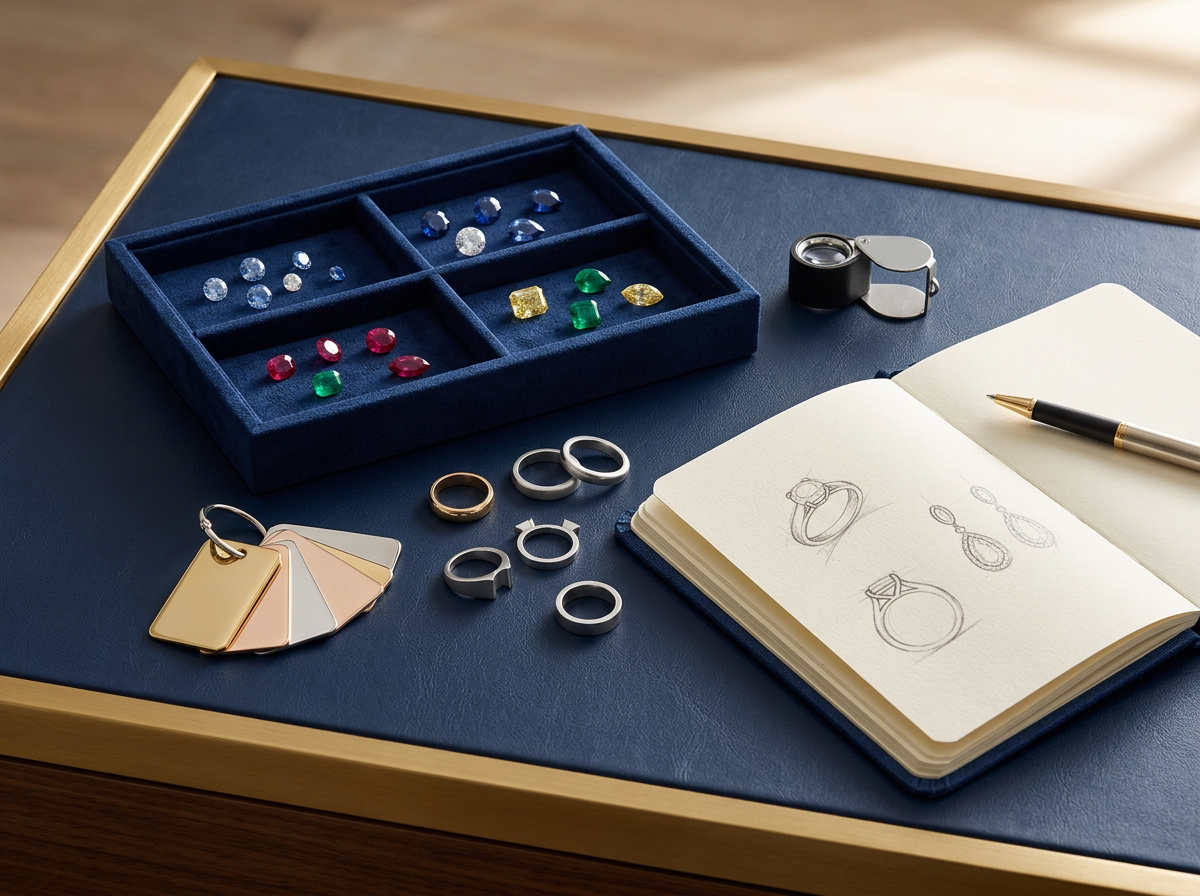
They reply to inquiries within minutes. They use brief pre-appointment notes to learn ring sizes, diamond shapes, and target proposal dates. When the couple steps inside the private viewing room, the preparation is already visible. A glass of chilled water or champagne is poured, the lighting is calibrated to reveal true diamond fire, and a pre-staged tray holding three carefully chosen designs rests upon the velvet pad.
—
—
1. Response Speed and Digital First Impressions
Inbound digital inquiries carry high emotional intent. When someone reaches out, they are thinking about proposing right now. They may also be browsing two other local jewelers.
Data across luxury retail shows a stark divide. Replying within fifteen minutes yields an appointment booking rate triple that of responses sent four hours later. After twelve hours, the probability of booking drops by more than seventy percent.
Quick outreach does not require an automated corporate blast. It requires a personal, unhurried note:
“Good morning, Alexander. Thank you for reaching out to our salon. An oval diamond in a slim yellow gold band is an exquisite choice. We would be delighted to welcome you in for a private consultation. Do you prefer Thursday afternoon or Saturday morning?”
The tone is welcoming, composed, and direct. It asks a simple binary question that makes scheduling effortless.
—
—
2. Pre-Appointment Discovery Without Friction
Never send a prospective client a ten-question intake form that reads like a mortgage application. Detailed financial questions before meeting in person breed defensiveness.
Keep pre-appointment discovery to three natural inquiries:
1. Aesthetic Direction: “Do you have any saved ring photos, links, or sketches you would like our team to review before you arrive?”
2. Key Timelines: “Are you working toward a specific proposal date or upcoming trip?”
3. The Guest List: “Will you be joining us on your own, or will your partner or a friend be coming with you?”
These three answers give you everything needed to stage the presentation. If the client shares a Pinterest link of an elongated emerald cut, your workshop can pull two loose emerald-cut diamonds from the safe and place them under natural light before the client walks in.
—
—
3. Staging the Three-Ring Presentation Tray
When a client sits down, their presentation tray should never be empty, nor should it hold a chaotic pile of ten rings. Ten rings trigger decision fatigue.
The master floor habit is the Anchor, Explorer, Challenger staging model:
– The Anchor: The exact design the client described online (for example, a 2.0-carat oval solitaire on a 1.8mm round-wire band in 18k yellow gold). This shows you listened carefully.
– The Explorer: A slight, elevated variation on their aesthetic (the same oval diamond, but set in a low cathedral with hidden diamond accents along the bridge). This tests their appetite for fine architectural nuance.
– The Challenger: A bold, contrasting alternative that flatters similar finger proportions (an elongated radiant cut or a clean east-west bezel solitaire).
This trio provides immediate focus. It allows the customer to compare silhouettes without wandering through dozens of confusing showcases.
—
—
4. The First Sixty Seconds at the Counter
The opening minute sets the emotional tenor of the entire consultation. Avoid jumping directly into technical diamond jargon.
Greet both clients warmly by name. Take their coats. Offer refreshments. Let them settle into their seats and take in the calm atmosphere of the salon.
Start with an open, conversational observation:
“Alexander and Claire, it is wonderful to meet both of you in person. We have pulled a curated tray inspired by the classic solitaire designs you shared with us. Before we inspect the stones under the loupe, tell me a little about how you two first met.”
That single transition shifts the energy from a commercial negotiation into a celebration of their relationship. Once the emotional foundation is established, gemological exploration becomes a pleasure rather than an interrogation.
—
—
5. Daily Floor Summary
A great appointment is ninety percent preparation and ten percent presentation. When your room is staged, your diamonds are inspected, and your opening questions honor the couple’s story, closing the sale becomes a natural conclusion.
—
6. Morning Team Briefing
– Reply Within 15 Minutes: Treat digital inquiries with immediate priority. A warm, personal text books the appointment before competitors respond.
– Three Questions Maximum: Keep pre-intake brief. Focus on design inspiration, proposal timelines, and whether they are shopping solo or as a couple.
– Stage the Tray in Advance: Never scramble for rings while the client watches. Have the Anchor, Explorer, and Challenger ready on the velvet pad before they arrive.
– Slow Down the First Minute: Offer refreshments and ask about their story before discussing carats and price tags.
– Calibrate Lighting: Keep halogen glare to a minimum and prepare to walk stones toward natural daylight.
—
7. Fact-Check Verification
| Metric / Procedure | Industry Standard | Retail Execution Rule |
| :— | :— | :— |
| Response Velocity | Within 15 to 30 minutes | +300% booking lift over responses delayed past 4 hours. |
| Pre-Intake Friction | Maximum 3 to 4 questions | Avoid budget questions on digital forms; focus on design and timing. |
| Tray Staging Limit | 3 rings on presentation pad | Anchor, Explorer, Challenger trio prevents choice fatigue. |
| Opening Minute Protocol | Personal connection first | Build emotional comfort before introducing technical grading reports. |
| Showroom Atmosphere | Chilled water, clean velvet, daylight | Physical hospitality establishes an unhurried luxury pace. |
Module Knowledge Assessment
Module 2 Assessment: Booking and Preparing the Appointment
10-Question Comprehensive Examination with Rationales
Q1: According to retail sales analytics and lead management studies, responding to an inbound digital bridal inquiry within 15 minutes increases appointment conversion by what margin compared to delayed responses?
– A) 10%
– B) 50%
– C) Over 300%
– D) It makes no difference
Correct Answer: C
Rationale: Responding while the consumer is actively engaged online captures peak emotional intent, increasing conversion to an appointment by over 300%.
Q2: What is the primary operational objective of a pre-appointment digital intake questionnaire?
– A) To run a secret credit check on the client
– B) To identify the client’s preferred diamond shapes, metal alloys, proposal timeline, and beverage preferences so the consultant can pre-curate the salon prior to arrival
– C) To demand an upfront non-refundable consultation fee
– D) To sign a binding purchase contract
Correct Answer: B
Rationale: Pre-intake questionnaires provide the essential design and timeline parameters needed to stage a personalized consultation.
Q3: In the “Rule of Three” show-tray staging methodology, what is the “Anchor” ring?
– A) The heaviest ring in the store
– B) The mounting that directly matches the specific style, diamond shape, and metal requested in the client’s pre-intake inquiry
– C) A ring made of nautical brass
– D) The most discounted item on clearance
Correct Answer: B
Rationale: The Anchor ring directly validates the client’s stated research, proving that the consultant listened to their preferences.
Q4: What is the function of the “Challenger” piece on a pre-staged bridal show tray?
– A) A damaged ring used to teach about jewelry repair
– B) An architectural alternative (such as a modern bezel, three-stone, or East-West setting) that allows the client to test a bold, distinct aesthetic they may not have considered online
– C) A piece brought in from a competitor store
– D) A ring the associate wants to dispose of
Correct Answer: B
Rationale: The Challenger tests the boundaries of client taste; roughly 20% of bridal buyers end up choosing an alternative aesthetic once they see it on their actual finger.
Q5: What is the globally recognized GIA laboratory color temperature benchmark for objective diamond color grading illumination?
– A) 2700K (Warm Yellow Incandescent)
– B) 3500K (Soft White)
– C) 5500K (Daylight Equivalent)
– D) 10,000K (Deep Blue Neon)
Correct Answer: C
Rationale: 5500K daylight-equivalent light provides balanced, neutral spectral distribution without yellow or blue color bias, matching GIA grading standards.
Q6: Why is pre-staging inventory on the consultation tray superior to browsing display showcases while the customer waits?
– A) Display cases are illegal to open in front of clients
– B) Pre-staging communicates meticulous luxury preparation, eliminates chaotic floor wandering, and focuses the client’s attention immediately
– C) It allows the store to hide prices from the client
– D) Pre-staged rings do not need to be insured
Correct Answer: B
Rationale: Pre-staging creates a seamless, personalized luxury experience and demonstrates that the boutique valued the appointment enough to prepare in advance.
Q7: Why should high-end bridal consultation suites feature a full-torso or standing-height mirror rather than only a small desktop hand mirror?
– A) To check for shoplifting
– B) Because engagement rings are worn as part of a complete personal silhouette, allowing the recipient to evaluate how the ring complements their overall posture, hand proportions, and personal style
– C) Full-length mirrors make diamonds look twice as large
– D) Desktop mirrors are banned by the FTC
Correct Answer: B
Rationale: A standing full-torso mirror allows the client to see the ring in full perspective as others will see it in daily life, reinforcing ownership.
Q8: What acoustic environment is recommended for luxury bridal consultation suites to encourage open budget discussions?
– A) Loud, energetic dance music at 85 dB
– B) Complete dead silence with zero sound
– C) Acoustic dampening (carpets, wall textiles) with subtle, sophisticated background music at ~50 dB to ensure conversational privacy
– D) An open loudspeaker broadcasting store announcements
Correct Answer: C
Rationale: Acoustic privacy is vital for couples discussing intimate emotional milestones and significant financial commitments without feeling overheard.
Q9: What is the “Outdoor Daylight Test” in diamond sales?
– A) Leaving diamonds outside overnight to test weather resistance
– B) Taking the diamond or ring with the client to a natural daylight window or outdoor courtyard to observe its true brilliance and color in natural light, demonstrating complete transparency
– C) Selling diamonds on the sidewalk
– D) A test performed by the fire department
Correct Answer: B
Rationale: Viewing a diamond in natural daylight verifies real-world performance, builds trust, and proves the jeweler is confident in the stone’s quality.
Q10: How should an automated appointment confirmation sequence be structured for bridal clients?
– A) Call the client ten times every day
– B) An immediate calendar invitation with location details, followed by a personalized SMS confirmation 24 hours prior with pre-staged details
– C) Send a certified letter via the postal service
– D) Send an invoice for consultation fees
Correct Answer: B
Rationale: An automated calendar invite combined with a warm, personal SMS reminder 24 hours in advance maximizes show rates and reinforces anticipation.