Module 4: Natural vs. Lab-Grown: The Balanced Conversation
Few counter topics generate more client curiosity, or more sales anxiety, than the choice between natural earth-mined diamonds and laboratory-grown diamonds.
Over the past ten years, lab-grown diamonds transformed the bridal counter from a single-tier market into a segmented one. Today, manufactured diamonds account for more than half of loose engagement ring unit sales in North American independent and regional retail stores.
Sales floors frequently stumble into two opposing traps.
In traditional guild salons, some associates dismiss lab-grown stones outright. They label them factory glass, tell clients the stones have no soul, and act as though asking about them is an insult. The customer feels judged, pockets their phone, and buys online.
In high-volume chain stores, eager associates push lab-grown diamonds exclusively because they are effortless to close. They ask why anyone would spend ten thousand dollars on a natural diamond when two thousand buys a massive three-carat stone. In doing so, they sacrifice margin dollars, collapse average ticket size, and fail to prepare the client for secondary market depreciation.
The master fine jewelry advisor avoids both extremes. We present both stones with complete transparency and equal respect, allowing each couple to choose the story that matches their own values.
—
—
1. Physical Parity and Contrasting Origin
To explain the difference clearly, begin with gemological facts.
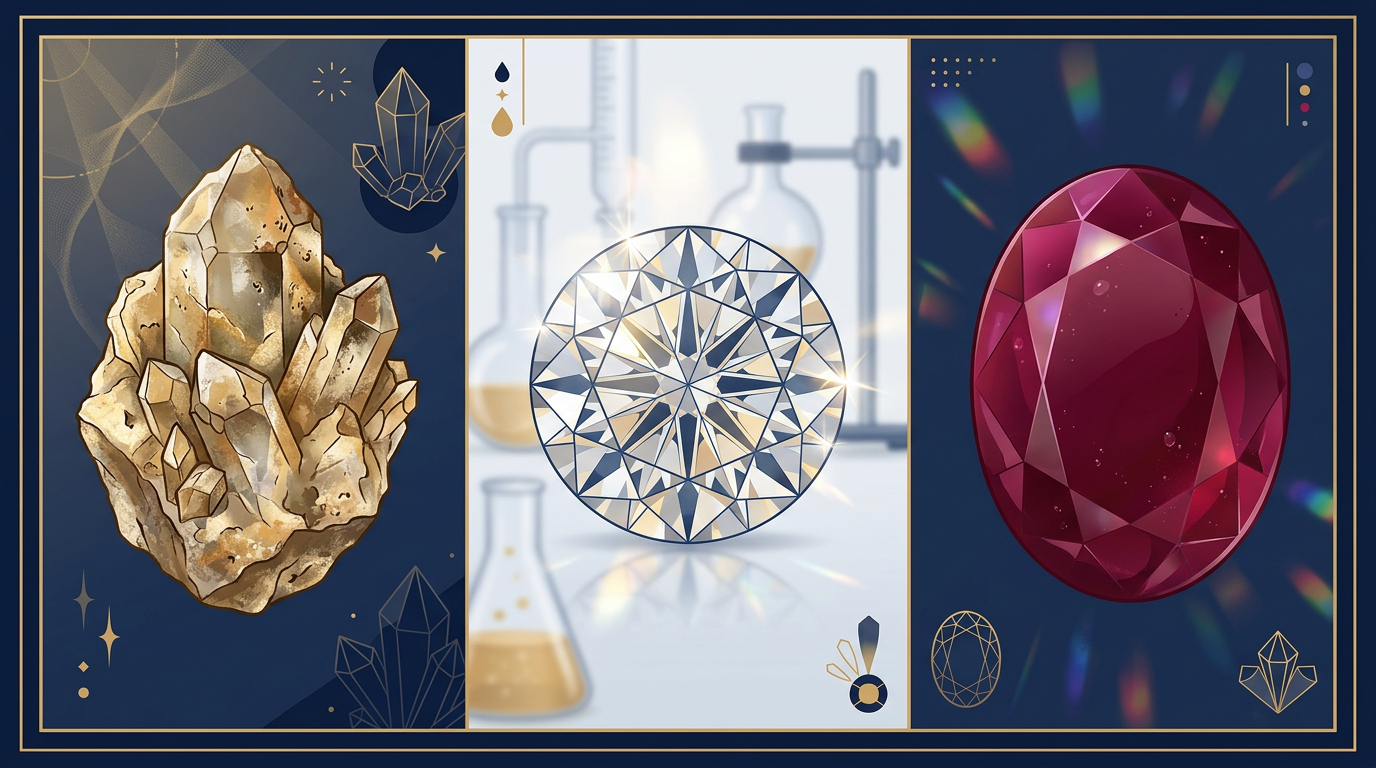
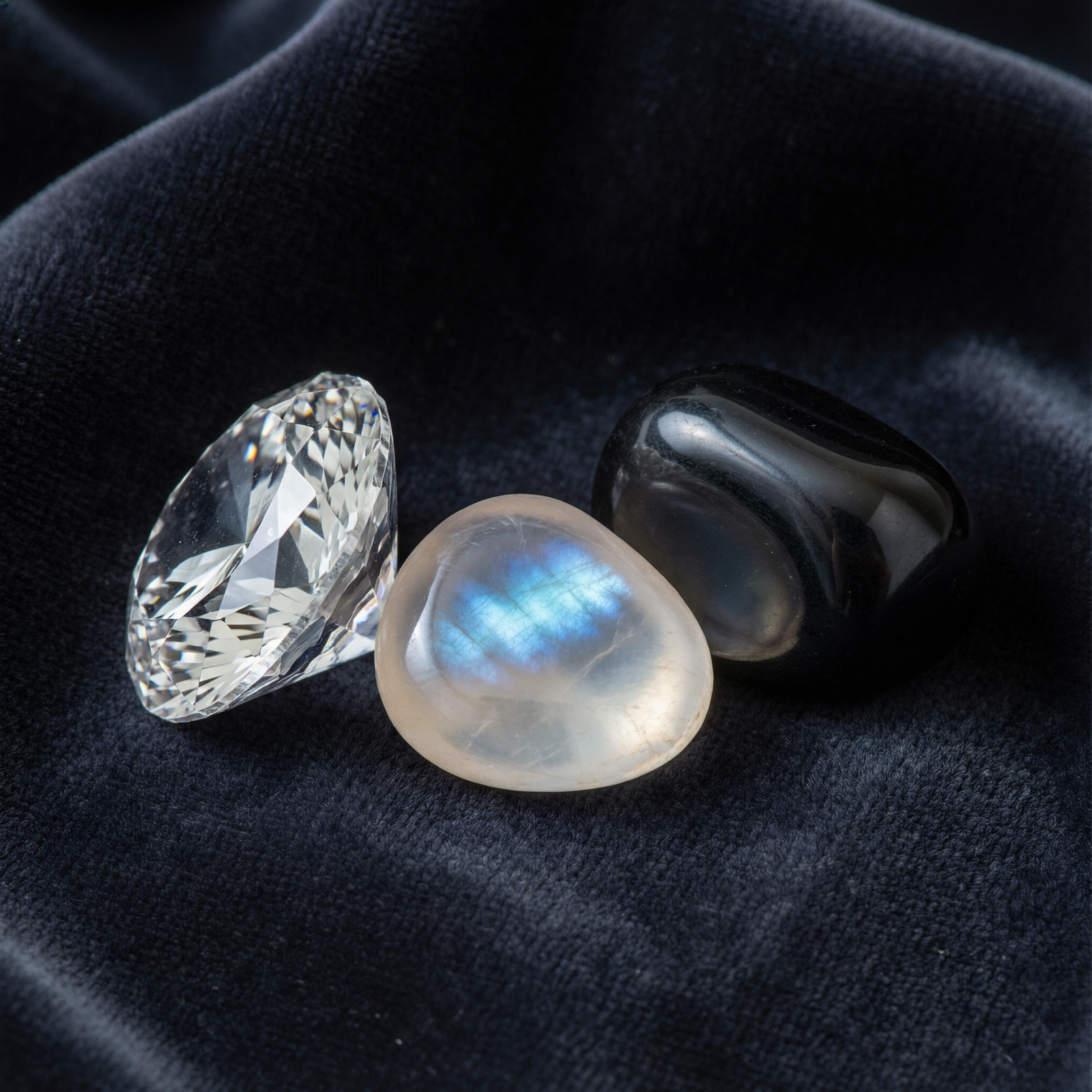
Both natural and laboratory-grown diamonds are one hundred percent crystallized carbon. They share identical physical, chemical, and optical properties. Both register 10 on the Mohs scale of hardness. Both have a refractive index of 2.417 and a dispersion rating of 0.044. When viewed side-by-side through a jeweler’s loupe, they exhibit identical brilliance, fire, and scintillation.
The distinction lies entirely in their origin and rarity.
A natural diamond formed between one and three billion years ago, deep within the Earth’s mantle under immense heat and pressure, before volcanic kimberlite eruptions carried it toward the crust. It represents geological antiquity and finite planetary supply.
A laboratory-grown diamond grows in a controlled plasma chamber over two to four weeks through Chemical Vapor Deposition (CVD) or High Pressure High Temperature (HPHT) synthesis. It represents human technological mastery, scalable production, and accessible cost.
—
—
2. Market Economics and Secondary Value
Clients deserve honest guidance regarding long-term financial dynamics.
Natural diamonds maintain an established secondary market. While fine jewelry should never be sold as an investment vehicle, natural diamonds have historically held baseline equity, supported by decades of global wholesale trade, auctions, and institutional retail trade-in guarantees.
Laboratory-grown diamonds operate on industrial manufacturing curves. As technology improves and production expands across India and China, the wholesale cost of producing rough lab-grown diamond crystals falls every quarter. A two-carat lab-grown diamond that retailed for eight thousand dollars in 2018 sells for twelve hundred dollars today.
Because production is theoretically limitless, the secondary liquid resale market for lab diamonds remains near zero. Pawn shops and estate buyers rarely purchase pre-owned lab stones.
Present this reality without condescension:
“When you choose a natural diamond, you are acquiring a piece of ancient geological history with established long-term trade-in equity. When you choose a laboratory-grown diamond, you are acquiring an identical optical stone at an accessible price point, allowing you to maximize carat size today. Many of our clients love having that choice.”
—
—
3. Side-by-Side Presentation on the Velvet Pad
Never describe the difference in the abstract. Place both stones on the presentation pad.
Select two loose diamonds with identical shapes and cut grades: a 1.50-carat natural diamond and a 1.50-carat lab-grown diamond, or a 1.50-carat natural stone next to a 2.50-carat lab stone that hits the same price ceiling.
Hand the client the tweezers and the loupe:
“Look at the light performance in both stones. Notice how the facet symmetry and edge fire are indistinguishable to the naked eye. The question is not which diamond sparkles more. The question is which origin story speaks to the milestone you are celebrating.”
By placing the decision in the client’s hands, you eliminate tension. The client feels informed rather than sold.
—
—
4. Structuring Lifetime Trade-In Standards
A store’s diamond upgrade policy reflects its confidence in its merchandise.
Most fine jewelry ateliers offer a 100% Lifetime Diamond Upgrade Policy on certified natural diamonds, applying the original purchase price toward any new diamond of greater value.
For lab-grown diamonds, retailers must craft clear, transparent policies. Offering full trade-in credit on rapidly depreciating manufactured goods creates catastrophic balance-sheet exposure. Responsible stores offer lab-grown trade-ins on a fair market basis, or restrict full credit to natural diamond transitions.
State your store policy openly during the invoice review. Clear disclosures build lasting trust.
—
—
5. Daily Floor Summary
The natural versus lab-grown discussion does not have to be an ideological battleground.
When you explain gemological parity with precision, address price depreciation with candor, and present both options on the velvet pad with dignity, your clients feel respected. They walk away with the exact ring they desire and total confidence in your atelier.
—
6. Morning Team Briefing
– State Gemological Parity Early: Both stones are pure carbon with Mohs 10 hardness and identical light return. Never call lab diamonds fake.
– Explain the Value Trajectory: Be honest about falling lab-grown wholesale costs and the lack of secondary liquidation markets.
– Put Both on the Pad: Show stones side-by-side under natural light so clients can evaluate them with their own eyes.
– Frame the Choice Around Personal Values: Contrast geologic antiquity and trade-in equity against immediate size and budget optimization.
– Clarify the Upgrade Policy: Ensure clients understand the trade-in rules for natural versus lab-grown stones before finalizing payment.
—
7. Fact-Check Verification
| Principle / Specification | Industry Standard | Retail Execution Rule |
| :— | :— | :— |
| Material Identity | Mohs 10, RI 2.417, Dispersion 0.044 | Both natural and lab diamonds are chemically and optically identical. |
| Growth Timeline | 1-3 Billion Yrs vs 2-4 Weeks | Explain origin difference clearly without dismissive language. |
| Secondary Market Reality | Natural holds baseline; Lab depreciates | Disclose resale and trade-in limitations transparently. |
| FTC Compliance | Mandatory disclosure (16 CFR Part 23) | Always qualify lab diamonds with approved terms (laboratory-grown, created). |
| Side-by-Side Presentation | Neutral visual comparison | Let client preferences drive stone selection. |